Aiming for sustainable development









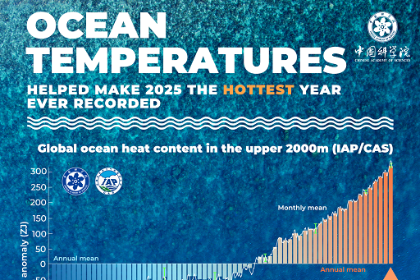
The extreme weather events across the world are just some of the consequences of climate change. To mitigate climate change, the 21st United Nations Climate Change Conference (COP21) in Paris pledged to limit the increase in average global temperature to well below 2 degrees Celsius above pre-industrial levels and make efforts to limit it to 1.5 C. This, along with other pledges and commitments, became part of the Paris Agreement in 2015.
In 2020, the UN Intergovernmental Panel on Climate Change, in its Sixth Assessment Report, painted a grim picture of the disastrous consequences of rising global temperatures, and urged UN member states to limit global temperature rise to below 1.5 C.
Since then, many developed and developing economies have pledged to achieve net-zero emissions. More than 70 economies, including China, the United States and the European Union, which account for about 76 percent of global emissions, have set their respective net-zero targets, while over 3,000 businesses and financial institutions have joined hands with the Science Based Targets initiative to reduce their emissions. And more than 1,000 cities, and over 1,000 educational and 400 financial institutions have joined the "race to zero", pledging to take rigorous measures to halve global emissions by 2030.
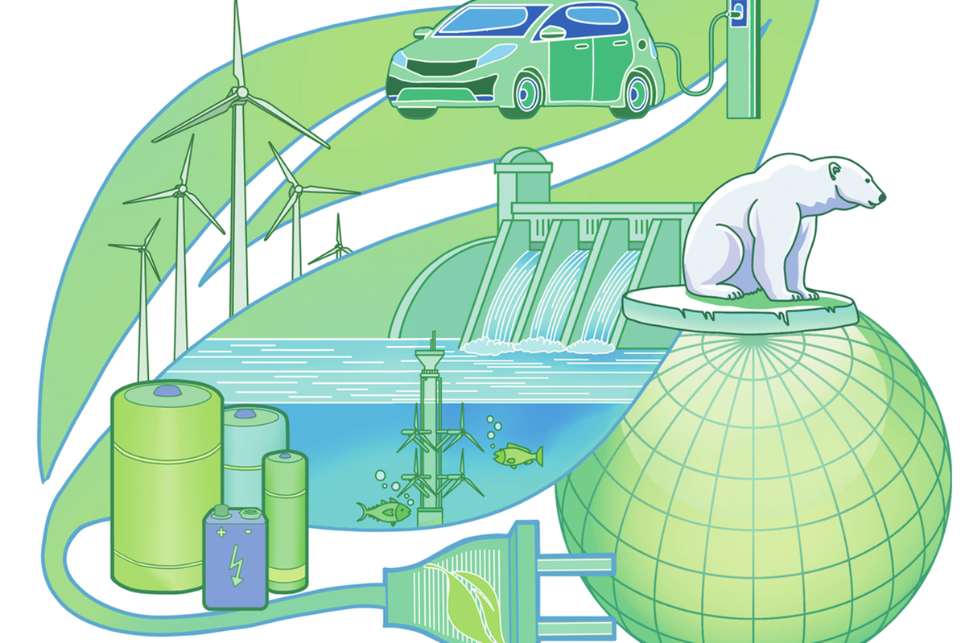
The energy sector is the largest carbon emitter, and the demand for energy continues to increase because of economic and population growth. No wonder experts say the conservative estimate for the world to achieve net-zero emissions is 2060 and the ambitious estimate 2050. But to achieve that, according to the International Energy Agency, emerging market and developing economies will need an annual investment of $2.2 trillion to $2.8 trillion from the early 2030s to 2050.
China has been a global leader in developing and using clean energy technologies, and accounts for about two-thirds of the total investment in clean energy by emerging market and developing economies. However, Southeast Asian countries will have to increase their annual investment by 7.13 times, India and other Asian countries by 4.7 times, Africa by 7.28 times, Latin America by 4.03 times, and the Middle East and Eurasia by 9.58 times to achieve the ambitious net-zero emission target by 2050.
Due to their economic and social situations, these economies have to bridge a wide financial and technological gap in order to transition to clean energy, with some of them having to invest more than the others. For instance, low and middle-income countries are home to more than 40 percent of the world's population but account for only 7 percent of global spending on clean energy, while some emerging market and developing economies that are major resource owners, including oil and gas producers and exporters, have to transition away from their high dependence on fossil fuel revenues.
And contrary to popular belief, public funding alone won't help the emerging market and developing economies to achieve net-zero. But how can the private sector be persuaded to provide $900 billion to $1.1 trillion, up from only $135 billion today, a year for investment in clean energy from the early 2030s to at least 2050?
There is more than $2.5 trillion in environmental, social and governance-related investment funds, but almost nothing from those flows into developing economies. Green, social, sustainable and sustainability-linked bonds could potentially attract some institutional investors and ESG funds. But unfortunately, a couple of weeks ago, S&P Global decided to stop using ESG scores when assessing the quality of credit and debt, dealing a blow to ESG investments by leading financial institutions.
Last year, a total of $136 billion green, social, sustainable and sustainability-linked bonds were issued by the emerging market and developing economies, with China accounting for more than half of them. In actual terms, the value of such Chinese bonds was $69.31 billion, up 53 percent year-on-year.
Furthermore, all the 775 million people around the world who don't have access to electricity and the 2.4 billion people who lack access to clean cooking fuel live in emerging market and developing economies. But despite the cost of making electricity and clean cooking fuel universally accessible by 2030 being less than 2 percent of the overall spending on clean energy, a lot needs to be done to realize SDG 7 — ensuring access to affordable, reliable, sustainable and modern energy for all — by 2030.
The commitment by advanced economies to mobilize $100 billion per year to help developing countries mitigate and adapt to climate change should have been fulfilled in 2020, but is likely to be met only in 2023, which might help the emerging market and developing economies to mitigate climate change to some extent.
Financing clean energy was already a challenge for the emerging market and developing economies. It has become a bigger challenge now due to the economic downturn and increasing difficulty in attracting capital.
Addressing the COP24 at Katowice, Poland, in 2018, youth climate activist Greta Thunberg said: "Our civilization is being sacrificed for the opportunity of a very small number of people to continue making enormous amounts of money. Our biosphere is being sacrificed so that rich people in countries like mine can live in luxury. It is the sufferings of the many which pay for the luxuries of the few."
Indeed, the fight against climate change is tough, and to win it, we need global efforts. Accordingly, the transition to clean energy has to be achieved globally, not separately by individual countries.
The views don't necessarily reflect those of China Daily.
The author is an associate professor at the School of Energy and Environment and Department of Public and International Affairs, City University of Hong Kong, and a visiting associate professor at the School of Public Policy and Management, Tsinghua University.
If you have a specific expertise, or would like to share your thought about our stories, then send us your writings at opinion@chinadaily.com.cn, and comment@chinadaily.com.cn.