


When porcelain was the original 'made in China' sensation










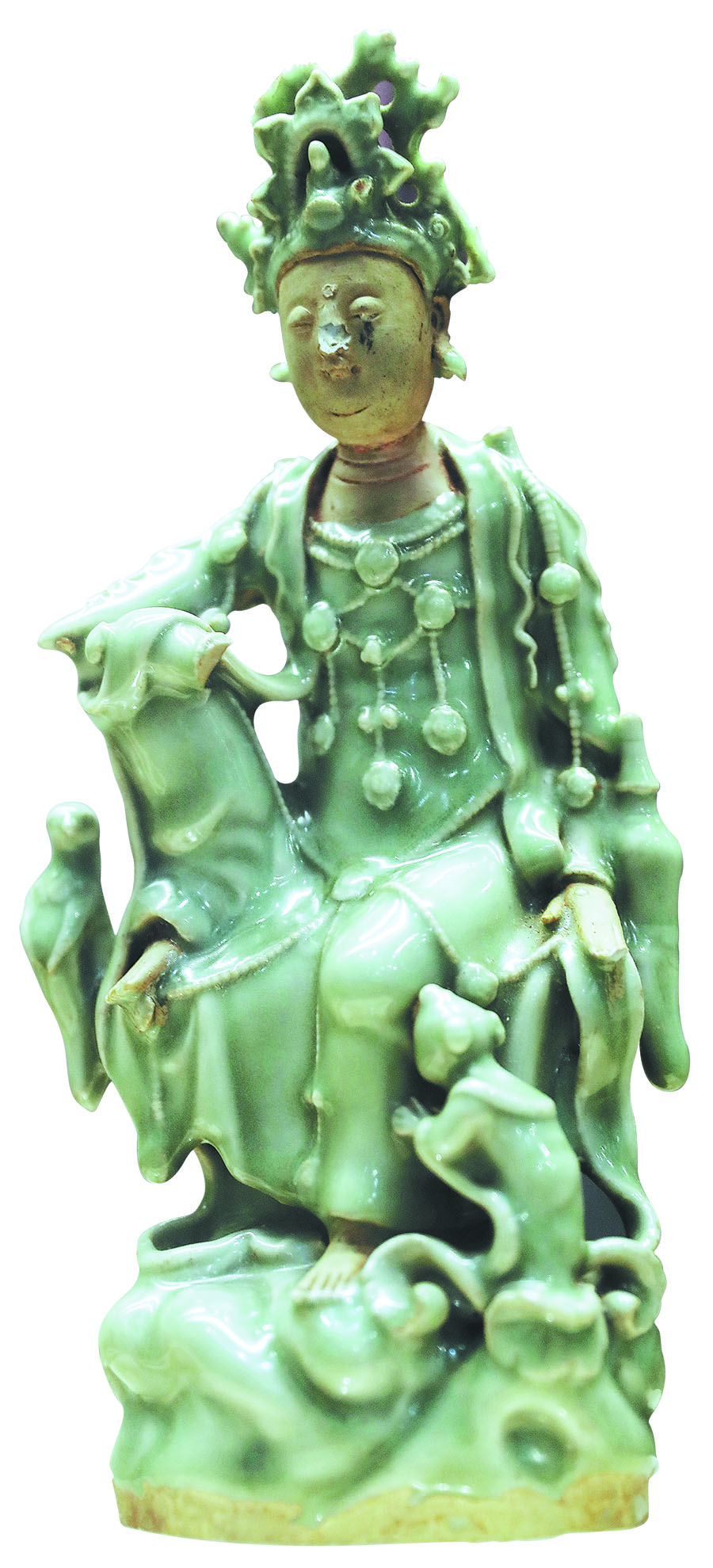
The export of Longquan celadon peaked during the Yuan Dynasty (1271-1368). According to historical records, about 80 percent of the ceramics exported from China at the time were the green-colored pottery made in Longquan.
"It was like the iPhone of ancient China, a popular commodity sought after by people across the world," says Liu.
An ongoing show at the Longquan Celadon Museum features porcelain relics found at the al-Mataf site, an ancient port ruin in Ras al-Khaimah in the United Arab Emirates. The finds from the harbor, where ships stopped after entering the Gulf, were compared to 30 similar pieces housed in the Palace Museum in Beijing.
A scientific analysis of the finds from the al-Mataf site shows their similarity to those produced in China at the same time, including Longquan celadon. The analysis was conducted in 2018 by a Chinese archaeological team led by Wang Guangyao, a porcelain expert from the Palace Museum.
After three years of excavation and study at al-Mataf, which was along one of the world's busiest maritime trade routes a millennium ago, Wang says their work proves that Longquan celadon and blue-and-white ceramics were the two main types of porcelain exported centuries ago.
"Together with silk and tea, ceramics were one of the three major goods supporting ancient China's export trade," says Wang, who has studied porcelain for more than three decades.
In the Tang Dynasty (618-907), ceramics produced in China began to appear in overseas markets. A wide range of ceramic products, including bowls, dishes, pots and vases, were transported across the world overland, and via the ancient Maritime Silk Road.
They were named after their country of origin, to illustrate their uniqueness and that they could only be bought from China. Before the Germans learned how to successfully re-create porcelain at the beginning of the 18th century, China was the only place able to produce these popular vessels.
"The history of the export of ceramics is also a history of cultural and technological exchange between China and the world," says Wang.





