First bullet train ushers in new era of connectivity for Southeast Asia










After years of delays and challenges, Southeast Asia's first bullet train is expected to hit the rails soon.
The Jakarta-Bandung High-Speed Railway, or HSR, is the most prominent Belt and Road Initiative project in Indonesia. It will be holding its trial run as the BRI enters its 10th anniversary. Analysts and industry leaders noted how this project can strengthen connectivity in one of the archipelago's biggest and busiest islands. They also cited how this railway aligns with Indonesia's economic goals and spurred technology transfer from China to Indonesia.
The HSR will improve Indonesia's productivity and global competitiveness, said Aditya Dwi Laksana, chairman of the road and railway transport forum at the Indonesia Transportation Society.
Laksana said the presence of a bullet train will increase people's mobility and raise the quality of public transport in Southeast Asia's biggest economy.
"This train will provide (higher value) transportation services, mainly in terms of safety, punctuality, time travel, as well as the comfort of the trip. (Commuters) will have more (when) traveling between Jakarta and Bandung or vice versa. The HSR also has a competitive advantage compared to other modes of public transportation," he said.
The HSR has a top speed of 350 kilometers per hour. Once operational, commuters who take the train can cut their usual three-hour journey time between Jakarta, the nation's capital, and Bandung in West Java Province to just 40 minutes.
Both cities are located in the island of Java, the fourth-biggest island in the archipelago and home to roughly half of Indonesia's population.
The HSR was supposed to hold its first trial run in August, in time for Indonesia's Independence Day celebrations on Aug 17. But the PT Kereta Cepat Indonesia China, or KCIC, the Sino-Indonesian consortium that constructed the railway, has postponed the trial and its subsequent launch to later this month, as the operation of the HSR requires careful preparation.
Safety and comfort
The KCIC said it prioritizes the safety and comfort of train commuters. It said the public can travel on the HSR for free during the trial run.
The KCIC was created in 2015 after China successfully bidded against Japan for the project. The high-speed line was supposed to be completed in 2018. But issues such as the COVID-19 pandemic disrupted the work schedule. Last year, China shipped a high-speed electric passenger train and an inspection train designed especially for the Indonesian project. These trains were designed by CRRC Qingdao Sifang and it was the first time that China exported high-speed trains.
Siwage Dharma Negara, co-coordinator for the Indonesia Studies Program at the ISEAS-Yusof Ishak Institute in Singapore, said the challenges and delays that the HSR project has encountered proved that infrastructure development, while ambitious, is not always smooth sailing. People are also not likely to feel its impact immediately, he added.
"It is not easy to build infrastructure, it takes longer time than expected," Negara said. He said policy planners need to rethink the costs and benefits of any future infrastructure project. "We have to be careful, to be very selective, to choose what kind of project is useful and beneficial for countries like Indonesia."
Linda Yin-nor Tjia, an associate professor at the department of public and international affairs at the City University of Hong Kong, said Indonesia's decentralization strategy since the late 1990s has encouraged "a plurality of opinions" among the executive arm of the central government, especially if it involves complicated project implementation like that of the HSR.
Tjia has extensively researched high-speed railway development in China and Japan. She said the Jakarta-Bandung HSR has been checked by multiple stakeholders and this has led to delays and rescheduling arrangements.
"Infrastructure construction is challenging not only because of economic and technological reasons. Political and institutional factors also matter," Tjia said.
Shinta Widjaja Kamdani, chief executive officer of the Jakarta-based conglomerate Sintesa Group and chairwoman of the Indonesian Employers Association, said the HSR is not just an investment in connectivity, but can serve as a central point for understanding the facts behind high-speed trains that Indonesia can use for future development.
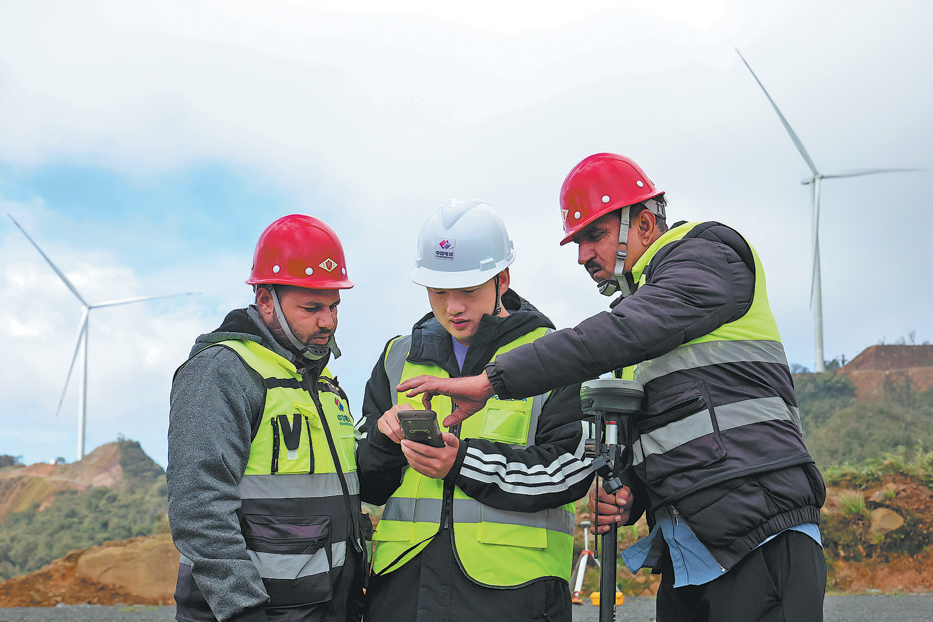
Kamdani noted that Indonesian workers have learned from Chinese technical experts who came in for the HSR project.
Laksana said developing infrastructure is key to economic growth and the biggest challenge in developing a country's infrastructure is the lack of funding and technology transfer.
But he underlined that the BRI is an economic cooperation between China and Indonesia and this partnership can overcome obstacles related to financing and technology transfer.
With the Jakarta-Bandung HSR set to begin operations soon, Laksana said the era of high-speed railway technology has finally arrived in Indonesia.
"The key is the transfer of technology and knowledge," he said, noting that technology transfer can enhance the knowledge, skill and capability of Indonesian workers.
Tjia said it is "very challenging" to transfer core HSR technology.
"But train operation involves many different components and some of the technology could be transferred to the non-HSR sector," she said.