



Need to chart a better future through talent cooperation









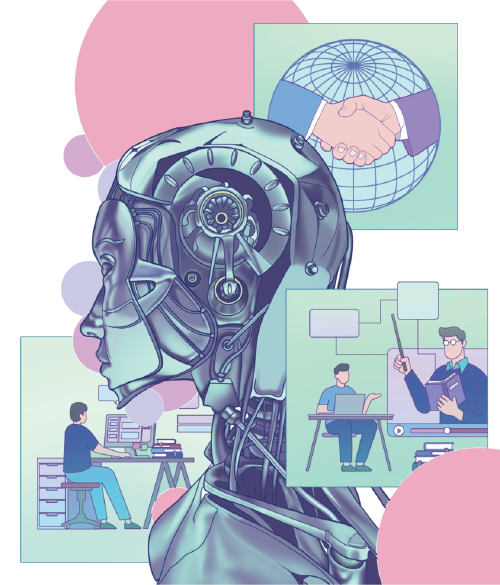
Global talent is indeed an important policy issue, as well as a practical matter as countries, governments, businesses and universities try to figure out new and better ways to recruit, educate and train, manage and nurture, and cultivate and retain high caliber talents.
I believe everyone will agree that we live in incredibly challenging times. The open, globalized world that facilitated the almost unencumbered movement of capital, information and know-how, and people across borders from the late 1970s to the 1980s and 1990s seems to be encountering some hurdles.
We find ourselves in a situation perhaps best called "fragmented globalization". The increasing concerns over national security, technological advantage and economic competitiveness have led a number of countries to take concerted measures to reduce their openness as a means of protecting their national interests. Unfortunately, this apparent turning away from globalization, albeit partial right now, has had a direct impact on global talent mobility — reducing some of the opportunities and the benefits to be gained from the smooth, unencumbered movement of people across borders and cultures.
While many hope the huge benefits versus the costs derived from globalization will be better understood and we can reverse the current trends. But the fact is that we have entered a period where it is unclear if and when this reversal will take place, who will lead it, and how the benefits of globalization can be more broadly shared. Perhaps the recent announcements coming from the BRICS countries at their recent summit in Johannesburg can point us in the right direction.
There are three major trends which we must keep in mind when we think about the optimal ways to work together to address the national, regional and global aspects of educating high-end talent.
The first is fluidity. Understanding the idea of fluidity is important, because change is ubiquitous — it is all around us. It is the one constant we can count on even as we try to put in place better planning and assessment mechanisms for meeting our respective talent needs. Educators have to pay particular attention because it means our curriculum and pedagogies have to constantly adapt to these changes.
The second is turbulence. A sound of understanding of turbulence is important because we have entered a period of uncertainties. Our respective and collective efforts to plan for the future in terms of education and training, specification of numbers, identification of skills, and talent deployment and utilization remain extremely challenging, because it is still difficult to put our hands around the definitive needs and specific skills required to meet emerging demands now and especially in the future. Here it is necessary to keep in mind Pulitzer Prize winning columnist and writer Thomas Friedman's comments about the so-called "agile mindset".
Friedman has posited that the most important skill for the workforce of the 21st century is "learning how to learn". Since our talent needs will continue to evolve and change, we ideally need to educate people who possess the flexibility, adaptability and comfort levels to get re-skilled, re-educated and re-positioned as their careers evolve and as the needs of the workplace change.
The third trend is "accelerated technological change". There have been extensive discussions on the impact of artificial intelligence across every aspect of education — how we teach, how students learn, and how to solve problems. The onset of the digital economy makes this type of discussion even more imperative. Over the next decade, in particular, AI will likely have an incredible, almost revolutionary impact on education and talent decisions, as well as on the overall workplace.
Some experts have suggested that the near future will be so dominated by the rapid acceleration of AI utilization and application that the forthcoming decade of change will feel like the last 100 years of change compressed into one-tenth of the time. I know at the University of North Carolina, we have spent the last six months preparing a new school year where the use of AI in the form of products such as ChatGPT is going to radically change academic life on campus, including in teaching, grading, student projects and assessment.
Living and working during such a period of dramatic upheaval promises to be extremely exciting and exhilarating, as well as unsettling. As someone focused on global talent concerns, I believe that we need to work together much more closely if we want to prevent the onset of so-called "talent wars" and the reliance on "beggar-thy-neighbor" policies that turn global talent issues into sources of conflict rather than collaboration.
We have a golden opportunity to better prepare for the future not through zero-sum competition, but through education cooperation and collaboration. By sharing our knowledge, leveraging our collective data, and communicating our concerns through open and frank dialogue, we can moderate the impact of fluidity, reduce the level of turbulence, and reduce the uncertainties generated by rapid technological change to make the global talent issue something around which we can coalesce global collaboration and support.

The author is president of the Alliance for Global Talent Organizations.
If you have a specific expertise, or would like to share your thought about our stories, then send us your writings at opinion@chinadaily.com.cn, and comment@chinadaily.com.cn.





