



De-risking will result in more risks and negative outcomes for the EU









In the midst of evolving global dynamics, the European Union is currently at a crossroads, contemplating the idea of decoupling and de-risking from its extensive economic ties with China. While the proposition may seem appealing to some, it is crucial to examine the potential disadvantages and repercussions that such a move could entail for the EU.
One of the most significant concerns surrounding decoupling or "soft" decoupling called by EU officials as de-risking is the possibility of reduced trade volumes between the EU and China. China stands as one of the EU's top trading partners, and any disruption in this relationship could have far-reaching consequences for the European economy. Trade is not just about numbers; it is about job creation, prosperity and the well-being of citizens.
Disrupting this trade relationship would harm businesses, workers, consumers and societies alike.
Furthermore, decoupling or de-risking, as it is called by EU officials, may result in increased tariffs and restrictions on investment, making it more challenging for EU businesses to access foreign markets and cooperate internationally. The imposing of tariffs can ignite trade wars that hurt everyone involved. Europe, with its export-driven economies, could find itself in the crosshairs of such conflicts, jeopardizing its economic stability.
Moreover, the idea of the proposed de-risking ignores the considerable investments that many EU businesses have made in establishing a presence in China. These investments, in terms of time, effort and capital, are substantial. If decoupling were to occur, these investments would be at risk, potentially leading to significant financial losses for EU companies.
De-risking, while touted as a solution to mitigate economic vulnerabilities while being de facto rebranded "soft" decoupling, has several major flaws. The concept itself remains somewhat nebulous, with no clear roadmap for implementation. There is a growing risk that EU policies aimed at de-risking may falter rather than succeed, leaving the EU in a precarious position without the anticipated benefits.
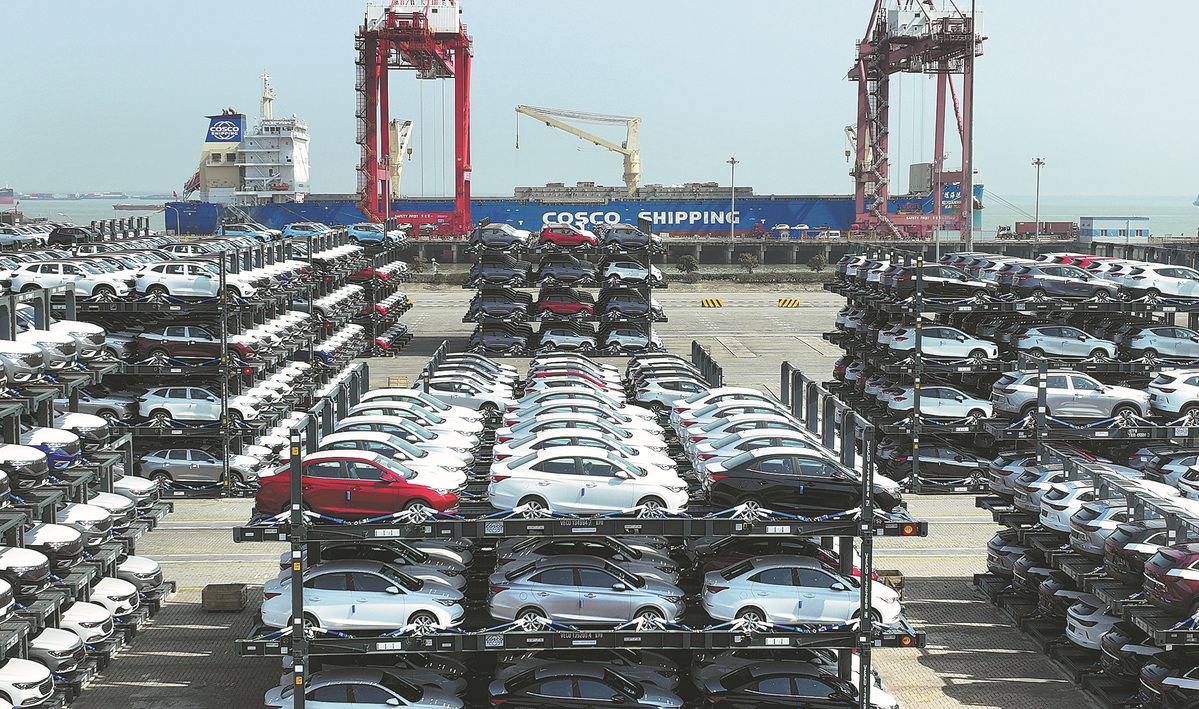
The EU automobile industry, a significant contributor to the region's economy, could also face the brunt of decoupling. With sales of Chinese-made cars in Europe projected to reach 1.5 million vehicles by 2030, equivalent to 13.5% of the EU's 2022 production, de-risking could hamper this growth and associated benefits. This could result in lost opportunities for the European automobile sector and hinder its global competitiveness.
Decoupling from China in the "soft version" called de-risking would not only affect the EU's economic prospects but also its global competitiveness. The EU has been losing its standing in global value chains, particularly in the areas of technological innovation and human capital. China, on the other hand, has been making significant strides in catching up. Cutting ties with China may accelerate this trend, leaving the EU further behind in the race for technological dominance.
Additionally, digital decoupling between China and the United States pursued by the US administration could impose significant costs on European companies operating in China. These companies may find themselves forced into a costly separation of their international operations, which could impact their profitability and competitiveness.
De-risking also carries the risk of decreasing trade integration within the EU itself. Much of the reduction in the EU's participation in global value chains would occur within the single market. In other words, EU intra-regional trade integration, particularly in terms of value-added, will significantly shrink. This will weaken the EU's internal economic dynamics.
In addition, there is a genuine concern that "soft" decoupling would jeopardize the green transition in the EU. There is no doubt that de-risking will raise input costs for clean energy technologies and materials, making the transition to a more sustainable and environmentally friendly economy more challenging and harder to handle by ordinary EU citizens and residents.
To sum up, the idea of decoupling and de-risking from China may seem appealing on the surface, but it is fraught with risks and downsides for the European Union. The EU must carefully consider the complex nature of global economic relationships and the challenges associated with de-risking before making any hasty decisions. Striking a balance between protecting its interests and maintaining economic stability and competitiveness is a delicate task that requires a thorough and thoughtful approach, not pursuing de-risking and other concepts that will create more risks for the EU and bring negative outcomes.
Dawid Wiktor is the chief executive officer of Media Scope Group and president of the Estonian-Chinese Chamber of Commerce.
The opinions expressed here are those of the writer and do not necessarily represent the views of China Daily and China Daily website.
If you have a specific expertise, or would like to share your thought about our stories, then send us your writings at opinion@chinadaily.com.cn, and comment@chinadaily.com.cn.





