Central Asia a model region for Belt and Road success









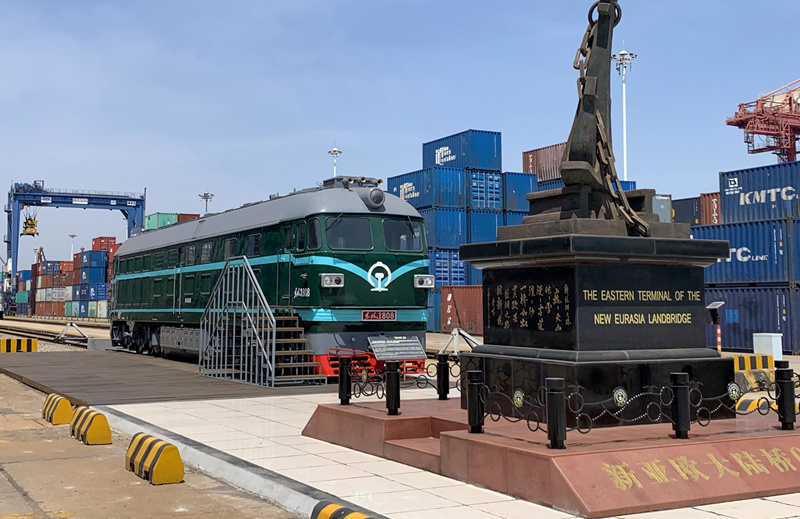
Over the past 10 years, the China-proposed Belt and Road Initiative has helped strengthen trade and cultural ties in the Eurasian region, with people from participating countries benefiting from trade exchanges, contacts and cultural integration.
Connectedness is the key word of the initiative. Chinese leaders link interconnectedness to economic development and, by extension, security and stability.
The situation can be characterized as being win-win. While much of the Belt and Road infrastructure helps deliver Chinese goods to emerging markets, the reverse process also occurs, with the facilitation of exports to China of necessary goods for the country's internal market. Moreover, local businesses can also use the infrastructure, resulting in various business solutions. This is also beneficial for China, as the economies of its neighbors are growing and trade volumes are increasing.
From 2013 to 2022, the cumulative value of imports and exports between China and BRI partner countries reached $19.1 trillion, and the cumulative two-way investment between China and partner countries reached $380 billion, including $240 billion from China. According to a World Bank report in 2019, if fully implemented, BRI transportation projects could increase trade between 1.7 and 6.2 percent for the world, increasing global real income by 0.7 to 2.9 percent.
In 2019, China also committed to making its Belt and Road investments "open, green and clean".
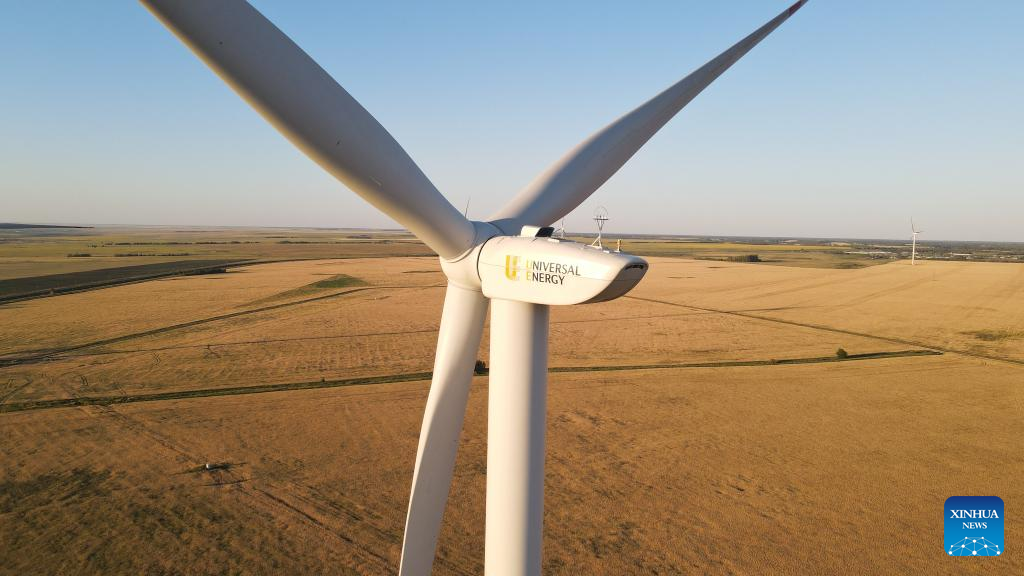
China's refusal to consider further coal projects in Bangladesh is a promising sign, as is the fact that renewables made up the majority of new Belt and Road energy investment in 2020.
All of this contributes to solving common challenges facing humanity, such as green and low-carbon development, health cooperation and global poverty reduction.
China is rethinking its approach to implementing the BRI, prioritizing post-pandemic recovery, debt sustainability and digital transformation. It is also actively developing public-private partnerships and strengthening cooperation with multilateral development banks.
It is exploring new financing mechanisms such as green bonds and equity investments to diversify funding sources and reduce financial risks for Chinese lenders and loan recipients.
The Belt and Road has been more effective in Asia because China has a better understanding of the circumstances of countries that are geographically and culturally closer to it. Regional mechanisms involving China, particularly the Shanghai Cooperation Organization, have worked well in enhancing cooperation.
Central Asian countries play a key role in the success of the Belt and Road Initiative, and their cooperation with China is essential to the initiative.
At the same time, the development of safe and short transportation corridors connecting China with Central Asia, with access to Europe, the Middle Eastand South Asia, is of strategic importance. The China-Kyrgyzstan-Uzbekistan rail link and the Termez-Mazar-i-Sharif-Kabul-Peshawar rail link, which will connect Uzbekistan, Afghanistan and Pakistan, should be viewed as crucial components.
Furthermore, the combination of the Belt and Road and the Trans-Caspian International Transport Route creates great opportunities for unlocking the potential of the North-South and East-West corridors.
In the Xi'an Declaration of the China-Central Asia Summit, which was held in May, the participating parties emphasized the need to raise the status of Central Asia as one of the most important trans-Eurasian transportation hubs. Since the launch of the BRI, China and the five Central Asian countries have intensified their cooperation for broader regional development and achieved a number of significant achievements.
In 2022, China's trade turnover with the five Central Asian countries amounted to $70.2 billion, about 100 times more than 30 years ago.
Through the BRI, China is and will of course remain the largest investor in Central Asia. China's growing involvement in Central Asia is a long-term phenomenon and a turning point in the economic development of the region.
The projects implemented with the assistance of China are mutually beneficial and help improve the living standards of the local population.
This gives new impetus to accelerating the development of the region.
Relations between China and the countries of Central Asia are based on deep historical roots and have a strong social foundation.
The world, meanwhile, is currently witnessing rapid transformation.
Situated at the crossroads between East and West, South and North, and located at the heart of the Eurasian region, Central Asia plays a key role in shaping these dynamics.
Realizing the growing geopolitical and geo-economic importance of Central Asia, the SCO member states consider the region to be the core of the organization and support the efforts of member countries aimed at ensuring peace, prosperity and sustainable development.
At the same time, the creation of 10 "Central Asia +" formats indicates the transformation of the region into one of the important geopolitical centers of the modern world.
The countries of Central Asia, being independent subjects of international relations, advocate the region becoming a space of creation, and do not accept the region as an arena of geopolitical confrontation.
In the face of increasing confrontation and unpredictability in international relations, the countries of Central Asia are more deeply aware of the need to support each other in order to counter security risks and take a principled position on issues of independence, sovereignty and territorial integrity of the states of the region.
For Central Asia, the main goal of cooperation with China within the framework of the BRI is to maintain lasting peace, security, sustainable development and prosperity.
At the same time, strengthening close multifaceted cooperation between Central Asia and China also contributes to improving the multilateral ties and inclusiveness between Europe and China, contributing to peace, stability and sustainable development in Eurasia.
Full-scale interaction with China, one of the largest investors and leading economies in the world, is a long-term factor for security and sustainable progress for the countries of Central Asia.
Overall, the success of the Belt and Road Initiative in Central Asia will depend on the cooperation between China and these countries, as well as the involvement of other stakeholders such as the European Union. By working together toward a common goal, they can create a more interconnected and prosperous Eurasia.
Unfortunately, tensions between the United States and China create an unfavorable environment for increased cooperation. It would be better to reduce tensions, try to iron out differences and work on joint solutions to global problems such as climate change, economic uncertainty and COVID-19.
The influence of China will only grow, so it would be better to somehow find a way to accommodate its growth rather than futilely trying to contain something that cannot be contained.
The author is former secretary-general of the Shanghai Cooperation Organization. The views do not necessarily reflect those of China Daily.