Paving the way ahead
China-Africa cooperation under the Belt and Road Initiative is expected to bring more opportunities for the continent and unlock its development potential









China-Africa cooperation under the Belt and Road Initiative is expected to bring more opportunities for the continent and unlock its development potential
Editor's note: The world has undergone many changes and shocks in recent years. Enhanced dialogue between scholars from China and overseas is needed to build mutual understanding on many problems the world faces. For this purpose, the China Watch Institute of China Daily and the National Institute for Global Strategy, Chinese Academy of Social Sciences, jointly present this special column: The Global Strategy Dialogue, in which experts from China and abroad will offer insightful views, analysis and fresh perspectives on long-term strategic issues of global importance.

The African Union's accession to the G20 at the group's New Delhi Summit will have a positive influence on the continent's economic development and participation in global governance. As the continent with the largest number of developing countries, Africa has immense potential for development.
China is a staunch supporter of Africa in exploring its own modernization path. In August, China launched an initiative in support of Africa's industrialization, and implemented a plan to support Africa's agricultural modernization and talent development with a view to boosting Africa's regional integration and modernization. As this year marks the 10th anniversary of the China-proposed Belt and Road Initiative, new momentum will be injected into building a China-Africa community with a shared future.
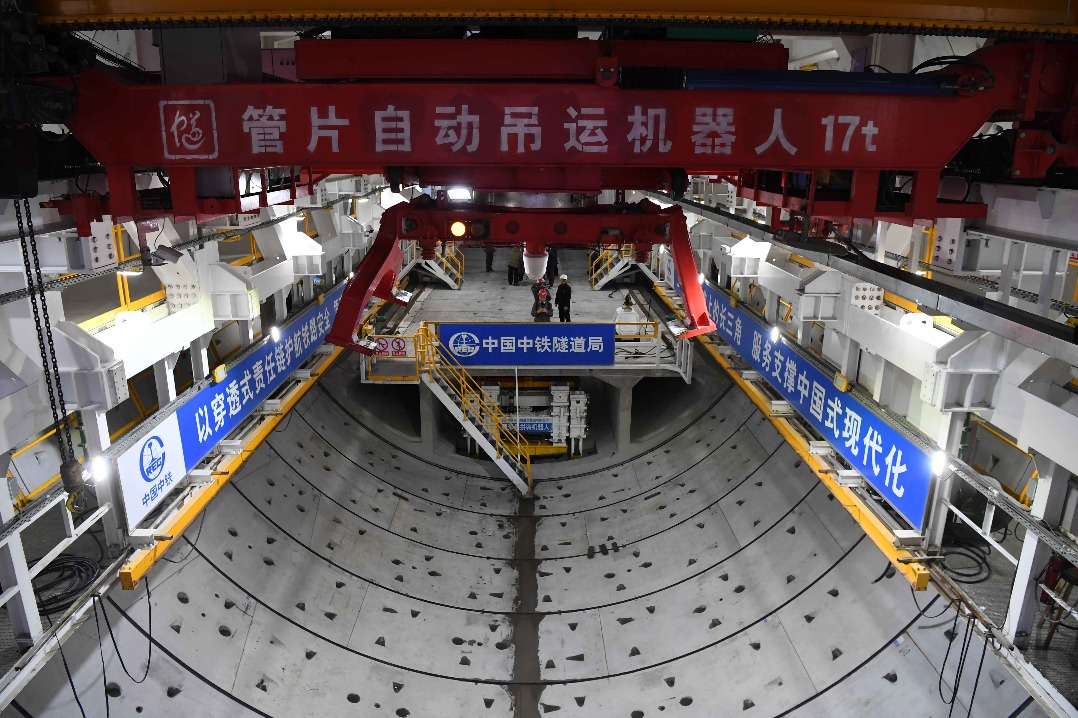
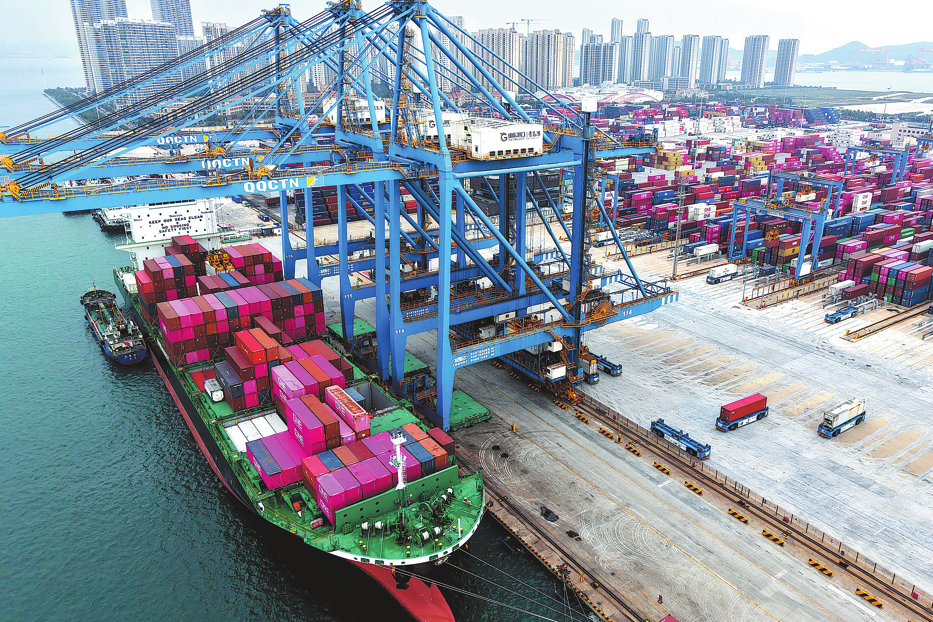
So far, China has signed cooperation documents on the BRI with 52 African countries as well as the AU. Over the past decade, China has helped build more than 6,000 kilometers of railways, over 6,000 km of roads, and 80-plus large power facilities on the continent. Some of the flagship projects-Egypt's New Administrative Capital, Nigeria's Lekki Deep Sea Port, the Mombasa-Nairobi Railway, the Addis Ababa-Djibouti Railway and the headquarters of the Africa Centers for Disease Control and Prevention — have improved regional interconnectivity and promoted socioeconomic development in Africa.
China has been Africa's largest trading partner for years and is the fourth-largest source of investment in the continent. In the next decade, China and Africa need to better align the BRI with the AU's Agenda 2063 and development strategies of African countries to help Africa develop its priority areas by drawing strengths from China's advantages.
First, African industrialization needs to be supported. Africa remains the least industrialized region in the world, with its economy heavily dependent on natural resources and industries with lower added value. According to World Bank statistics, sub-Saharan Africa's manufacturing added value only accounts for 11.2 percent of its GDP.
China, with its own experience in rapid industrialization, can assist Africa's industrialization by investing in local manufacturing industries and boosting the added value of agriculture, oil and mineral products. China can also help Africa train skilled workers by developing vocational education. In addition to providing capital and technologies, China should share with Africa its expertise in industrialization and help African countries formulate industrial policies, and set up special economic zones to attract long-term industrial investments.
China-Africa industrial capacity cooperation under the framework of the BRI can facilitate Africa's integration into regional and global value chains. The United Nations Conference on Trade and Development has recently released its annual Economic Development in Africa Report. The report notes that the BRI, as a South-South cooperation initiative, will boost Africa's industrial growth and improve the intra-regional trade.
In the coming decade, Africa will have a huge demand for infrastructure. The construction of new infrastructure will reduce production costs and promote industrial upgrading as well as the coordinated development of related industries, thus raising productivity and creating new jobs. However, the BRI should focus more on commercially viable and environmentally sustainable projects.
Second, Africa's pursuit of green development should be boosted. Although Africa emits only a tiny fraction of the world's carbon dioxide, it is the most vulnerable region to climate change impacts. Data released at the Africa Climate Summit 2023 showed that the loss and damage costs in Africa due to climate change are projected to reach up to $440 billion in the period from 2022 to 2030. Many African nations face the daunting challenge of expanding energy supply, which is necessary for industrialization and better livelihoods, while these countries also need to transition to clean energy. In the Nairobi Declaration, African leaders called for the world to help Africa develop its renewable power generation capacity.
In the next decade, China and Africa can deepen green development cooperation under the framework of the BRI. China is a global leader in clean energy technologies and financing, and Africa is endowed with abundant clean energy resources, which have a huge potential for development. Chinese enterprises, which boast of rich experience and expertise in renewable energy, can cooperate with African nations in areas such as clean energy, smart agriculture, and green infrastructure.
China and Africa can also work closely on research in environmental protection and biodiversity conservation, and share best practices in climate-friendly development in pursuit of sustainable growth and win-for-all cooperation among governments, companies, financial institutions and local communities.
Third, Africa's digital transformation needs to be promoted. China and Africa should advance the Digital Silk Road's development and bridge African countries' digital divides. In the past decade, China has built more than half of Africa's wireless stations and high-speed broadband mobile networks, paving a total length of 200,000 km of fiber-optic cables, which serve 900 million local residents. Despite the increasing access to mobile phones and the internet, Africa still lags behind the rest of the world in broadband connection, e-commerce and digital services.
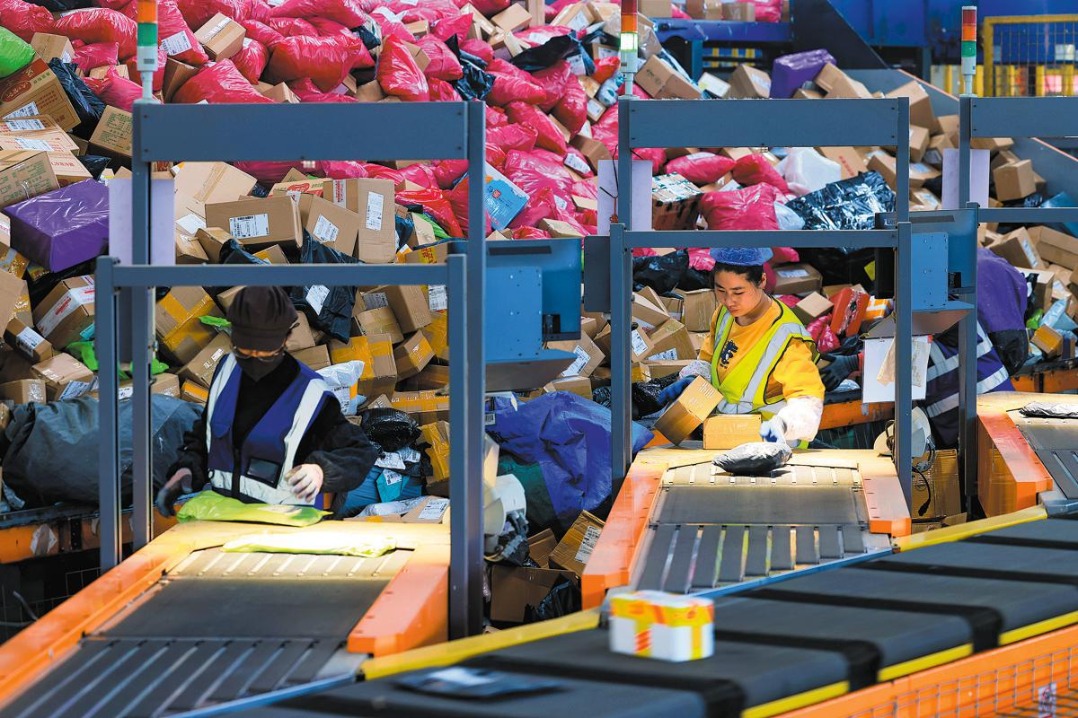
In the next decade, Chinese digital enterprises can help Africa build 5G networks, cross-border cables, and infrastructure for mobile payment, smart manufacturing and cloud computing. Digital infrastructures related to smart cities can improve local public services and transport. China can also provide African youth with training programs in digital skills and innovate cooperation models in e-commerce, finance and logistics to facilitate the continent's high-quality development.
In addition, to pursue high-standard and sustainable development that benefits the people, China and Africa should strengthen institutional building and capacity building. Collaboration and policy communication in risk management, transparency and the fight against corruption will boost Belt and Road projects' long-term value and sustainability, and China will also benefit from lower financial risks and more balanced trade relations.
As China-Africa cooperation under the framework of the BRI ushers in a new decade, the partnership between the two sides is expected to bring more opportunities for Africa and unlock its development potential by supporting the region's industrialization, low-carbon and digital development as well as institutional and capacity building.


The author is an assistant researcher with the Institute of World Economics and Politics at the Chinese Academy of Social Sciences. The author contributed this article to China Watch, a think tank powered by China Daily.
Contact the editor at editor@chinawatch.cn.