


Confucianism spans time and space, and the knowledge within is as pertinent today, as it was when originally taught
I started studying the Confucian classics before coming to China in 2009. During my studies here, I found that many Confucian classics do not have Persian translations and, if they do, they are not directly translated from Chinese to Persian. Therefore, I decided to start translating The Works of Mencius.
After many years, I have translated The Analects, The Great Learning, The Doctrine of the Mean, Rules for Disciples and Children, and The Classic of Filial Piety into Persian and published them in Iran.
Through years of research and translation of Confucian classics, I have discovered that China's traditional culture, including Confucianism, contains rich philosophical thoughts and a humanistic spirit, which can provide enlightenment for people to understand and transform the world, and also provide an essential reference for solving the problems faced by humankind today.
What is jingdian (a classic)? There are many explanations and definitions for it.
The word was first used in the Biography of Sun Bao in the Han Shu (Book of Han), in which it meant a work with eternal significance and a model for future generations.
Liu Zhiji, a historian of the Tang Dynasty (618-907), said in the Narrating Events chapter of his Shi Tong (Comprehending History): "The writings written by sages and worthies are called classics."
This definition focused on the classics among ideological works. All human spiritual civilization is composed of classics to some degree. They form the foundations of all nations and spiritual cultures.
British poet T.S. Eliot believed that "maturity" can fully express the meaning of jingdian, because classics often appear when a civilization, language and literature mature.
The famous Iranian poet Hafez believed that classics are connected to saints who have "the eternity of their lives recorded in the books of the world".
Confucius, who lived during the Spring and Autumn Period (770-476 BC), was the founder of Confucianism, and the first teacher in China.
He traveled around the country for over 10 years, promoting his political ideas of renzheng (benevolent government) and lizhi (ritual rule). His thoughts on ethics and society have spanned several millennia, and still shine brightly today, both in China and abroad.
Confucianism transcends nationalities and regions, elevating Chinese culture to a new level, shouldering the mission of being fundamental to the origins of Chinese society and being a window through which the world can view and understand Chinese culture.
Xi Jinping, general secretary of the Communist Party of China Central Committee, has pointed out that some knowledgeable people in the world believe that China's traditional culture, including Confucianism, contains important inspiration for solving the problems faced by contemporary society.
Confucianism, represented by Confucius' thoughts, seeks to use ren (benevolence) to achieve a state in which "the old are safe and the young are cared for" and people are "generous to the masses", thereby realizing an ideal society in which wealth is evenly distributed and where there is peace, safety and stability.
Confucius traveled around, but he always remembered his upbringing. He once said: "While his parents are alive, a son may not go far away. If he does go far away, he must have a fixed place to which he goes."
During his travels, he saw the prosperity of people in other states, and he always remembered his homeland.
As The Works of Mencius reads: "When Confucius was leaving the Lu State, he said, 'I will set out by-and-by' — this was how to leave one's homeland. When he was leaving the Qi State, he strained off, with his hand, the water in which his rice was being rinsed, took the rice, and went away — this was how to leave a strange state."
When Confucius and his party were captured in the region of Kuang (in today's Hebei province), he said confidently: "After the death of King Wen of the Zhou Dynasty (c. 11th century-256 BC), was not the cause of truth lodged here in me? If heaven had wished to let this cause of truth perish, then I, a future mortal, should not have got such a relation to that cause. While heaven does not let the cause of truth perish, what can the people of Kuang do to me?"
When talking about glory and wealth, he said: "Riches and honors acquired by unrighteousness are to me as a floating cloud."
Confucius was knowledgeable, but maintained humility, was eager to learn, and was not ashamed to ask questions. He said: "When I walk along with two others, they may serve me as my teachers."
Many Confucian ideas contain rich humanistic and spiritual connotations, and their ideological values transcend time and space, such as those of benevolence, moral governance, upright politics, continuous self-improvement and virtue, and promoting harmony without uniformity. In particular, his view that "the world under heaven belongs to all" still resonates today.
Confucianism has survived because its core values and concepts span eras and cultures. These qualities give it universality and eternal value.
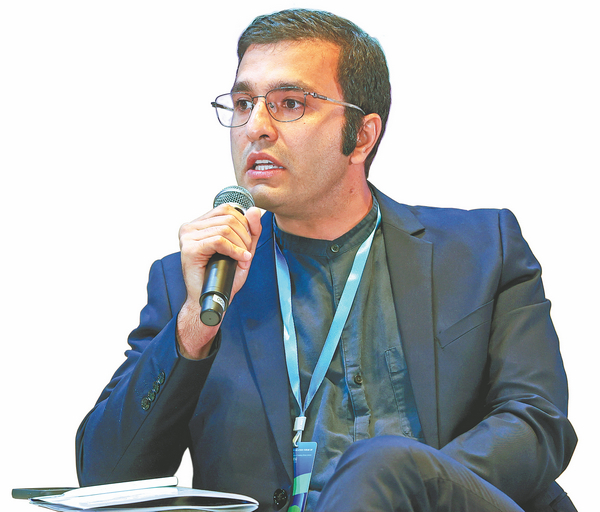
Ehsan Doostmohammadi is an associate researcher with the School of History and Culture at Southwest University in Chongqing and a recipient of the 16th Special Book Award of China, the highest national accolade for foreigners in publishing.
Fang Aiqing contributed to this story.
Contact the writer at fangaiqing@chinadaily.com.cn








