China Focus: China's technologies help BRI partners turn waste into wealth









BEIJING -- There are abundant biomass resources in Southeast Asia, mainly including waste from agriculture and forestry. China has been employing its technologies to help its Belt and Road Initiative (BRI) partners in turning waste into wealth.
Thailand has rich biomass resources, such as crop straw and wood residue. The existing biomass gasification projects have faced problems like poor fuel flexibility, low gasification efficiency, high tar content in gas, and secondary pollution from tar wastewater. It is urgent to enhance equipment reliability and operation and maintenance capabilities to ensure system stability and reduce investment and operating costs.
The Guangzhou Institute of Energy Conversion (GIEC) of the Chinese Academy of Sciences (CAS), in collaboration with universities and companies from Thailand and Pakistan, built an advanced and efficient 1 MWe multi-generation demonstration project based on biomass gasification in Nakhon Phanom in Thailand.
Liu Huacai, a researcher from GIEC, said that the energy demand in ASEAN countries has been rising dramatically due to economic development, rapid urbanization, and population growth, and promoting modern biomass energy technology there will contribute to building a sustainable energy supply system, protecting environment, and boosting rural economic development.
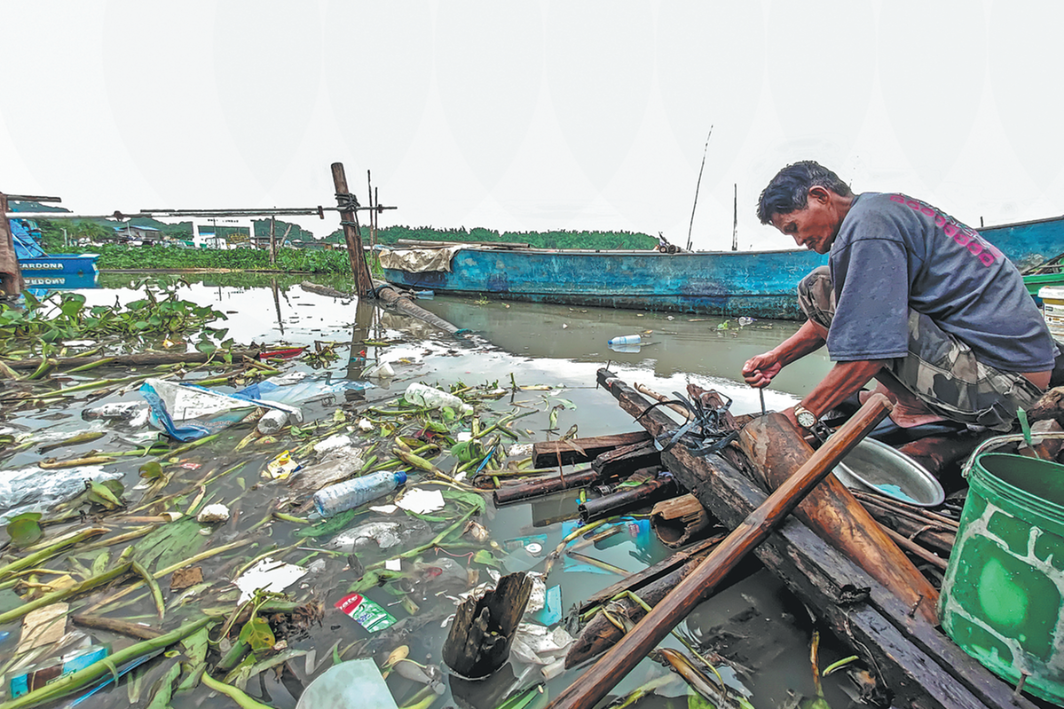
Malaysia and Indonesia are two major palm oil suppliers whose production has accounted for more than 80 percent of the global total. However, since the palm residues cannot be effectively used, they have been discarded and burned, polluting the environment.
The Institute of Process Engineering (IPE) of CAS has been working with the Malaysia Innovation Hub (MIH) in the development of bio-based plastics with palm fiber and other biomass as primary raw materials.
The IPE developed new functionalized ionic liquid modifiers to treat palm residues and built a 10,000-tonne bio-based material demonstration project in Wuqiao County, north China's Hebei Province, where qualified bio-based material packaging products have been produced.
Xin Jiayu, a researcher from IPE, said that the technology will alleviate the environmental and hygiene challenges posed by the inappropriate disposal of palm residues.
According to Vincent Wong Wai Sang, president of MIH, the National Farmers Organization of Malaysia and the United Arab Emirates will jointly introduce technology and invest in a 30,000-tonne bio-plastics production line in Malaysia, eyeing the Middle East and European markets with environmentally friendly products as an alternative to traditional fossil-based plastics.
In addition, the Institute of Urban Environment (IUE) of CAS has been cooperating with Malaysia and Indonesia to build two demonstration projects in Malaysia in 2024 that are capable of processing 10 to 20 tonnes of biomass waste on a daily basis to produce carbon-based materials.
The project is supported by the ANSO, an international scientific organization founded in 2018 by the CAS and 36 other international science and education institutions around the world.
Wang Yin, a professor of IUE, said that biomass-derived products include biochar and activated carbon materials that could be used in the purification of local drinking water, domestic sewage, and air and carbon-based fertilizers for soil amendment.
The cooperation project is expected to generate economic benefits of more than 10 million yuan (about 1.39 million U.S. dollars), provide 300-plus jobs, and train more than 20 engineers and technicians.
The cooperation has laid a solid foundation for future exchanges between China and its BRI partners, and relevant technologies and experience will be extended to countries such as the Philippines, Brunei, and Thailand to improve local people's well-being and mitigate climate change, said Wang.