


A route from history to the future









Hiroko Matsukawa, a 74-year-old woman living in the city of Akishima, visited the Xinjiang Uygur autonomous region 10 years ago. She went to see the exhibition on Oct 3 and was amazed.
"European culture spread to Asia through the Silk Road and then made its way to Japan. I believe the reason Japanese culture is what it is today is that, in the past, China pioneered the Silk Road, which led to the transmission and continuity of culture," Matsukawa says.
Tomoko Fudeyasu, a resident of Yamanashi prefecture, says she experienced the changing colors of different eras in China after viewing the exhibition.
"I was particularly impressed by the use of green in the exhibits. Furthermore, after seeing sculptures and other items on display, I felt the depth of the distinct cultures of each era. This exhibition has once again reminded me of the importance of communication between people and the significance of cultural heritage," Fudeyasu says.
Artifacts are evidence of civilization and it is important to let them speak, let them recount the history of the Silk Road, and allow the audience to grasp the spirit of the Silk Road through them, says Chen of the Kouzan Fine-arts Company.
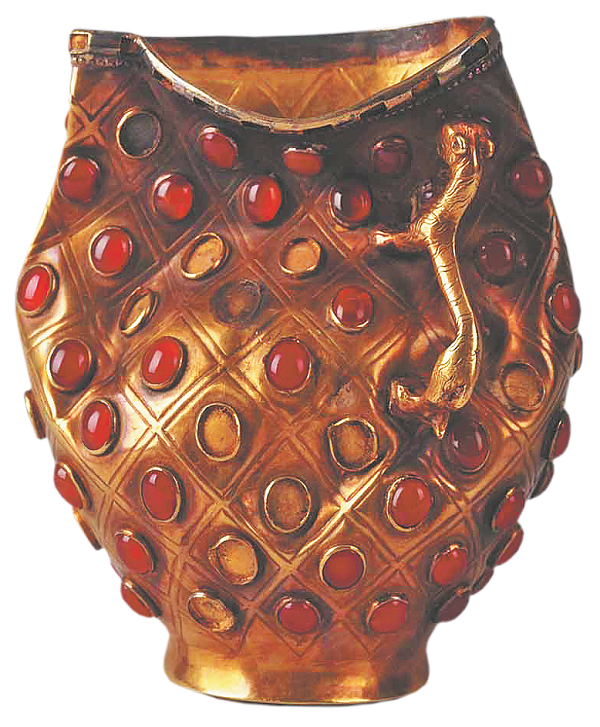
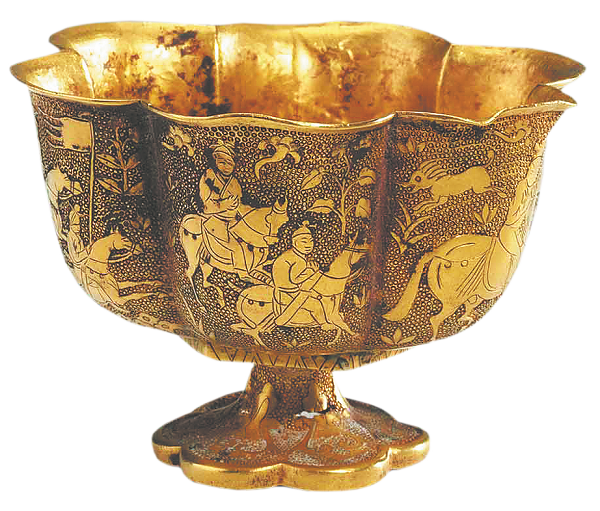
These artifacts not only showcase the way of life along the Silk Road, but also reveal their cultural essence to the audience. For example, there is a gold cup, unearthed in Xinjiang, that has the shape of a Western goblet, but the decorative elements on the cup are entirely Chinese, reflecting the lifestyle of Chinese nomads and featuring Tang Dynasty (618-907) patterns.
"From this cup, we can see the importance of a fusion of multiple civilizations," says Chen.
The Tokyo Fuji Art Museum has previously collaborated with Chinese partners to host exhibitions with themes like "the Three Kingdoms" and "the Palace Museum", which attracted 1.01 million and 1.07 million visitors respectively. It is estimated that the ongoing exhibition will receive 800,000 to 1 million visitors.
The exhibition will be held at the Tokyo Fuji Art Museum until Dec 10 and is planned to tour other venues from January 2024 to February 2025, including the Fukuoka Asian Art Museum, the Tohoku History Museum, the Ehime Museum of Art, the Okayama Prefectural Museum of Art, and the Museum of Kyoto.
"Every time we host exhibitions related to traditional Chinese culture in Japan, they receive wide recognition. The Japanese audience deeply understands that hundreds or thousands of years ago, Japan and China had such a relationship, and the source of Japanese culture can actually be found in China. From the bottom of their hearts, they have an appreciation for China, which strengthens their feelings toward the country," Chen says.
Japan has been doing research on the Silk Road for a long time. Soka University has a Silk Road research center that has conducted extensive research and investigations related to the Silk Road. Many other universities in Japan also have Silk Road research institutes. Some specialize in excavating ancient relics and making new discoveries, while others excel in analyzing silk or studying existing artifacts, such as Buddhist statues, says Gokita of the Tokyo Fuji Art Museum.
In the 1980s, NHK, a Japanese public broadcaster, aired a television program about the Silk Road, which sparked interest among nonprofessionals in Japan. This created a wave of enthusiasm nationwide and brought Japanese people closer to the Silk Road, Gokita says.
"Some of the emerging Silk Road researchers at that time, through writing books and papers, elevated the study of the Silk Road in Japan to new heights. However, many of these researchers are now elderly, and it appears that the Silk Road research in Japan is in a period of transition from the old to the new generation," he says.
Wang Kaihao contributed to this story.