Moment of truth










At COP28, China, India and the UAE should set their differences aside to tackle climate change and the elephant in the room — finances to honor the Paris deal
"It is not just climate change, nor climate crisis. It is simply climate collapse." This is how one of my colleagues at the Intergovernmental Panel on Climate Change described the year 2023. Last September was the hottest month ever and 2023 is firmly set to be the warmest year on record in human history as per the World Meteorological Organization's release on Oct 5.
With two months to go, the planet is already showing signs that it is witnessing a most calamitous year, not only because of conflicts among countries but also the war against our common enemy: climate change. The frequency and intensity of the extreme climate events along with human and economic costs keeps rising every year. A United Nations report says that over the past 50 years, climate related events have claimed 2 million lives and cost nearly $3.64 trillion in losses. The number of events with each causing $1 billion in losses is also on the rise.
From California to Algeria to Australia, Bulgaria, Brazil, Croatia, Yunnan province in China and Hawaii, wildfires continue to rage, aggravated by temperatures. The El Nino factor that should have joined climate change much later this year, as per weather scientists, has entered much earlier and may stay longer. Flash floods and glacial lake bursts in Asia, droughts in Africa and hurricanes in most parts of the world including in India and China have set the stage for urgent action-oriented negotiations at the 28th Conference of the Parties to the United Nations Framework Convention on Climate Change (COP28).
However, these negotiations are likely to end in a deadlock because of an elephant waiting to enter the room — carrying with it the issue of financing for developing countries as was agreed upon in the Paris Climate Agreement in 2015. Developed countries are now devising a number of tricks to wriggle out of these promises and shoo away this elephant.
However, key leaders of the Global South, such as Brazil, India and China, along with the United Arab Emirates, which holds the presidency for COP28, have an opportunity to set the planet on the right track.
Climate finance of $100 billion annually from developed countries is simply not forthcoming, and there are new obligations for the loss and damage as had emerged at COP27 in Sharm el-Sheikh, Egypt, last November, as well as adaptation funds. At the World Economic Forum in Davos in 2023, a proposal was made to impose a tax (also called carbon tax) on wealthy companies in developed countries that make windfall profits to finance developing countries' transition as well as emissions reduction in developed countries.
In the past three decades, the backlog of pay promised by rich countries for damages to the climate and for poor countries' transition to a fossil-fuel-free economy has risen to more than $1 trillion.
Recently, in June, French President Emmanuel Macron convened the bold imitative summit for a New Global Financing Pact in Paris. It called for building a more responsive and inclusive global financial architecture for the transition. Nearly 40 countries and all global financial institutes, including the World Bank and the International Monetary Fund, actively participated in the meetings. There was agreement that the obsolete, dysfunctional and unfair global financial system needs reform. Surely, climate change is not going to wait for the time-consuming reforms.
At the summit, UAE Minister of State Sultan bin Ahmed Al Jaber, who is also the COP28 president-designate, said: "We need to shift the narrative that views climate finance as a burden and recognizes it as an economic opportunity." This is potentially an inspiring and powerful statement that may set the climate negotiations in Dubai in perspective.
First, it is an opportunity for developed countries to put an end to the century-old subsidy for production and consumption of fossil fuels, such as coal, oil and natural gas. According to the United Nations Development Programme, the world spends an astounding $423 billion annually to subsidize fossil fuels — oil, electricity that is generated by the burning of other fossil fuels, gas and coal — for consumers. This is four times the amount being called for to help poor countries tackle the climate crisis. Half of these subsidies are paid by developed countries. When indirect costs, including costs to the environment — health costs due to pollution by burning fossil fuels — are factored into these subsidies, the figure rises to almost $6 trillion annually, according to data published recently by the IMF. The backlog of $1 trillion promised by developed countries to developing countries for climate finance looks smaller and within the reach of developed countries even after considering their present economic parameters. This is exactly that opportunity.
Worst, these subsidies, paid for by taxpayers, end up deepening inequality and impeding action on climate change, says the UNDP.
Continuing subsidies on fossil fuels not only makes a mockery of the global efforts to get rid of fossil fuels but also derides the fact that the world continues to spend billions of dollars on fossil fuel subsidies, while hundreds of millions of people live in poverty and the climate crisis accelerates.
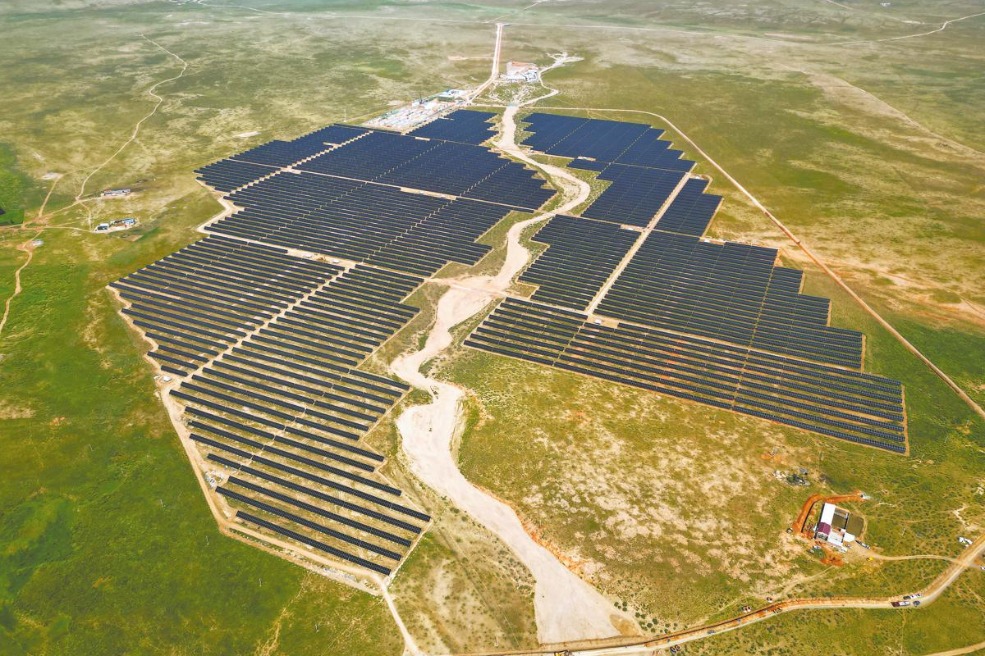
Second, climate finance for investing in clean energy is yet another opportunity to build the sustainable world with sustainable market mechanism because the prices of renewable energy such as solar energy are falling rapidly. There is a need to demonstrate this through case studies like of Masdar city in the UAE, Modhera village in India and Solar Valley in Dezhou in China's Shandong province at the COP28.
Third, removal of subsidies has the power to speed up implementation of other sustainable development goals such as reducing inequality (SDG 10), ensuring good health and wellbeing (SDG 3) apart from SDG 7 (ensuring access to affordable and clean energy) and SDG 13 (taking urgent action to combat climate action).
Fourth, phasing out subsidies and using the revenue gained for better targeted social spending, reduction in inefficient taxes, and productive investments can promote sustainable and equitable outcomes.
India, China and the UAE have an opportunity to join hands to demonstrate their hands-on dedication to renewable energy and emphasize that while developing countries cannot be asked to plug out from fossil fuels, developed countries can end the fossil fuel subsidy and finance the developing countries' transition to clean energy and net-zero emissions. China, India and the UAE must take COP28 as a moment of truth. They should keep their own geo-political differences aside and show the practical way to deal with their common enemy.
The author is former head of the Paris-based Ozon Action Programme of the United Nations Environment Programme, coordinating lead author of IPCC 2007 that won the Nobel Peace Prize and the founder director of Green TERRE Foundation. The author contributed this article to China Watch, a think tank powered by China Daily.The views do not necessarily reflect those of China Daily.
Contact the editor at editor@chinawatch.cn.