Mentality, knowledge and process
More support for capacity building is needed at the climate meeting in Dubai









More support for capacity building is needed at the climate meeting in Dubai
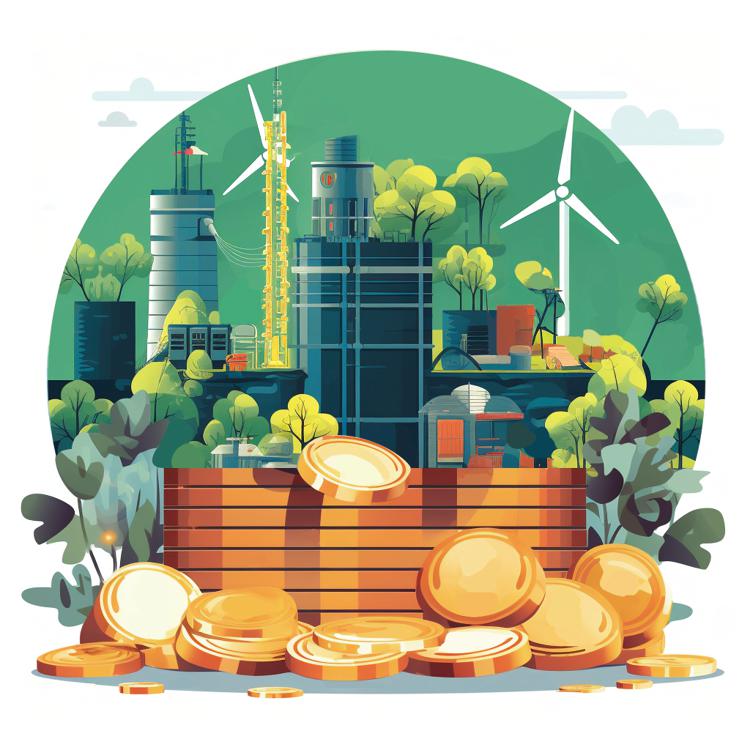
The 28th session of the Conference of the Parties to the United Nations Framework Convention on Climate Change (COP28), which commenced on Nov 30 in Dubai, United Arab Emirates, convened amid a concurrence of geopolitical and socioeconomic complexities. The COP28 presidency has rightly emphasized a few priorities to deliver ambitious, yet pragmatic climate actions, such as a further push for a just energy transition, a call for transformative climate finance, as well as the need for synergistic climate solutions that take care of people and the planet.
These are all crucial topics to be addressed to help decarbonize and build resilient economies. However, the conference should also focus more discussions on the means of implementation, particularly capacity building. After all, it will be challenging to take the right actions without the appropriate mindset and skillsets.
This being said, the next big question is what kinds of capacity should be cultivated to make climate actions happen in an effective way. As outlined in the Paris Agreement Article 11, "Capacity-building under this Agreement should enhance the capacity and ability of developing country Parties … to implement adaptation and mitigation actions, and should facilitate technology development, dissemination and deployment, access to climate finance, relevant aspects of education, training and public awareness, and the transparent, timely and accurate communication of information".
To this end, a series of steps could be envisaged to help build the capacity needed to realize the Paris Agreement goals. This pertains to a variety of stakeholders, including individuals, states, companies and financial institutions, each having respective roles to play in building the capacity of their own and others.
First, efforts could be devoted to helping better understand climate risks and their impacts. It is not that the majority do not accept that the climate is changing; devastating floods and wildfires have made denial preposterous. It is the uncertainty of such events that has rendered it difficult to grapple with; the weather extremes 20 years from now are hard to predict, as are their potential damages. This ambiguity makes it even harder to understand the cost of inaction today, especially in the wake of competing priorities: people who live at the bottom of the economic pyramid globally aspire to improve their living standards and they are entitled to do so in the most affordable way, which, however, might not be the most climate-friendly way.
In the gradual buildup of public knowledge, it is therefore imperative to make available the years of accumulated scientific evidence of climate change that shows the probabilities of climate disasters and their outcomes with increasing credibility. This would in part help to resolve the speculating on the future. More important, it needs to be clearly communicated how growth, prosperity and well-being are premised on proper actions to cut carbon emissions and build resilience. For instance, livelihoods would be severely endangered for many natural resource dependent communities if their forests vanished. Ultimately, to improve the appeal of climate actions, personal stakes must be generated through direct linkages between a response and expected benefits.
Second, to bring climate, and more broadly, sustainable finance to scale, sustainable finance systems have to be put in place, particularly in emerging markets and developing countries (EMDCs).This entails the promotion of transition finance, as a specific response to the call of the G20, which has endorsed the G20 Technical Assistance Action Plan (TAAP) under the Indian presidency this year. Moreover, the TAAP calls for the provision of bespoke capacity building services, with respect for country development contexts and local sustainable finance ecosystem needs.
Such emphasis is pivotal in light of the increasingly divergent views prevailing among developing and developed countries as to what constitutes credible Parisaligned low-emission development pathways and the costs countries should bear to pay for such transitions. In this context, a constant dialogue — as an integral part of the capacity building process — on these topics may help cultivate a sense of solidarity among both sides, which could serve as the entry point for collaboration at a later stage.
As outlined in the Paris Agreement, developed countries need to take the lead in supporting the capacity building actions of developing countries. This makes sense, given their existing wealth of capital, expertise and practices. Nevertheless, while being the recipients, EMDCs could play a pioneering role in providing capacity building services in some facets.
The experience of China's green finance development, for instance, may serve as a useful reference for others. A combined top-down and bottom-up approach has spurred a fundamental rethinking of the financial markets in China, with early pilot green finance zones making explorations that provided the momentum for regulation.
In fact, green finance emerged in China originally due in part to the fast national awakening of air pollution in 2013. While it might be hard to replicate the exact means how public awareness was raised on environmental issues back then, the ways in which science, including that of climate change, is interpreted, presented and spread through social media nowadays, have helped accumulate the momentum to trigger eventual policy responses.
If COP28 could leverage more support for capacity building to ensure the right mentality, knowledge and process are in place, the meeting will have made meaningful progress. It is also time to start navigating opportunities for international cooperation in capacity building, with EMDCs taking an equal weight in leading the efforts.
The author is a climate specialist at the New Development Bank. The views of the article are entirely those of the author's, and do not represent those of the New Development Bank. The author contributed this article to China Watch, a think tank powered by China Daily. The views do not necessarily reflect those of China Daily.
Contact the editor at editor@chinawatch.cn