



NEVs leading the way in global chase for carbon neutrality









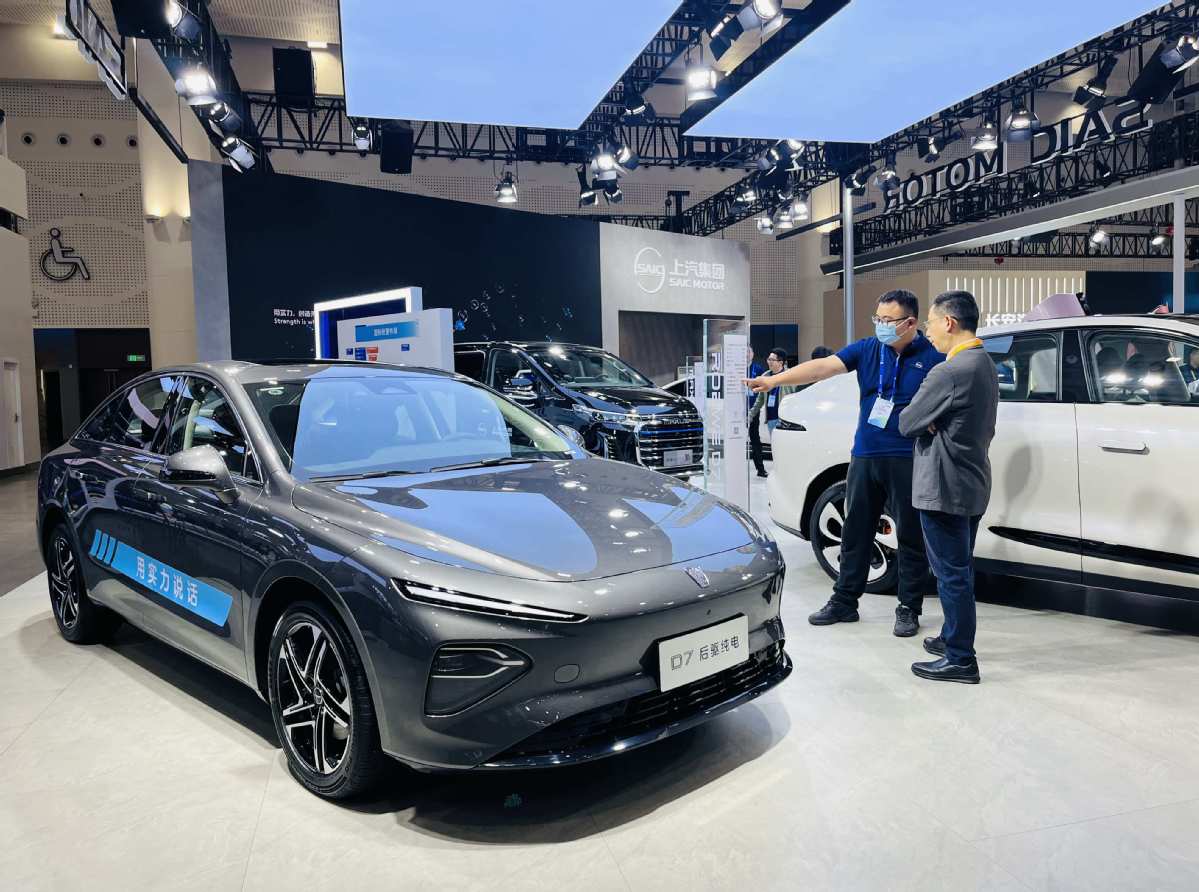
Haikou conference highlights pressing demand for coordinated development
In pursuit of carbon neutrality goals, the global automotive industry is accelerating efforts to make new energy vehicles the focal point of a new round of industrial competition.
In the first three quarters of 2023, global NEV sales soared to 9.75 million units, a year-on-year increase of 38.5 percent, accounting for more than 15 percent of total vehicle sales. China maintained its rapid growth in the NEV sector over the same period with 6.28 million units sold, up 37.5 percent year-on-year, which accounted for 29.8 percent of its total vehicle sales. Cumulative global sales of NEVs now exceed 37.7 million units, with China contributing over 22.5 million.
Addressing the 2023 World New Energy Vehicle Congress, held from Thursday to Saturday in Haikou, South China's Hainan province, Wan Gang, president of the China Association for Science and Technology, said the rapidly growing global NEV market necessitates coordinated development of electric, plug-in hybrid and fuel cell vehicles, with a focus on key technologies like power batteries, chassis designs and autonomous driving systems.
At the congress, the Green and Low-carbon Development Roadmap for China Automotive Industry 1.0 was released, providing guidance to achieve the country's dual carbon goals of peaking emissions before 2030 and achieving carbon neutrality before 2060.
Li Jun, honorary chairman of the China Society of Automotive Engineers, said around 150 countries, including China, have set carbon neutrality goals, with many aiming for electrification and zero carbon emissions in the auto sector.
The roadmap shows vehicles accounted for 8 percent of China's total carbon emissions in 2022, and about 80 percent of the transportation sector as a whole. Notably, commercial vehicles, representing only about 11 percent of the total number, contributed around 55 percent of those emissions.
China has forecast a growth potential of 200 million additional vehicles on the roads by 2055, boosting the nation's total to 500 million. Projected accumulated domestic car sales are expected to peak at around 35 to 40 million units by 2040.
Li said future development of environmentally friendly cars should focus on two key areas: transitioning traditional internal combustion engine systems to low-carbon or zero-carbon options, particularly for commercial vehicles, and expanding the market for NEVs while improving the energy efficiency of electric vehicles to drive high-quality electrification.
Zu Sijie, vice-president and chief engineer of SAIC Motor, said China's rapid rise to prominence in the electric and intelligent vehicle sector has positioned the country to become the world's leading automotive exporter.
By leveraging its early-mover advantage, from January to October, China's cumulative auto exports reached 3.9 million units. Supported by globally popular models like the MG4, SAIC Motor expects its overseas sales to eclipse 1.2 million units this year.
"To better serve local customers, we have initiated the site selection process for a manufacturing base in Europe, with the goal of achieving local production, sales and services," Zu said.
With the rapid development of electric mobility, demand for batteries is expected to grow exponentially. Volkswagen anticipates a battery demand exceeding 450 gigawatt-hours by 2030, with over half of that demand expected to be fulfilled through in-house production, said Ralf Brandstaetter, chairman and CEO of Volkswagen Group China.
In response, the German auto giant set up battery company PowerCo and acquired a 26 percent stake in the Chinese battery maker Gotion in 2020.
Brandstaetter said the Volkswagen China Technology Company, with an investment of 1 billion euros ($1.08 billion), is the carmaker's largest development center outside Germany.
With more agreements reached with local partners, Volkswagen is accelerating its development pace to match "China speed", aimed at reducing the development time for new products down to 30-36 months.
Meanwhile, South Korean automaker Hyundai has also increased its transformation efforts, with plans to invest 63 trillion won ($65 billion) in electrification, smart and advanced technologies over the next decade.
From 2025 to 2030, Hyundai plans to introduce 13 models developed on a new platform — four from Hyundai, four from Kia and five from Genesis. The collective sales target for electric vehicles from the three brands is anticipated to reach 3.6 million units by 2030.
As the first automaker to mass-produce hydrogen fuel cell vehicles, Hyundai has achieved over 36,000 global sales of its NEXO SUV, making it the world's top-selling hydrogen fuel cell vehicle. The company's hydrogen fuel cell heavy-duty trucks, exported to Europe and North America, have collectively covered more than 7 million kilometers in operational mileage.
"The NEXO is now imported and sold, holding new energy vehicle licenses in cities like Beijing and Guangzhou," said Piao Guozhe, vice-president of Hyundai Motor Group (China).
"We've also gained qualification for producing hydrogen fuel cell commercial vehicles and introduced dedicated models for the Chinese market. In June, Hyundai's overseas hydrogen fuel cell system base in Guangzhou commenced production and sales."



















