Anti-Chinese laws protested in Florida









Two state measures put restrictions on land ownership, location, student researchers
They are SB 264 and SB 846. They have different numbers, but their common thread is that they are anti-Chinese legislation in Florida.
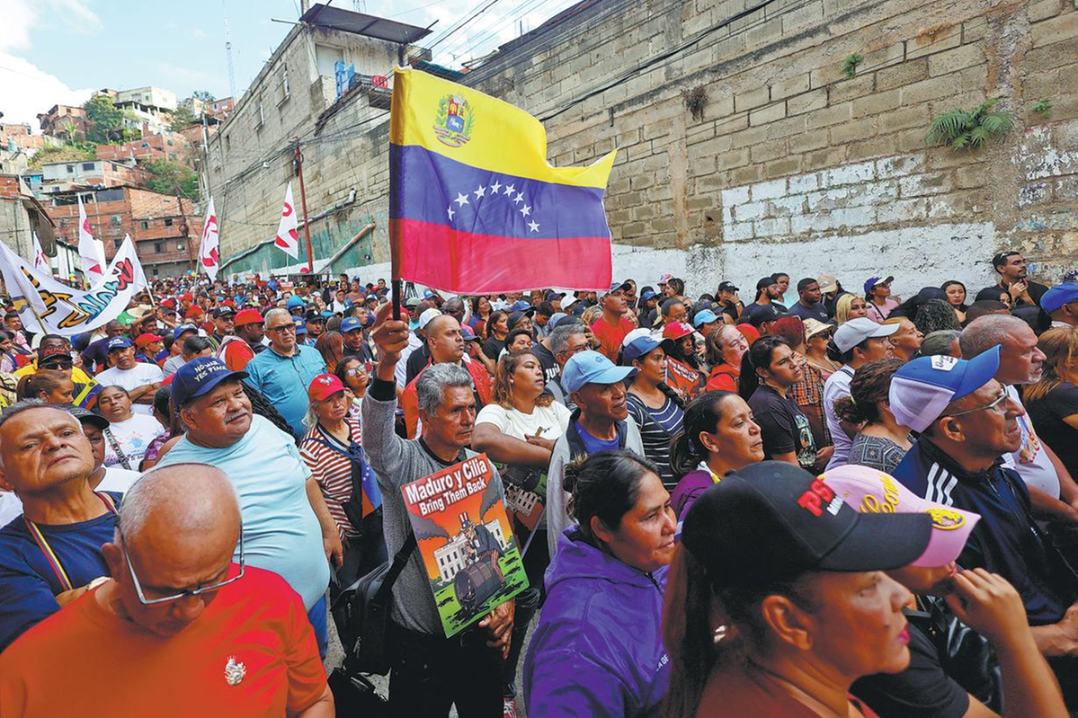
US Representative Judy Chu from California, Texas state Representative Gene Wu and 2020 presidential candidate Andrew Young from New York joined hundreds of protesters in pouring rain in Miami on Saturday to protest the laws.
They were joined by leaders from some major civil rights groups across racial lines — the League of United Latin American Citizens, the NAACP, the American Civil Liberties Union, United Chinese Americans, and a few others.
SB 264, often referred to as "Florida's New Alien Land Law" took effect on July 1 and prohibits entities and citizens of seven "countries of concern" — China, Cuba, Iran, North Korea, Russia, Syria and Venezuela — from acquiring agricultural land.
In addition, Chinese citizens alone are singled out by further restrictions. Those with nontourist visas are allowed to acquire only one single property smaller than 2 acres that is at least 5 miles from military installations or 10 miles from critical infrastructure. If violated, both the seller and buyer could face legal charges.
SB 846, which also took effect July 1, prohibits Florida state's public colleges and universities from taking money from or partnering with entities in the same seven countries of concern.
It also prohibits an institution from offering anyone living in one of those countries a contract to do research. The law aims to block the governments of those countries from "influencing" state colleges, universities and their students and staff.
Jiangeng Xue, professor of material science and engineering at the University of Florida (UF) told China Daily that high-quality graduate students working as research assistants are vital in executing multiple projects in a laboratory.
"I was looking through the graduation ceremony and it lists all the graduates in the year, and I was counting the number of Chinese students who got PhDs every semester. It's about 15 percent of all US graduating PhDs in the entire semester. That's not a small number," Xue said.
"If we don't have the ability to recruit Chinese students directly out of China, then we will have to go to somewhat lower-quality students. And that will limit our ability to best execute our research projects.''
More than 280 faculty members at UF, which has the state's largest research portfolio, have signed a petition urging UF to clear up the confusion and to actively support a call for an open-door policy on hiring.
"We urgently request a timely decision that allows us to recruit top international graduate students with an assistantship, irrespective of their nationality," declares the petition, sent on Dec 6 to UF President Ben Sasse and senior UF leadership. "Failure to act swiftly may result in the loss of exceptional students to other universities, and the damage will be irreversible."
The law classes as a "foreign researcher" not just people currently living in another country, but also anyone with one year or more of training or employment outside the United States — even if they hold US citizenship. And those turned away because of something in their background seen as suspect must be reported to the FBI or another law enforcement agency designated by the governor.
The Florida law allows exceptions only when the Board of Governors, which oversees higher education in the state, decides that the interaction isn't "detrimental to the safety or security of the US or its residents" through a vetting process on a case-by-case basis. It would be the last step in a lengthy vetting process for anyone seeking a research position as a graduate assistant or postdoc.
Xue said vetting is "not practical" because the submission times required by the Board of Governors make it impossible to meet the general academic application deadlines: either the decisions won't be made in time, or students will be informed too late.
The uncertainty created by the law has already put a freeze on making offers to research students in China for the fall of 2024, which normally happens in December and early January, according to science.org, one of the journals published by the American Association for the Advancement of Science (AAAS), the world's oldest and largest general science organization.
"We have missed that window," said Zhong-Ren Peng, a UF professor of urban planning who leads a center for adaptation planning and design. "And the best students cannot wait. Instead, they will go somewhere else," he told science.org.
Xue said the new law is "political". "There have already been laws discriminating against Chinese," said Xue. "It just amplifies it."
Many others agree.
"You'd go to jail if you sell a house to Chinese. Chinese are not allowed to come over to schools. Once those ideas are deeply planted in people's mind, the average Chinese Americans will be discriminated (against)," Steven Pei, an engineering professor at the University of Houston, said in a group chat when encouraging people to go to the rally. "The general population will view the Chinese as dangerous members, and Chinese in all walks of lives will be impacted."
The rippling impact of the laws have already been felt by some. Liu, a Chinese in Houston, told China Daily that when he was given a ride home from the airport, the driver said to him that "Chinese are spies".
"When he saw that I got mad at what he said, he quickly explained that it's just a joke. I told him: 'This is no joking matter.'"
Ai Heping and Mingmei Li in New York contributed to this story.