



Low-carbon progress not equal to slow growth









China saw notable improvement in its ecological environment last year, making admirable progress in its transition to a low-carbon, green economy. And despite the significant increase in economic activity in the post-COVID-19 pandemic period, China remains committed to maintaining the positive trend of improved air quality.
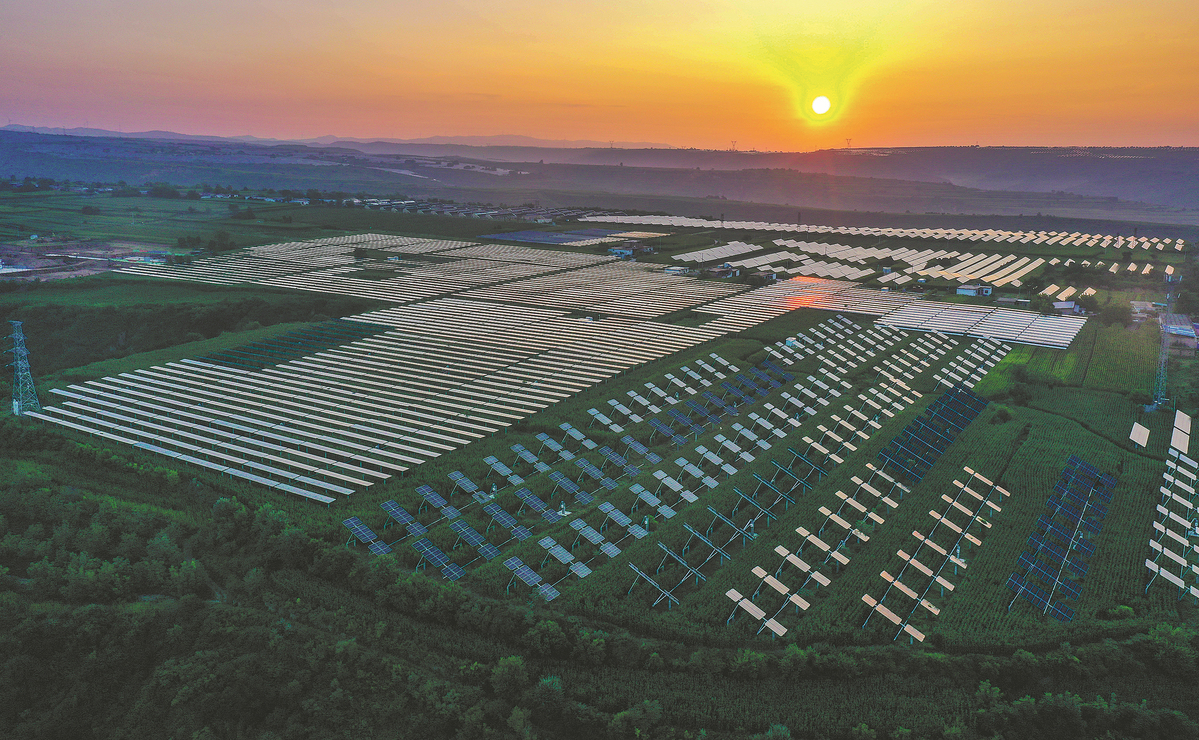
That is because China has intensified efforts to combat air pollution, making the fastest improvement in air quality in the world after having addressed coal-related pollution. Its energy structure, too, is fast improving thanks to the fast-paced development of renewable and new energy sources. In fact, from January to September 2023, China added 172 million kilowatts of renewable energy capacity, up 93 percent year-on-year, making renewable energy an important source of electricity supply.
New green and low-carbon industries and models are thriving in the country, exemplified by the rapid development of new industries — solar photo-voltaic panels, lithium batteries and electric vehicles. Also, while the hydrogen industry is developing at a faster pace, the new energy storage industry has been making swift progress.
Besides, ecosystem protection and restoration efforts have been advancing well, with more than 600 billion yuan ($83.8 billion) invested in over 10,000 projects in the eco-environmental sector from January to August 2023. And initial successes have been achieved in the construction of the first batch of five new national parks, with an additional 49 national park candidates selected. The parks will cover about 1.1 million square kilometers — making them cumulatively the largest protected area in the world.
But despite China's intensified efforts to achieve the green, low-carbon development goals, some new challenges have emerged in recent years. For instance, some local governments now prioritize meeting the low-carbon assessment targets without assessing the economic rationality of their measures. This has led to phenomena such as "campaign-style carbon reduction", "assault carbon reduction", and a one-size-fits-all approach.
Other challenges include the ad hoc setting of low-carbon environmental standards by some local governments during or after investments in or launch of enterprises, creating confusion in the market. And disorderly development in some areas of the low-carbon industry, exemplified by the new energy vehicle sector, has created problems like oversupply and potential financial risks, as well as underdeveloped carbon trading market and ecosystem degradation.
To solve these problems and realize green and low-carbon development, China has laid out a detailed plan to peak carbon dioxide emissions before 2030 and achieve carbon neutrality before 2060 that mainly focuses on five aspects — building a green, low-carbon and circular development economic system; making energy utilization more efficient; increasing the proportion of non-fossil energy consumption; reducing CO2 emissions; and increasing the carbon sink capacity of ecosystems.
The central authorities also plan to shift national dual control from "single control" to "system control", notably by easing restrictions on clean energy consumption. This will create more ways of reducing CO2 emissions, achieving energy transition and promoting economic development, providing institutional support for peaking carbon emissions and achieving carbon neutrality.
As the world enters the era of low-carbon, green economy, countries across the world are taking the needed steps to expedite energy transition and green industries' development. Accordingly, the competition between countries in green industries is intensifying.
Therefore, to achieve the twin carbon targets on time, and promote overall green socioeconomic development, China needs to make greater efforts, especially in areas such as energy structure transformation, renewable energy integration capacity, and photovoltaic lithium battery production, to achieve the targets.
China is a major carbon emitter, but it has played an important role in global carbon emission reduction. It is the biggest producer of renewable energy and an indispensable force in establishing an effective international carbon market. As a responsible major country committed to helping build a community with a shared future for mankind, China has been working tirelessly to achieve sustainable development across the economic, social and environmental sectors, and following the path of resource-efficient, eco-friendly, green development, to realize the twin carbon goals.
At the industrial development level, China adheres to the green development philosophy in securing all the chains of the industrial, agricultural and service sectors, and is helping build a production system that will promote low-carbon and green circular development, with the focus on creating a market-oriented green technology innovation system. The goal is to enhance the greenness of traditional industries, realize the benign transformation of ecological values and facilitate high-quality development.
China is also committed to promoting the establishment of carbon pricing and carbon reduction mechanisms globally, contributing Chinese solutions to climate change problems.
In conclusion, China's journey toward green, low-carbon development involves overcoming challenges and making greater efforts to build a sustainable future. On Thursday, the central authorities unveiled a guideline for promoting the Beautiful China Initiative, a top-level development blueprint detailing specific targets for a wide range of sectors for the nation's green and high-quality development. Indeed, China is at the forefront of global efforts to combat climate change and build a better, greener future.
The author is a distinguished professor at Tongji University, and director of the Center for Chinese Economic Studies of the China Institute for Innovation and Development Strategy.
The views don't necessarily reflect those of China Daily.





