Cutting cross-Strait trade ties bad for island's residents









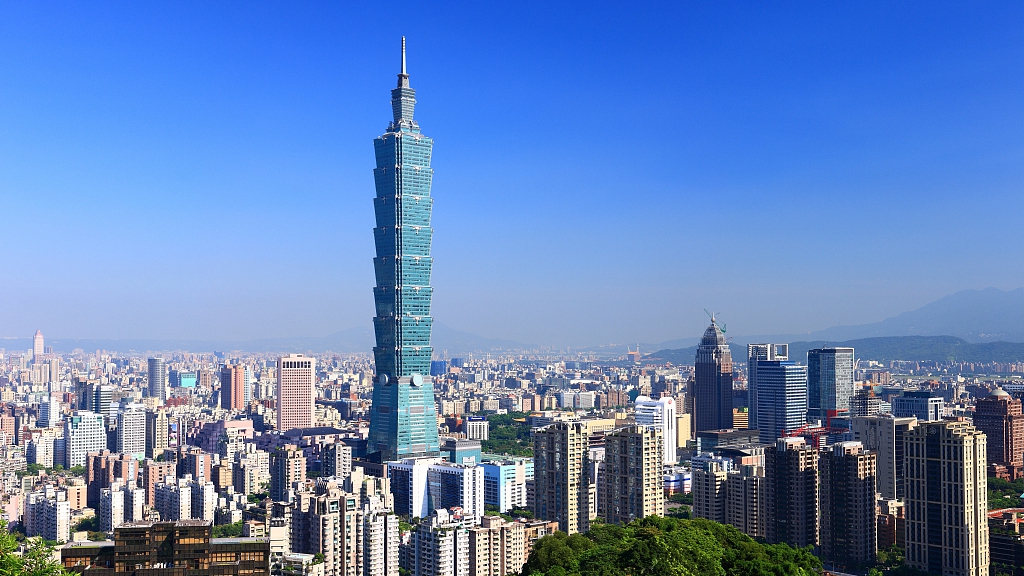
Lai Ching-te won the recent Taiwan leadership election by a narrow margin, securing another term for the Democratic Progressive Party. But regardless of the shifts in the Taiwan island's political landscape, it is essential to remember the irrefutable fact that Taiwan is an integral part of China.
The Chinese mainland remains committed to maintaining peace across the Taiwan Strait and making efforts to improve cross-Strait ties, in line with the principles outlined by the 20th National Congress of the Communist Party of China and the overarching strategy for resolving the Taiwan question and realizing national reunification.
Given the intertwined domestic and international factors constraining cross-Strait economic cooperation, the mainland is poised to implement the top leader's vision of deepening cross-Strait integration and consolidating the foundation for peaceful national reunification. The goal of the vision is to overcome challenges to develop a new paradigm for cross-Strait economic integration.
First, it is imperative that the damage caused by the DPP's eight-year rule to cross-Strait economic cooperation be repaired. Since taking office in 2016, the DPP has used various tactics to undermine cross-Strait economic ties. On the political front, it introduced measures such as the "anti-infiltration act" and the "five amendments to the national security laws" to punish individuals who promoted cross-Strait exchanges. And the "new southbound policy" is aimed at decoupling the island from the mainland and severing the economic links between the two sides of the Strait.
Moreover, after former US president Donald Trump assumed office in 2017, the Tsai Ing-wen administration in Taiwan strengthened its "alliance" with Washington, violating World Trade Organization rules and breaching the terms of the Cross-Straits Economic Cooperation Framework Agreement.
In response, the mainland suspended tariff concessions on certain imports from Taiwan. If the DPP fails to take effective measures to correct its course, the mainland will be compelled to take further countermeasures such as suspending more tariff concessions. These steps are expected to improve the institutional environment for cross-Strait economic relations and steering cooperation in the right direction.
Second, cross-Strait economic development is driven by the people on both sides of the Strait. History shows that economic cooperation has served as a stabilizing force in cross-Strait relations. After more than 30 years of cross-Strait exchanges, the intrinsic dynamics and deep-seated foundations of cooperation have benefited both sides. But the Chinese island's actions undermine this relationship.
Data from Taiwan show the island had a total trade surplus of $80.5 billion in 2023, while its trade with the mainland reached the same figure. That means without trade with the mainland, Taiwan would not enjoy any trade surplus. Although exports to the mainland hit a new low in 2023, Taiwan's dependence on exports to the mainland was still as high as 35.2 percent of its total last year.
A study conducted by Taiwan's institutions shows the mainland, along with the Hong Kong Special Administrative Region, remains the largest destination for both exports and imports of the island. Since this interdependence is difficult to change, industries and businesses on both sides of the Strait should expand exchanges while the two sides of the Strait need to resolve cross-Strait issues through negotiations.
Despite the DPP's efforts to spread anti-mainland sentiments, an increasing number of Taiwan residents have come to realize that "Taiwan independence" is a daydream and the future of Taiwan lies in reunification with the motherland. Seeing the mainland enter a new stage of high-quality development with new, emerging industries, facilities and platforms, Taiwan compatriots and businesses aspire to seize the opportunities that they offer.
Third, creating a new framework for cross-Strait cooperation necessitates standardized practices. To facilitate cross-Strait economic exchanges and help Taiwan compatriots and businesses to benefit from the mainland's pursuit of high-quality development, efforts should be made to optimize the institutional framework for economic exchanges.
The mainland, to be sure, will continue to prevent the DPP from seeking "Taiwan independence" and violating established rules. The mainland will also seek dialogue based on the 1992 Consensus that there is only one China with relevant organizations and groups in Taiwan, in order to resolve economic and trade issues.
In other words, the mainland will build a demonstration zone for cross-Strait integrated development in Fujian province. Through a series of reforms, this zone will become the first home for Taiwan compatriots and businesses, providing services for learning, entrepreneurship, employment, social participation, judicial services and tourism. This initiative is aimed at creating a potent platform for personnel mobility, talent exchange and entrepreneurship, serving the interests of residents on both sides and setting new standards for cross-Strait economic integration.
As a saying goes, where there's a will, there's a way. By aligning with public sentiment, overcoming obstacles, promoting exchanges and standardizing cooperation, a new path for cross-Strait economic integration can be forged.

The views don't necessarily represent those of China Daily.
If you have a specific expertise, or would like to share your thought about our stories, then send us your writings at opinion@chinadaily.com.cn, and comment@chinadaily.com.cn.