Youth breathe new life into ancient art form









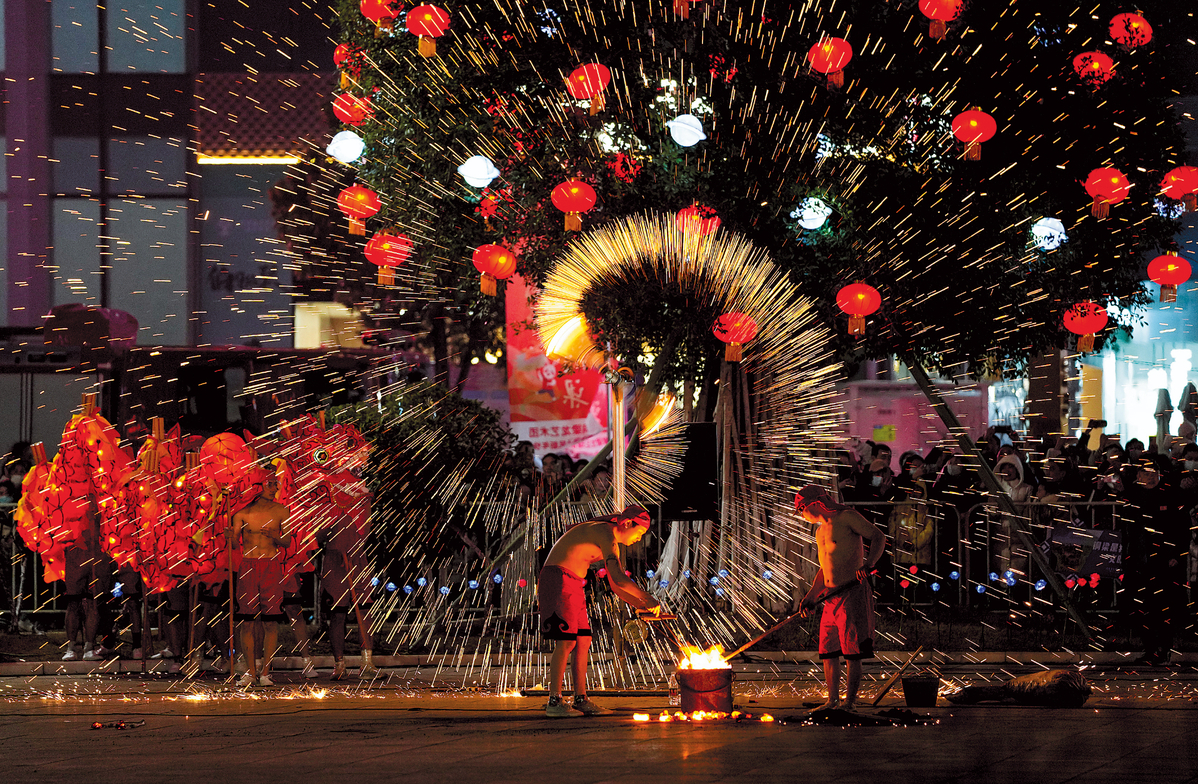
Tongliang's promotion of its proud dragon dance heritage paying off
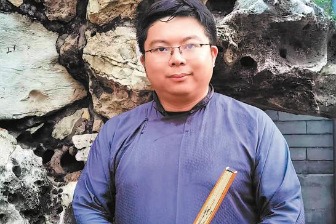
Cai Mingcan, a 47-year-old artist in Chongqing, Southwest China, who has been preserving and modernizing Tongliang dragon dance for 30 years, is glad to see it gaining popularity, especially among the young.
"As the heirs of the dragon, all Chinese love the creature, and we shoulder a responsibility to pass on the dragon culture," he said.
Tongliang, a district in Chongqing, claims to be the home of the country's best dragon dance performance, a nationally listed intangible cultural heritage.
One of the best practitioners in the area is the National Tongliang Dragon Dance Troupe, which was honored as such by the Chinese Dragon and Lion Dance Sports Association in 1999.
Cai, the only professional artist among a handful of municipal-level Tongliang dragon dance inheritors, became coach of the troupe in 2012.
In 2021, the national troupe was integrated into the Tongliang Dragon Art Troupe, which was established that year, and Cai became the art troupe's deputy director and coach.
The troupe of more than 50 performers — with an average age of only 21 — consists of the national team and three other teams. Eighteen members are women, and 85 percent of team members are local residents, Cai said.
The teams have performed in more than 30 countries and regions, including the United States, Britain, France, Australia, Turkiye, Japan and South Korea.
The Tongliang dragon dance has been showcased at such major events as China's National Day celebrations, the 2008 Beijing Olympics and the 2010 Shanghai World Expo. On New Year's Eve in 2017, it wowed audiences when it performed in New York City's Times Square in the US.
Cai said there are about 100 types of dragon dance in Tongliang. The troupe performs different types of dragon shows according to the 24 solar terms, including the bamboo dragon show in spring, the lotus dragon show in summer, the straw dragon show in autumn and the fire dragon show in winter.
Other common types include the folk dragon and competitive dragon shows.
Performances of the latter have won the troupe 78 gold medals in national dragon dance competitions since the 1980s, Cai said.
The Tongliang dragon dance dates back to the Sui (581-618) and Tang (618-907) dynasties, when people prayed for rain by worshipping the rain-bringing dragon kings, who in Chinese mythology lord over the seas and control the weather.
The ritual gradually evolved into a folk recreational activity during the Ming (1368-1644) and Qing (1644-1911) dynasties, typically during the Lantern Festival — one of the most important new year celebration events in ancient China.
"The dance has continued to thrive and even has profound meanings in the contemporary era," said Cai, adding that in Chinese culture, the mythical creature is associated with power, nobility, fertility, wisdom and auspiciousness.
"It also symbolizes an enterprising spirit, solidarity and bravery."
Inspired by a legend
Cai's enthusiasm and unremitting efforts to promote the art were sparked by a dragon-dance legend.
He was first introduced to the art in 1994, when he was among only three students of Tongliang's Pingtan Middle School invited to perform with the Tongliang Dragon Dance Troupe, the precursor to the national team, by Huang Tingyan.
Huang, born in Tongliang's Anju township in 1941, became a dragon dance choreographer in 1965. A renowned Sichuan opera performer, he started blending different art forms such as Sichuan opera, martial arts and other dragon dances, ultimately creating the Tongliang dragon dance in 1988.
Huang became one of the most talented dragon dance artists of his time and was honored as the national inheritor of the Tongliang dragon dance in 2008.
Under Huang's coaching, Cai's team, which consisted of three middle school students and members from a Sichuan opera troupe, won its first national dragon dance competition in May 1995.
With his passion for the art ignited, Cai used all his spare time training and honing his performance skills with an aim to be as good as professional dancers.
Cai remembered learning a dance move in which he imitated a dragon jumping on water. He had to hold the heavy dragon in position with his limbs and head as he moved. Continuous practice of the move led one of his legs to be covered in bruises and caused a bald spot on his head.
Cai's hard work paid off when he was appointed "second hand" of the national troupe.
There are several "hands" in a dragon dance troupe that are tasked with controlling key parts of the dragon and guiding its movements. Cai said the second hand — which stands behind the dancer in the lead position, known as the first hand — plays a crucial role in ensuring the dragon's head and body move in unison.
"The ultimate goal in a dragon dance is to achieve perfect harmony between human and dragon — even by imagining oneself as a dragon."
To imbue the art form with a modern vibe, Cai, with his superb artistry and profound insights in the form, has reinvigorated both Tongliang dragon dance and the art of dragon-making.
For example, he has infused street dance movements in the Dance of the Dragon, a dynamic competitive dragon dance show. Moreover, he has replaced the dragon's scales, formerly made of satin, yarn or mesh, with sequins.
Cai is now the deputy director of the Chinese Dragon and Lion Dance Sports Association and has served as a judge and coach at multiple international competitions.
Carrying the torch
These days, the ancient art continues to attract young performers
"I feel privileged to be able to pass on the intangible cultural heritage," said 25-year-old Li Jing, who was born and raised in Tongliang.
Like Cai, Li developed a keen interest in the art at a young age and was chosen to join the national troupe when she was in middle school.
She decided to join the troupe in 2020 after graduating from college and was the only woman among the 12 dancers.
Li is the troupe's "dragon ball hand", the person who holds a ball on a stick that the dragons follow as they move.
She contributes both strength and grace to her troupe's performances, and said she recognizes and appreciates the history behind the dragon dancing.
"The glory of the dragon dance is inseparable from our deeply rooted dragon culture and our dedicated successors," Li said.
Tongliang continues to pay homage to its heritage as the birthplace of the Chinese dragon dance.
The district has many dragon-themed streets and sites, including White Dragon and Golden Dragon avenues, Dragon Fly Road and White Dragon Square.
She said dragon dance artists are highly respected by residents. Taxi drivers even offer troupe members free rides.
Amateur teams are also active. Each year, dragon dance competitions are held at local primary and middle schools, and multiple dance troupes perform during festivals and holidays.
Several organizations dedicated to researching and preserving the dance form have also been established.
The local government has also attached great importance to the cultural heritage. Besides providing funding, special promotional efforts have been made, and a video of the director of the local cultural and tourism commission performing a dragon dance recently went viral online.
Cai's art troupe also uses Douyin, an online video-sharing platform, to promote the dance. He said as the dance has grown in popularity, the ribbon dragon dance — a new type focusing on fitness — has drawn massive attention on the platform and beyond.
Last year, the troupe, with support from the Ministry of Culture and Tourism, went on a tour in Bulgaria and performed ribbon dances.
"More than 20 ribbon dragons were snapped up by local residents after the performance," he said.
On Jan 29, 36 artists from the troupe staged a fire dragon dance show in Harbin, capital of Northeast China's Heilongjiang province. The performers use molten iron to create sparks that are supplemented by fire blasted from the dragon's mouth, creating a spectacular three-dimensional effect.
The iron is heated to 1,600 C in eight ovens arranged in a circle. Eighteen bare-chested men spray the liquid iron into the air, creating scatterings of flower-like flames. Fireworks fly from the bodies of two golden dragons held by 20 other shirtless men as the creatures fly up and down and back and forth through seas of fire.
"Many youngsters have shown interest in learning the dragon dance," said Cai, who has taught thousands of students at home and abroad.
"I hope there will be more international cultural exchanges for the Tongliang dragon dance in the future," he said.

- China ramping up Nipah virus surveillance
- Shanghai to host embodied intelligence expo in July
- Chongqing sets GDP growth target of over 5% for 2026
- Xinjiang strengthens economic, cultural ties with Hong Kong, Macao
- Former senior political adviser sentenced to 12 years for bribery
- Hubei's government becomes first in China to add 'emotional value' to work report