Global financial architecture needs reform










After the end of World War II, an international financial architecture was built with the aim of helping war-ravaged and low-income countries to recover and rebuild the global economies. At the center of this architecture were the World Bank and the International Monetary Fund.
The international financial architecture's aim is to ensure the stability and smooth functioning of the global monetary and financial system. The international financial architecture had certain structural deficiencies at the time of its conception, but with the passage of time the architecture has become increasingly plagued by inequities and inefficiency. It is dysfunctional in the sense that it serves the interests of only a small group of Western countries and ignores, even neglects, the real needs of the world, especially of the developing countries.
For example, the existing global financial architecture allows the United States and the European Union to weaponize their currencies USD or Euro which have the global currency status, to plunder the wealth of other countries by tidal movements, a fresh case was in 1998 in Asian financial turmoil, to dominate international payment system to punish countries with different opinions, worse, even fund wars in other regions. It also allows the major Western economies to use their values and policies to influence the world order in the name of "promoting democracy" and "defending human rights".
The fact that the rest of the world does not enjoy the above privileges makes it very difficult for countries to manage their debt because of the exorbitant interest rates which is up to eight times more than those for developed countries. Also, the developing countries are struggling to address the dramatic challenges and budget deficits due to their limited access to financial resources.
About 60 percent of the least-developed countries are in or at the risk of debt distress today compared with 39 percent before the pandemic. Currently, 25 developing economies have external debt payments exceeding 20 percent of their total revenue. For them, this debt cycle will likely continue pushing millions more into poverty, unless the existing international financial architecture undergoes thorough reform.
An apt example of the IMF's discriminatory policy was evident in 2021. The IMF allocated more than $650 billion in special drawing rights, but $160 billion went to EU member states and just $34 billion to African countries which are actually in need of financing. In other words, people in the EU received on average nearly 13 times more funds than those in Africa.
In addition, Washington, along with its allies, is weaponizing the US dollar to maintain its global economic and geopolitical position. Washington has imposed economic sanctions on nearly 40 countries across the world, including Cuba, China, Russia, North Korea, Iran and Venezuela, affecting nearly half of the world's population and creating severe hardship for ordinary people and seriously disrupting those countries' economies.
Moreover, the US Federal Reserve's aggressive tightening policy has made the dollar a much stronger currency. With the dollar continually gaining in strength, currencies around the world have been weakening, pushing up the prices of imported goods, including food, oil gas fuel and medicine, and exporting inflation to other countries.
A stronger dollar has increased other countries' borrowing costs and decreased the value of other currencies, putting more pressure on the central banks to raise their respective interest rates, which incidentally will raise the interest rates for home mortgages and other types of loans.
Many developing countries with big debts have been particularly hard hit by the strengthening of the dollar, because their external debt stocks and debt service payments are mostly denominated in dollars, making it very difficult for them to borrow from the open market to finance their budget deficits and address their emerging crises.
All these facts show that the existing global financial architecture needs to be reformed to meet the needs of the world in the 21st century. The architecture has not been able to break a decade-long stagnation of debt in vulnerable, low-income countries, let alone help them achieve financial alignment in public spending as part of the UN Sustainable Development Goals, and failed in its mission to provide a global safety net for developing countries.
As the world continues to change, the global financial architecture too must be changed through all parties' careful consideration, collaboration and cooperation, in order to ensure it remains effective and continues to support global economic stability and growth.
The old Western-centric international financial architecture needs urgent reform so as to adapt to the new realities and challenges to create a more inclusive, stable, responsive and accountable financial system to support the development of the world.
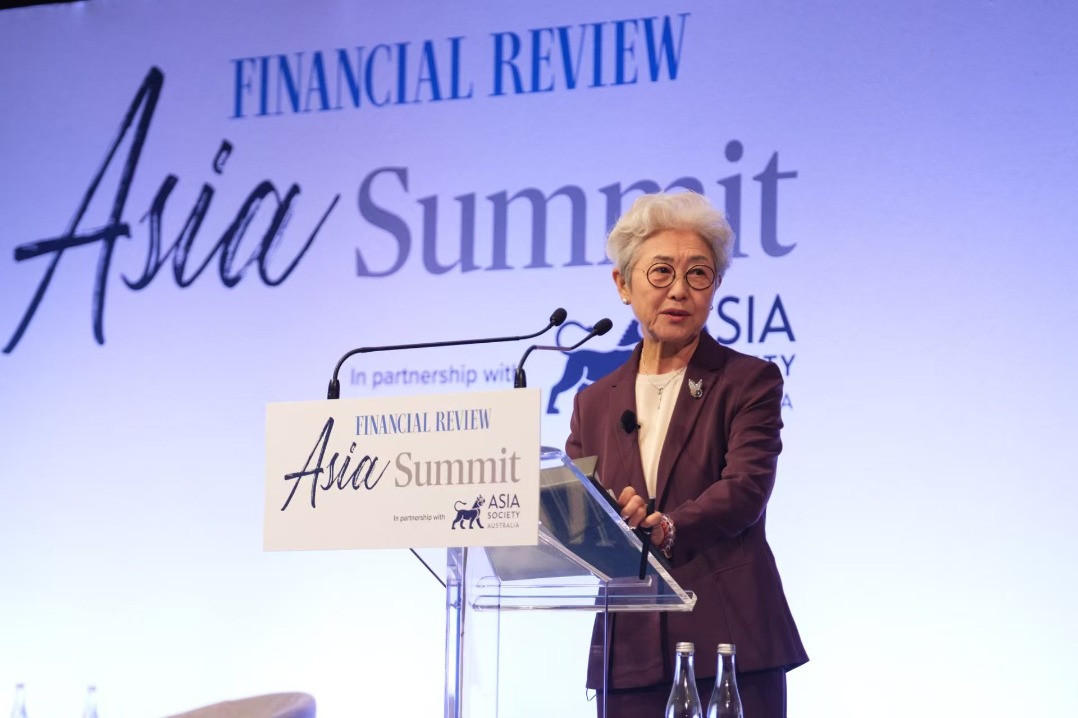
The author is deputy secretary-general of the Center for One Belt One Road, Chinese Academy of Social Sciences. The views don't necessarily reflect those of China Daily.
If you have a specific expertise, or would like to share your thought about our stories, then send us your writings at opinion@chinadaily.com.cn, and comment@chinadaily.com.cn.