What's behind the Philippine Maritime Zones Act?









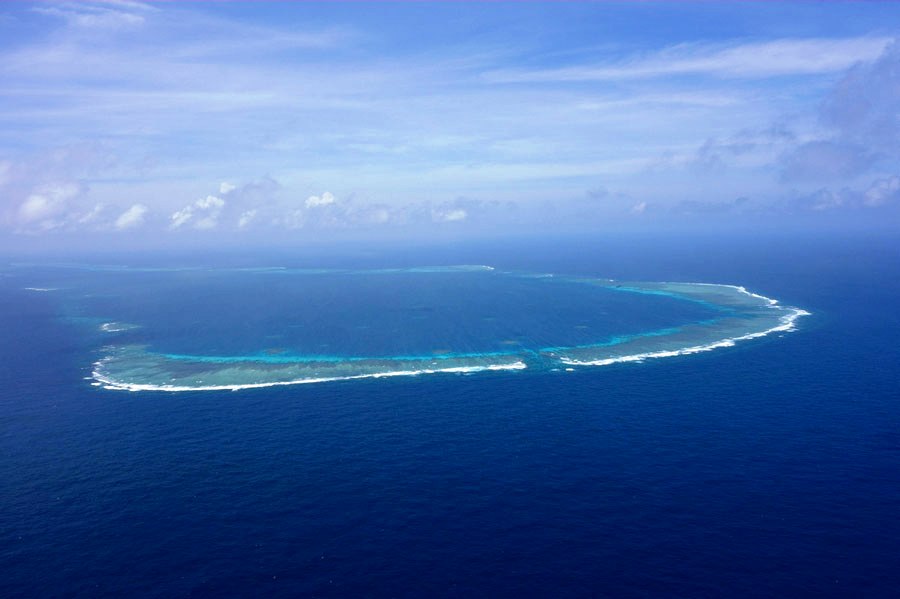
Recently, the Philippine Senate passed the amendment to the Marine Zones Act (S. No. 2492) in the third reading, which was unanimously passed by the Philippine House of Representatives in 2023. The Philippines has been preparing for a long time, saying that its main purpose is to further clarify the "maritime boundaries" and provide a "legal basis" for the exercise of exclusive jurisdiction over the claimed maritime areas, based on the United Nations Convention on the Law of the Sea (the UNCLOS) and the South China Sea Arbitration Award (the "Arbitral Award").
As we all know, in 2013, with the instigation and support of the United States, the Philippines initiated the South China Sea arbitration case on the premise of "legalizing" the illegal occupation of Nansha islands and reefs. The aim was to consolidate its ill-gotten gains and shrink the space for China's sovereignty and maritime rights. In this case, the arbitral tribunal violated many basic principles that should be followed by international judicial and arbitral institutions, exceeded its jurisdiction, and rendered an award full of loopholes. This farce shows that forcibly bringing the relevant disputes into the track of judicial settlement regardless of the actual conditions does not apply to the complex South China Sea disputes and that the third-party compulsory settlement procedure without the consent of the state deviates from the original intention of the UNCLOS States Parties in designing the dispute settlement mechanism, and undermines the confidence of the States Parties in whether the UNCLOS dispute settlement mechanism can be used correctly in practice.
Since the 1950s, the Philippines has never given up its coveting of several islands and reefs in the South China Sea but has adopted different methods of infringement and protection at different times. In addition to the illegal occupation, the use of so-called civilian expeditions, the grounding of warships to reefs, the abuse of the dispute settlement mechanism of the law of the sea and the amendment of domestic legislation are all ways for the Philippines to gradually break through the external limits of its territory established by the three international treaties. In recent years, in the process of amending its domestic legislation, the Philippines has deliberately packaged its territorial claims as maritime jurisdiction claims, evaded the legal and political facts of its illegal occupation of Nansha islands and reefs, and ignored the principle of "land dominating the sea" in international law.
As a provocation against China, the Philippines' push for maritime zone legislation reflects the negative impact and spillover effects of the South China Sea arbitration. The act repeatedly mentions the arbitral award as the "source and basis" of the Philippine claim. When the act comes into force, it will further reduce the political space for the Philippines and China to manage the crisis and properly handle controversial issues. In the view of the Philippines, only by continuously adding the content of arbitral awards to domestic legislation can the role of arbitral awards be better played, to continuously consolidate the domestic political, legal, and even social foundation for maritime confrontation with China.
In addition to stipulating the nature, status and jurisdiction of the different maritime areas claimed by the Philippines, the act also covers the delimitation of maritime areas, the outer limits of the continental shelf beyond 200 nautical miles, and the settlement of maritime disputes. It can be seen from this that after the law comes into effect, the Philippines may further infringe and provoke China, such as applying for the delimitation of the outer limits of the continental shelf beyond 200 nautical miles in the South China Sea alone or jointly with other parties, advancing negotiations on maritime delimitation in the South China Sea with specific parties, and may also file a new international lawsuit in the South China Sea under the guise of marine environmental protection and freedom of navigation.
The Philippine Senate's approval of the act is also part of the Philippines' cognitive warfare provocation against China in the South China Sea. The legislative process of the act echoes the issue of infringement and exaggeration in the Philippines. On the one hand, the Philippines has continued to hype up the events at Ren'ai Reef and HuangYan Island in the arena of public opinion, highlighting the "urgency" and "necessity" of the legislation to the domestic society and different political forces, to speed up the legislative process. On the other hand, the Philippines has used the legislative achievements to create new topics in the arena of public opinion, and some high-level officials such as the Philippine Coast Guard, the National Security Council, and the Special Committee on Maritime Jurisdictions who like to "talk tough" on the South China Sea issue have been constantly making emotional and inflammatory remarks to serve their own political interests while smearing China's image and misleading the international community.
China's ability to safeguard its sovereignty, security and development interests in the South China Sea is no longer what it used to be, and its willingness to maintain stability in the South China Sea remains unwavering. No matter what the Philippines does around the arbitral award, no matter how the Philippines pushes through the domestic legislative process, and no matter what tactics the Philippines uses to try to impose its unilateral claims on China, it will not "legitimize" the arbitral award and will not affect China's legitimate claims in the South China Sea under international law. In this regard, China will take strong measures to safeguard territorial sovereignty and regional stability, and at the same time, it will also work to bring the Philippines back to the right track of managing maritime disputes through negotiations to avoid escalation of the crisis.
Ding Duo is deputy director and associate research fellow, at the Research Center for Ocean Law and Policy at the National Institute for South China Sea Studies.
The opinions expressed here are those of the writer and do not necessarily represent the views of China Daily and China Daily website.
If you have a specific expertise, or would like to share your thought about our stories, then send us your writings at opinion@chinadaily.com.cn, and comment@chinadaily.com.cn.