


Expanded free trade zones to combat protectionism










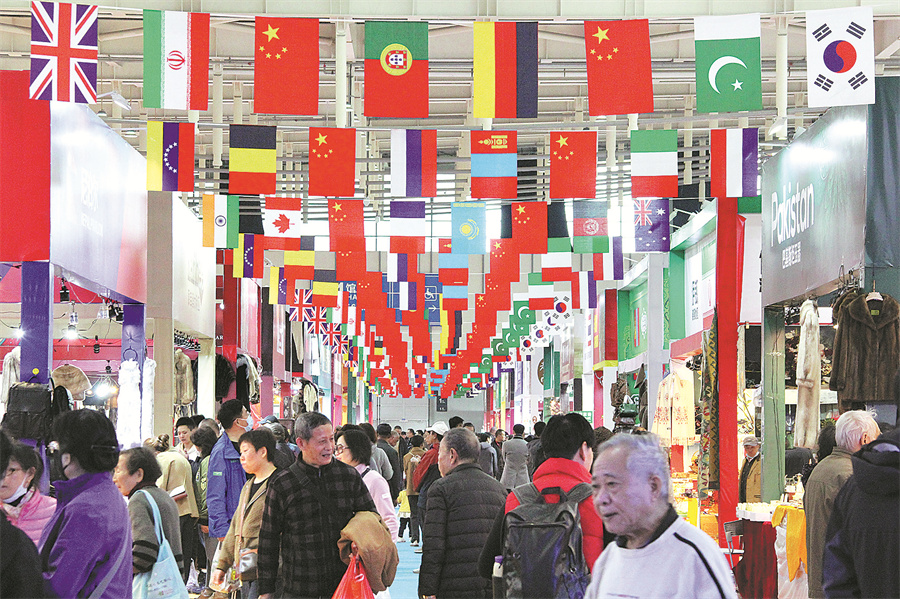
China has set its sights on expanding its network of high-standard free trade zones this year by proactively engaging in negotiations, implementing existing pacts and seeking new partnerships, which will help stabilize the country's foreign trade and facilitate sustainable economic growth, according to officials and experts.
They added that by promoting free trade and pursuing economic openness, the country aims to counteract the rising wave of protectionism and trade barriers, and create a more inclusive and interconnected global trading system that benefits all participants.
China, according to the Ministry of Commerce, had inked 22 free trade agreements with 29 countries and regions by the end of January, accounting for some one-third of its total foreign trade volume.
By slashing trade barriers and opening up new avenues of market access, China has unleashed a wave of opportunities for its export-oriented businesses, empowering them to explore previously untapped markets and expand their global footprint, said Liu Xiangdong, a researcher at the China Center for International Economic Exchanges.
The sheer size of China's market, with its population of some 1.4 billion people, and in particular, a constantly growing middle class, offers immense potential for its trading partners looking to expand their customer base, Liu added.
That said, the current global economic landscape is marked by persistently low levels of export, consumption and investment demand among major economies. Reduced consumer purchasing power and slower economic growth in key markets will present inevitable implications for export-oriented economies, including China, said Ming Ming, chief economist of CITIC Securities.
The rise of protectionist measures, such as tariffs and trade barriers, imposed by various countries, as well as intensifying geopolitical tensions, will dampen market confidence to some extent and result in a cautious approach by businesses and consumers alike, limiting the growth potential of foreign trade activities, he added.
Despite a challenging global economic environment, China's continuous efforts to push ahead with the network of high-standard free trade zones will help the country stay competitive in shifting global market dynamics.
The nation will strive to conclude the China-Association of Southeast Asian Nations Free Trade Area agreement 3.0 upgrade negotiations this year, as well as the free trade negotiations with Honduras and upgraded FTA talks with Peru, said Wang Shouwen, China's international trade representative, at a news conference in late January.
The country is set to embark on a series of free trade negotiations and upgrades with key partners, including the Gulf Cooperation Council, New Zealand, South Korea and Switzerland, to further build a global network of high-standard free trade zones, said Wang, who is also vice-minister of commerce.
China's steps to diversify its trading partners shield the country from vulnerabilities associated with overdependence on any one market, and can mitigate risks and help it navigate uncertain global conditions with greater ease, said Zhou Mi, a senior researcher at the Chinese Academy of International Trade and Economic Cooperation.
The country will continue to advance its accession into the Comprehensive and Progressive Agreement for Trans-Pacific Partnership and the Digital Economy Partnership Agreement, vice-minister Wang added.
In particular, China has taken the initiative to exercise pilot programs on par with the CPTPP standards in pilot free trade zones where conditions are ripe, as well as at the Hainan Free Trade Port, said He Yadong, the ministry's spokesman.
A working group on China's accession to DEPA has been established to fully advance the negotiations, and China is currently having in-depth exchanges with member economies on relevant issues of the agreement, He added.
The agreements provide a framework for aligning regulations, intellectual property rights and labor standards with international best practices. These reforms not only enhance China's competitiveness but also help foster a more conducive business environment, attracting foreign investment and driving technological innovation, said Zhou.





