Provocations at sea: Philippines' intention and approach









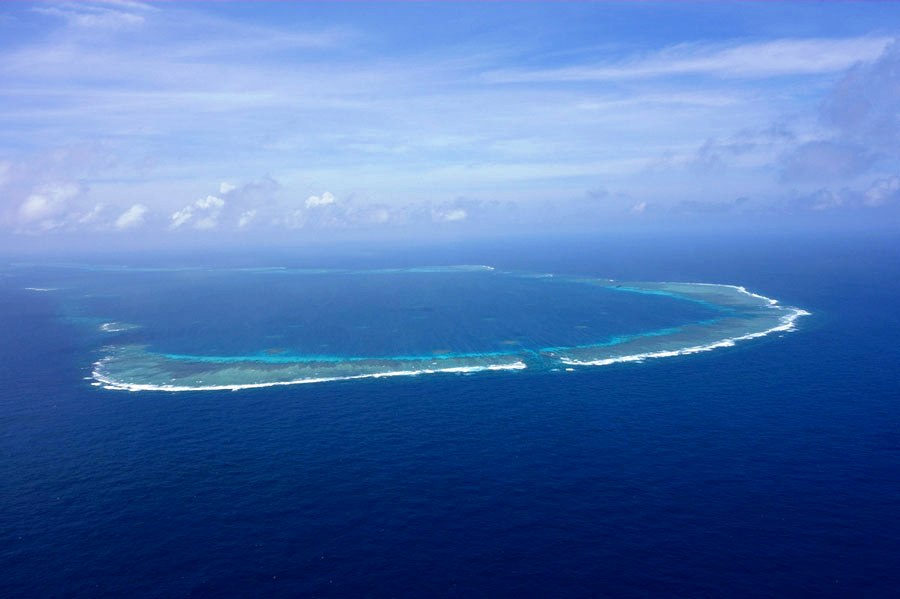
Recently, China and the Philippines have engaged in communication on properly managing the situation at Ren'ai Jiao, but the Philippines has once again reneged on its commitments and complicated the maritime situation.
There is a saying that "listen to his words and watch his deeds". If the Philippines continues to disregard its national reputation, saying one thing and doing another, not only China, but also regional countries and the international community have reason to believe that "political commitment" is no longer a credible option among Philippine diplomatic tools.
In an interview with reporters a few days ago, Philippine President Ferdinand Marcos Jr. once again declared that the Philippines' actions in the South China Sea are not driven by the United States. However, since the Marcos Jr. administration, the Philippines has continued to increase its provocations on issues such as Huangyan Dao and Ren'ai Jiao, which is inseparable from the strengthening of the US-Philippine alliance.
Over the past year, the Philippines and the United States have enhanced their strategic coordination and accelerated the pace of maritime cooperation. Security cooperation in the South China Sea has been launched between the Philippines and the "four-nation mechanism" mainly in the forms of "maritime situational awareness", "joint sea and air patrols" and "intelligence system interoperability". China has a clear understanding of what support the United States provided to the Philippines, what methods it used, and what role it played in the incident at Ren'ai Jiao. To a certain extent, it is precisely because of US intervention that the Philippines is behaving more and more like a gambler on issues related to the South China Sea and has shown several characteristics.
The first is to "tie up" the maritime situation at Ren'ai Jiao and Huangyan Dao. China is now with growing ability to assert its rights and maintain regional stability, and it is becoming increasingly difficult for the Philippines to take advantage of its maritime moves. In response, the Philippines has tried to alternately provoke China on the issues of Ren'ai Jiao and Huangyan Dao, to continuously disrupt the maritime situation and consolidate its illegal vested interests in the South China Sea.
The second is to deepen intelligence sharing between the Philippines and the United States in the South China Sea. Under the relevant mechanism, the United States has increasingly provided information and intelligence support to the Philippines. The defense departments of the two countries have held several dialogues at different levels to discuss the establishment of a common maritime defense posture and the improvement of communications interoperability and information sharing mechanisms. The deep integration of the Philippines and the United States in maritime intelligence collection, data sharing, and information control interoperability has been on the fast track.
The third is to promote domestic legislation. In the process of amending the constitution initiated by the Marcos Jr. administration, the government and the opposition have reached a consensus on including the South China Sea arbitration award in the constitution. Recently, the Philippine Senate also deliberated and approved the "Maritime Zone Act", which attempts to use domestic legislation to strengthen the arbitral award, further "consolidate" the political, legal, and even social foundation for its maritime confrontation with China and squeeze the political space to manage the crisis and properly handle the disputed issues with China.
Fourth, the Philippines continues to hype up maritime frictions, and even links the South China Sea issue to China-Philippines economic, trade and investment cooperation. High-level officials of the Philippine Coast Guard, the National Security Council, and the Special Committee on Maritime Jurisdiction have been making emotional statements. Extreme nationalism in the Philippines on issues related to the South China Sea is on the rise, and it is difficult for relatively neutral and objective officials, scholars, and civil society to make their voices heard.
The fifth is to threaten China with a new international lawsuit. Although the Philippines has continued to carry out maritime provocations, it has not achieved its goal. Under such circumstances, the Philippines has claimed that it will once again file an international lawsuit against China for damaging the marine environment in the South China Sea. In view of China's position that it "does not accept any claims and actions based on arbitral awards", it is foreseeable that no matter what kind of public opinion and legal packaging the Philippines uses to whitewash its illegal territorial claims in the South China Sea, if it still obsessively abuses the dispute settlement mechanism of the law of the sea to infringe and provoke China, it will definitely face strong countermeasures.
As can be seen from the recent actions of the Philippines, although China and the Philippines held consultations on the South China Sea issue in January this year, the Philippines still does not fundamentally recognize the importance of returning to the right path of negotiation to manage differences and enhance mutual trust between the two sides, but mistakenly regards it as a delaying tactic and an expedient measure against China. If the Philippines fails to fulfill its commitments and insists on provocation, it will only lead to further tensions at sea. Judging from the current international situation and the background of the upcoming presidential election in the United States, there are certain differences in the attitudes of the United States and the Philippines on the South China Sea issue. The Philippines is constantly making small moves at sea to test how reliable the security guarantees and military support provided by the United States can be, to see how much actual support the United States can give to the Philippines on specific issues, and even has the intention of getting the United States involved by instigating friction at sea.
The ups and downs of the situation in the South China Sea and the China-Philippines relations over the past decade or so should have provided the Philippines with enough experience. If the Philippines fails to take a correct and rational view of China's principled position and patience and goodwill on the South China Sea issue over the years, it will inevitably pay the price for its repeated mistakes.
Ding Duo is the deputy director and an associate research fellow at the Research Center for Ocean Law and Policy, the National Institute for South China Sea Studies. Zhong Hui is an assistant researcher at the Division of International Exchanges, the National Institute for South China Sea Studies, and the Secretary at the China-Southeast Asia Research Center on the South China Sea.The views do not necessarily reflect those of China Daily.
If you have a specific expertise, or would like to share your thought about our stories, then send us your writings at opinion@chinadaily.com.cn, and comment@chinadaily.com.cn.