Non-regional powers creating troubles in South China Sea









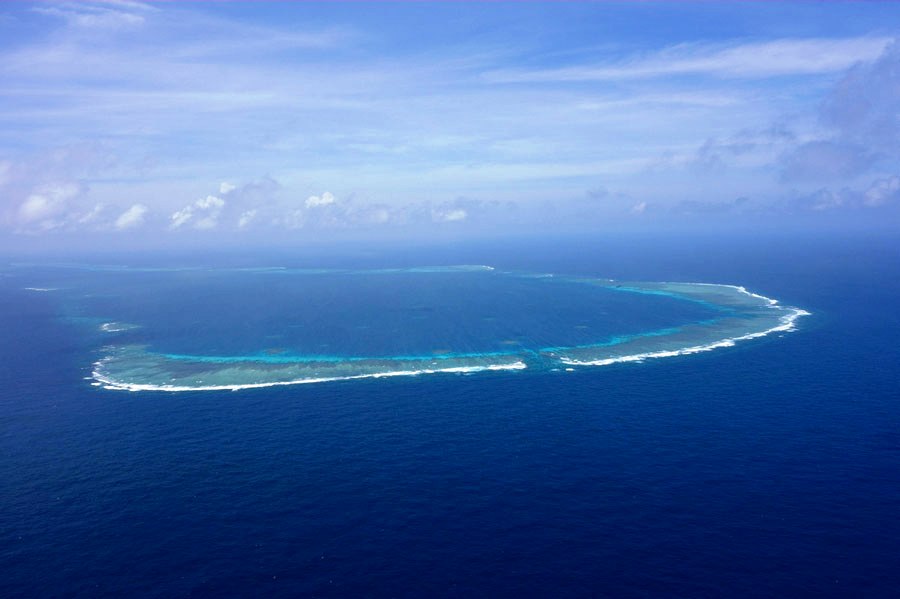
Foreign Minister Wang Yi reiterated China's position on the South China Sea issue at a press conference on March 7 during the just-concluded annual sessions of the National People's Congress and the Chinese People's Political Consultative Conference National Committee.
Throughout history, China and its neighbors in the Southeast Asian region have peacefully co-existed and taken care of each other, shaping the East Asian civilization together.
The South China Sea is also the route through which foreign powers have attacked and invaded the coastal areas of East Asian countries in the past. In modern times, Western colonial powers have used this sea route to colonize many places — from what was earlier referred to as the Indo-China Peninsula, as well as the Malay Peninsula, the Sunda Islands, Sumatra, Luzon, even the Japanese archipelago, and coastal and inland areas of China. That was a dark period in the histories of the countries around the South China Sea.
China has lived peacefully with the countries around the South China Sea for thousands of years. Chinese fishermen and those from Vietnam and other Southeast Asian countries have fished in the waters for ages, and rescued each other when in distress. Even after the maritime dispute in the South China Sea, the fishermen maintained their friendship.
Mutual respect and understanding used to be the hallmark of the relationships among the countries around the South China Sea until the early 2000s, because they tried to resolve their disputes through consultations. In 2002, the disputing countries jointly signed the Declaration on the Conduct of Parties in the South China Sea. And in 2005, oil companies from China, the Philippines and Vietnam signed the Tripartite Agreement for Joint Marine Seismic Undertaking in the Agreement Area in the South China Sea, with China completing the exploration stipulated in the agreement.
However, the situation deteriorated when former US secretary of state Hillary Clinton launched Washington's "pivot toward Asia" strategy in 2009. Since then the United States has been trying to turn the South China Sea issue into a geopolitical game, by interfering in the regional affairs. Accordingly, the policies of the Philippines and Vietnam on the South China Sea changed between 2010 and 2016, harming their relationships with China.
The US' strategy toward China shifted from interference in key issues to comprehensive containment. The US' twin carrier battle groups often patrol in the South China Sea in the name of "freedom of navigation" operations. Considering the more than 300 joint military exercises held in the past few years, the US has singlehandedly worsened the security situation, heightening tensions, in the South China Sea.
What has further worsened the situation is the tendency of some Southeast Asian countries to seek the help of Western powers to counter China's historical territorial claims in the South China Sea. By interfering in an issue that it is not a party to, the US has encouraged some countries to create trouble for China in the South China Sea.
But, unfortunately, aligning with the Western powers will not yield the expected results for the Southeast Asian countries that have disputes with China in the South China Sea. In the 1970s, then Philippine president Ferdinand Marcos signed the US-Philippines Bilateral Defense Guidelines with his US counterpart and then tried to garner Washington's support to, unsuccessfully, lay claim to some islands and reefs in South China Sea.
Over the past few decades, some countries around the South China Sea have invited hundreds of global oil companies based in the US and other Western countries to explore and exploit the oil and gas reserves in the South China Sea, by offering them oil lease rights and a share of the profits in exchange for their support to legitimize their territorial claims. That the region's countries have sought the help of the US and other Western powers to strengthen their claim against China is a big mistake, which has vitiated the atmosphere in the region.
On March 7, Wang said peace and stability in the South China Sea have been maintained thanks to the collective efforts of China and the ASEAN member states, a fact that should be cherished by all sides. From 2010 to 2022, more than 1,300 media outlets from the US, Japan, the United Kingdom, Australia, the Philippines and other countries published innumerable articles on the South China Sea issue, so intense has been their coverage of the issue.
The somewhat volatile situation in the South China Sea over the past 10 years, mainly due to the US' interference in the issue, and the heightening of tensions in 2023 have cast a shadow over the prospects of the China-ASEAN Declaration on the Conduct of Parties in the South China Sea and impeded peace and cooperation in the region.
The situation in the South China Sea worsened drastically after non-regional powers stirred up trouble, and played a key role in intensifying the maritime disputes. As the genuine stakeholders in the South China Sea issue, China and some ASEAN member states need to carefully navigate the stormy sea and peacefully resolve the maritime disputes to restore lasting peace and promote the development of all the countries in the region. The Southeast Asian countries should not allow outside powers to use them as chess pieces on their geopolitical chessboard, if they genuinely want to resolve the maritime disputes.
The author is the dean and a professor of the School of International Studies at Jinan University.
The views don't necessarily represent those of China Daily.
If you have a specific expertise, or would like to share your thought about our stories, then send us your writings at opinion@chinadaily.com.cn, and comment@chinadaily.com.cn.