Coordinated development a tough balancing act









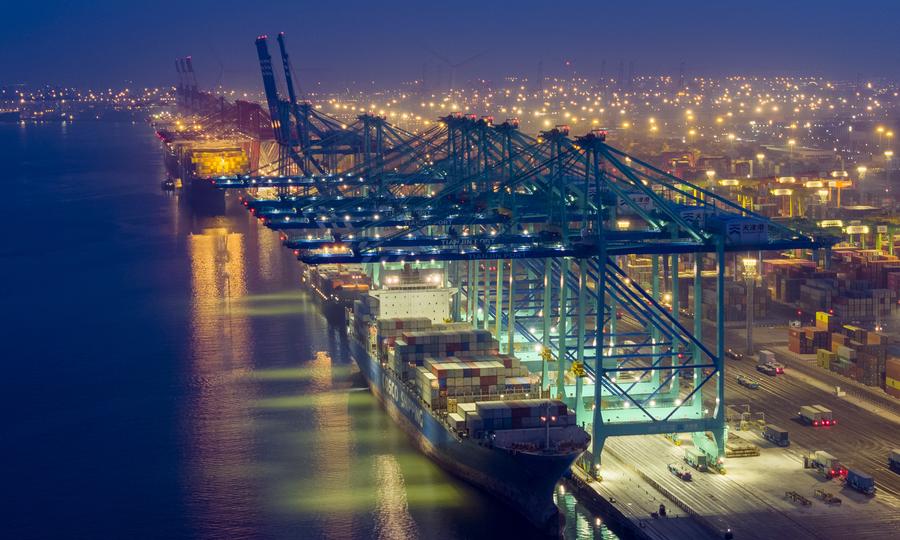
This year marks the 10th anniversary of the Jing-Jin-Ji (Beijing-Tianjin-Hebei) coordinated development plan and the seventh anniversary of the establishment of the Xiong'an New Area, or the "city of the future", in Hebei province.
In early 2014, the Chinese top leader urged Beijing, Tianjin and Hebei province to explore a sustainable development path, leveraging respective complementary strengths, which would yield mutual benefits.
The Beijing-Tianjin-Hebei region, with a population of 110 million, is the largest urban agglomeration and economic region in North China. The mega-region is pivotal to North China's development, just as the Yangtze River Delta region is to East China's development and the Guangdong-Hong Kong-Macao Greater Bay Area is to South China's development.
Beijing and Tianjin have advanced manufacturing capacity and strong tertiary sectors, whereas Hebei is less developed, as evidenced by its per capita income relative to Beijing (40 percent) and Tianjin (64 percent). But while Beijing has significant innovation capability, Hebei offers relatively low-cost land and labor, which makes the strengths of the two places complementary.
Also, the new plan aims to foster the growth of world-class industrial clusters in the mega-region, prioritizing electric vehicles, biopharmaceuticals, hydrogen energy, industrial internet, high-end industrial machinery and robotics.
In the past decade, the Beijing-Tianjin-Hebei region's investment has increased by 2.1 times. Although the synergies have increased at the county level, much potential remains to be tapped in regional synergies.
As for Xiong'an, the investment in the development of the "city of the future" will again exceed $28 billion this year. Over the past seven years, Xiong'an has emerged as a high-level modernization showcase, with cutting-edge technologies such as 5G, big data, artificial intelligence and autonomous driving applied in the city.
How has the Beijing-Tianjin-Hebei region fared in the past decade? The region's GDP reached about 10.4 trillion yuan (about $1.44 trillion) in 2023, representing a 1.9-fold increase from 2013 at current prices. It now has more than 11,000 kilometers of railways, up 30 percent in a decade, and nearly 11,000 km of highways, an increase of more than 40 percent from 2013.
A more comprehensive assessment builds on the development index and indicators, such as innovation, coordination, green development, openness and shared development.
Much remains to be achieved, however. In addition to equity, other challenges include difficulties in the mega-region's coordinated environmental governance, the development of green and digital economies, and institutional mechanisms for coordinated development. Still, the early signs are promising, highlighting untapped potential.
Over a decade ago, I used to lecture at the Shanghai Institutes for International Studies on national, regional and urban competitiveness, relative to international experiences. For years, I cooperated with Harvard's Michael Porter, whose Competitive Advantage of Nations (1990) shifted international interest toward regional and urban clusters.
I recorded efforts to steer regional differentiation even in innovation-driven small economies, including Finland's Wireless Valley, Israel's Silicon Wadi and Ireland's Dublin tech hub. In the reports for the European Union, Organisation for Economic Co-operation and Development and the Nordic Council, I used to examine regional competitiveness in all major advanced and emerging economies, from the United States to China, as well as regional high-tech clusters and megacities. At the India, China and America Institute, I saw how India sought to follow in China's footprints.
What worried me most in New York City was the dire state of urban slums, such as Harlem and the Bronx. Worse, the devastated Rust Belt from New York through the Midwest, once the thriving hub of manufacturing, had become synonymous with regions facing industrial decline, due to its abandoned, rusty factories. To a few, it meant fabulous profits; to many ordinary Americans, it was a depressive nightmare.
But the more I spent time in China, the more I felt that Chinese development, together with the BRICS, was shaking the old "rules of the game", which in the past had been monopolized by the West.
In New York City, I saw successive city administrations trying to boost competitiveness, yet each US metropolis and state fought primarily for its own interest. In Europe, there is greater willingness at coordination, but the fragmented continent constrains integrated regional development.
Shunning coordinated regional development in the US has contributed to cutthroat competition. The net effect has been the "race to the bottom"; excessive deindustrialization and blind offshoring, which have hollowed out US industries, unleashing a host of employment, social and environmental challenges. Related political challenges include protectionism, populism and "America First" xenophobia.
Industrialization and urbanization have left most advanced economies unbalanced.
As evidenced by the experiment of Beijing-Tianjin-Hebei coordinated development, China seeks to move toward balanced and sustainable development.
What makes China's regional strategies unique is the top-down effort to catalyze bottom-up initiatives, even though disparities in resources and development between different regions remain.
The views don't necessarily reflect those of China Daily.
The author is founder of Difference Group and has served at the India, China and America Institute (US), Shanghai Institute for International Studies (China) and the EU Center (Singapore).
If you have a specific expertise, or would like to share your thought about our stories, then send us your writings at opinion@chinadaily.com.cn, and comment@chinadaily.com.cn.