


Serving high-end products to the whole world
Go-getting domestic firms tap new sectors abroad for growth, take on competitors










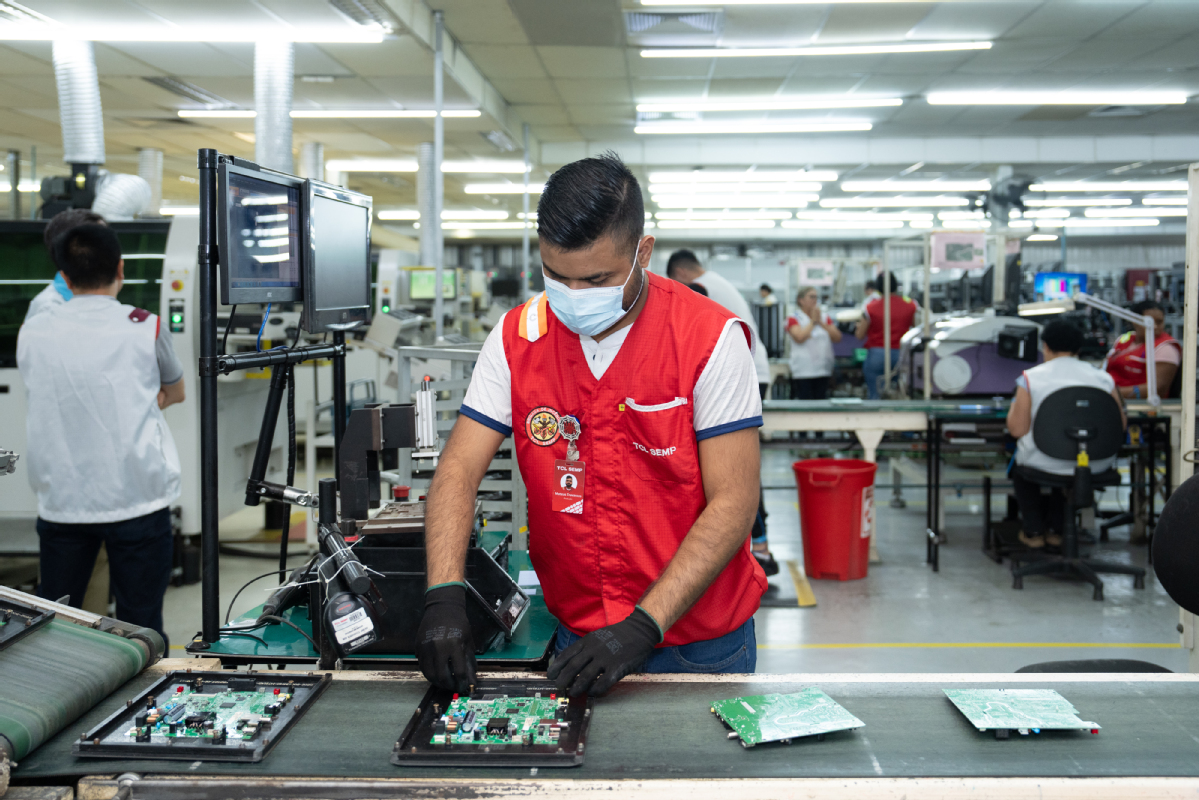
Despite challenges like global economic uncertainties, geopolitical tensions and evolving international economic and trade regulations, "go-global" will continue to be a key growth strategy of corporate China, said Eddy Chan, senior vice-president of FedEx Express and president of FedEx China.
"Many Chinese companies are increasingly focusing their investments and resources on manufacturing operations in Southeast Asia. This shift has resulted in a growing demand for customized services to ensure the smooth operation of their supply chains within the region," said Chan.
The US courier service provider announced in mid-March that it had completed significant upgrades to its gateway facility in Shenzhen, Guangdong province. The facility now boasts an intelligent management system called e-warehouse.
Chinese companies' dynamic investment approach has made significant global advances in areas like trade in services, new foreign trade formats and digital and green growth in recent years.
Trade in services refers to purchase and sale of services. According to the World Trade Organization's definition, trade in services covers 12 major sectors. These include commerce, communication, construction and related engineering, finance, entertainment, culture, sports, tourism, education and environment.
"These moves have helped drive economies and job markets in many countries, especially those in Southeast Asia, South America, the Middle East and Europe," said Johnny Chou, chairman and CEO of BEST Inc. The Hangzhou, Zhejiang province-based logistics services provider opened its largest sorting center by facility size in Southeast Asia in Kuala Lumpur, Malaysia, in January.
EVE Energy Co Ltd, a battery manufacturer based in Huizhou, Guangdong province, is another example. The Chinese company is constructing a battery plant in Debrecen, Hungary, to supply batteries to BMW Group's Debrecen factory. With an investment of 1 billion euros ($1.08 billion), the Chinese company will help generate over 1,000 new jobs for the local community.
Liu Jincheng, the company's chairman, said the factory is scheduled to be completed and put into operation in 2026.
"In terms of internationalization trends, Chinese battery companies have advantages in both materials and equipment. We are able to serve global customers with an entire industrial chain," he said.
With advantageous geographical location and mature industrial infrastructure, Hungary remains a top destination for Chinese investment in Central and East Europe, covering a range of areas, including manufacturing, chemicals, finance, telecommunications, automobiles and logistics, according to information released by the economic and commercial office of the Chinese Embassy in Budapest.
As Chinese technology has advanced rapidly, "Made in China "and "globalization" have emerged as the defining features of the Chinese business culture, said Lin Meng, director of the Modern Supply Chain Research Institute at the Beijing-based Chinese Academy of International Trade and Economic Cooperation.
Amid greater efforts by many Middle Eastern countries to utilize the digital economy for sustainable growth, Terminus Group, a Beijing-based artificial intelligence services provider, launched its international headquarters in Dubai, the United Arab Emirates, in late February, to capture a larger market share in the region.
The new headquarters will facilitate Terminus' projects and business expansion initiatives in the UAE, Saudi Arabia, Qatar, Oman and other countries in the region. It will also support the group's operations in Singapore and Australia, as well as many countries participating in the BRI.
The Chinese company will also set up an AI laboratory in the new facility, focusing on cutting-edge exploration in the field of AI and the development of targeted solutions for the international market.
Victor Ai, CEO of Terminus Group, said that as many Middle Eastern countries strive to advance in eco-friendly energy, manufacturing and smart city initiatives, the company aims to fully capitalize on its AIoT (artificial intelligence of things) strengths to engage in related projects in these markets.
According to a report published by UBS Group AG, a Switzerland-based multinational investment bank, the size of the digital economy in the Middle East is projected to grow from $180 billion in 2022 to $780 billion by 2030, with an average compound annual growth rate of 20 percent. This will make it one of the fastest-growing regions in the global digital economy over the coming years.
Chinese companies, especially those from the private sector, are embarking on a new phase of global expansion, with China's technology and brands making significant inroads overseas and exploring new opportunities for growth, said Lu Feng, a professor of economics at Peking University's National School of Development.
Guo Tingting, vice-minister of commerce, said China's cooperation with other countries will continue to expand, particularly in the green economy, digital economy and blue economy, in the coming years.
The trend of China's outbound investment growth will likely continue this year. China saw its nonfinancial ODI surge 10 percent year-on-year to 149.64 billion yuan in the first two months, according to the Ministry of Commerce.
To create more favorable conditions for boosting China's foreign trade, attracting foreign investment and enhancing Chinese companies' global competitive power, the ministry said in late March that the country will use a variety of channels to engage in multilevel communication and exchanges with all relevant parties. That is also expected to quicken China's accession to the Comprehensive and Progressive Agreement for Trans-Pacific Partnership, a multilateral free trade agreement with high-standard economic and trade rules.





