



Exploring sustainable ways
Yunnan is pioneering an inspiring path toward sustainable development










Yunnan province has always been a land of inspiration for people and nature. First and foremost, Yunnan is diverse, from mountains, cloud forests, and wet and dry river valleys in the south to the high Himalaya in the north. This complex mountainous geography promotes the richest cultural diversity in Yunnan in languages, belief systems, land use and livelihood practices.
People in Yunnan have adapted to the land in ways that demonstrate their intimate relationship with the local ecosystems. There are the UNESCO world heritage traditional rice terraces and ancient tea tree gardens on the cloud-shrouded mountainsides. A thousand years ago, merchants from southern Yunnan traveled the Tea Horse Road to Tibet in caravans that formed a socio-cultural network between low river valleys and high mountain communities. And today, there are modern horticulture and contemporary trade ways — Yunnan features the largest flower market in China shipping bouquets to every corner of Asia. The mountains remain pathways of commerce and migration that reduce the barriers between highlands and lowlands.
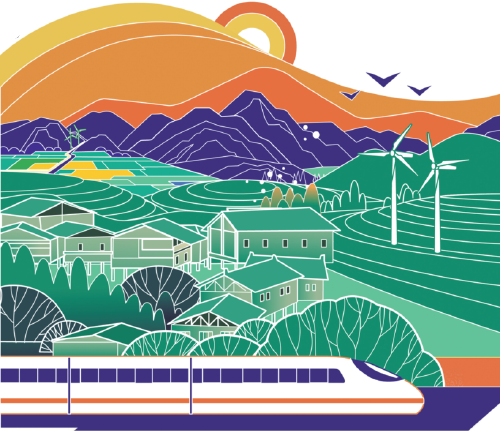
Yunnan is many things to many people and it continues to change. When I began my first job at Xishuangbanna Tropical Botanic Garden in 1986, it took me seven days to travel from my home in eastern China to southern Yunnan. Now, it takes me seven hours to go from Kunming to Luang Prabang, Laos, by high-speed train. This certainly benefits tourists who come for holidays. But the cultural and biological diversity connections in Yunnan can also serve as a living lab to integrate innovations used by local mountain people into new ways to build an ecological civilization in China and the world.
In 2016, an international research group launched the Mountain Futures Initiative to enhance the health of mountain ecosystems while supporting sustainable lifeways for dwellers in the highlands. Led by the Chinese Academy of Sciences and Chinese Academy of Agricultural Sciences with strong support from several United Nations programs, this consortium built a platform to protect nature and culture. This program is based on support for cultural beliefs that focus on traditional ecological views of life and reverence for nature; cognitive values that believe in "the unity of heaven, god, man and earth"; the domestication and sustainable use of plants and animals by humans; ecological farming based on circular agriculture of nutrients, water and energy; sustainable production using traditional ecological knowledge of nature; a one-health ecosystem approach to human health; ecological wisdom that combines scientific and traditional practices to maintain biodiversity; the inheritance of traditional farming knowledge; and innovation to spread mountain farming culture and new crop varieties to benefit people and nature.
Mountain Futures Initiative delegates hosted a program at the 15th Conference of Parties to the Convention on Biological Diversity (COP15) in October 2021 in Kunming and, in December 2022, participated in another COP15 event in Montreal that launched a new Mountain Futures Action Plan. The plan is aspirational and ambitious. Its general goals closely follow those of the COP15 Kunming-Montreal Global Biodiversity Framework, including the sustainable use of biodiversity, ecological restoration for ecological health, full participation of indigenous peoples and local communities, and sustainable lifeways change through public education and economic transformation.
The action plan is already being implemented at the Honghe Innovations Center for Mountain Futures in southern Yunnan. Established in 2019, the center covers 672 hectares of dry mountain sloping lands and serves as a public-private laboratory where projects in support of local livelihoods can be tested. So far, it has attracted investment of $10 million from local, provincial and national governments along with private donors. Current projects cover a range of experiments: multipurpose agroforestry system for fruit and fodder crops, integrated fertilizer use with efficient water management, kapok products for sustainable rural-urban market supply chains, innovative biomass production for soil restoration; and more. We expect that general lessons learned in the Honghe dry-hot valley may be exported to other mountain areas in China and the world.
Just as in ancient times, intercultural learning and interdisciplinary research are built into the Mountain Futures Initiative. There are international scientists and PhD students from France (shaded-agroforestry coffee), the United States (bee keeping and pollination), Kenya (plants for new fiber materials), Ethiopia (animal nutrition and husbandry), Sri Lanka (edible mushroom cultivation), and Nepal (forest products development) working together with local farmers and regional business entrepreneurs. The young generation today will take leading roles for transforming landscape and livelihoods for mountain people and urban dwellers through innovative knowledge and social value chains. That is our future dream and our contemporary action plan in Yunnan — building a new sustainable civilization based on historical roots from the countryside to the city and from the mountains to the sea.

The author is a professor at Kunming Institute of Botany at the Chinese Academy of Sciences and principal scientist of World Agroforestry Center. The author contributed this article to China Watch, a think tank powered by China Daily.
Contact the editor at editor@chinawatch.cn.
Sponsored by China Internet Development Foundation(CIDF).





