Spend money on priorities that will help more people









Every country in the world faces a multitude of challenges and competing wishes for the future. Ideally, we would all like to fulfill all our wishes. But scarce resources mean that in real life, we have to prioritize.
Saying that some things must come first is controversial because it also means saying that many things won't come first. That is why a lot of politicians shy away from explicit prioritization. Instead, they make it appear that they can indeed attempt to do everything.
Globally, this approach has been cemented in the United Nations' Sustainable Development Goals. These are promises signed on to by countries to achieve almost literally every good thing imaginable by 2030. Over the course of 169 wordy targets, the world has promised to eradicate extreme poverty and hunger, end AIDS, tuberculosis and malaria, stop wars, climate change and corruption, improve education and healthcare, save biodiversity, reduce inequality, provide jobs for everyone — and even promote sustainable tourism and increase urban parks for the disabled.
Because of the failure to prioritize these goals, money has been spread thinly by development organizations, donors and governments across all these areas. Consequently, the world is falling short on every one of its promises.
Fortunately, around the world, more and more governments and organizations are focusing on what would really work among all the promises. We have worked together with the Copenhagen Consensus think tank and many of the world's leading economists to ask which policies among all the world's many promises could achieve the most good. Our peer-reviewed findings are available for free, and they can also be read in the book, Best Things First. They offer a road map for the 12 smartest initiatives for politicians around the world.
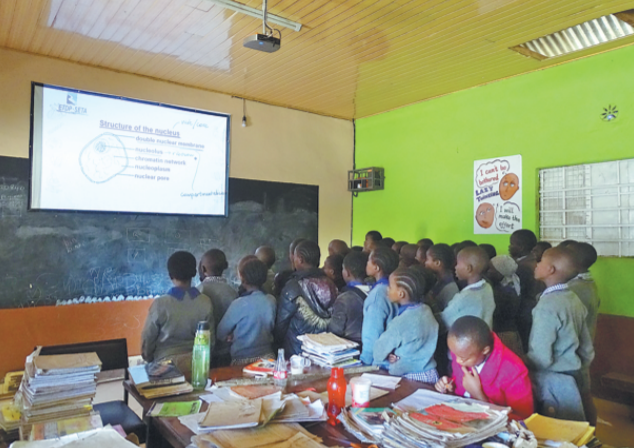
One of the most phenomenal solutions is to improve primary school learning by using tablets with educational software for one hour a day. This makes each student learn much faster because the tablet is teaching at exactly the level adjusted to the student.
When we worked with Malawi's National Planning Commission, economists identified this approach as one of the very best policies for Malawi. Although resources are scarce, the studies showed that every dollar spent teaching the students better with tablets would deliver an amazing 106 dollars of long-term higher productivity. This is one of the reasons the government decided to dramatically focus resources on this policy.
Malawi has already put almost half a million children in front of educational tablets, and the goal is to get adaptive learning on tablets to all 3.5 million children in the first four grades in this decade.
Tablets are not the only way. India has embraced a cheaper, lower-tech solution in which schools shuffle students' classes for one hour every day so that all students go to the class that is at their actual learning level. This can lead to some awkward social interactions with children of different ages, but because it needs no new technology it is also much cheaper. One year of this approach has been shown to have the learning equivalent to two years of normal schooling.
Teaching students at their own level is incredibly effective and is getting ever-more attention. For instance, Colombia is trialing this approach, designed to improve literacy in low-income communities and rural schools.
Similar is the case with getting government online offers to dramatically improve efficiency. When working with the National Development Planning Commission in Ghana, research showed the power of digitalization to streamline bureaucracy and reduce waiting time and uncertainty for citizens. Ghana's local governments, which are responsible for infrastructure and service delivery, still depend on central government transfers to fund their development, generating only about 20 percent of their total budget with their own resources.
Streamlined, digitalized revenue collection has the potential to improve their autonomy. Digitalizing property and business fees can make tax collection much more efficient, and this will help municipalities to provide the best possible services to citizens. Calculating both the cost and the time and money saved, each dollar spent on this intervention yields a return nearly nine times higher.
Some other countries, too, are prioritizing digitalization, for instance by putting all their purchasing online, which is called e-procurement. Since the government is often the largest buyer in a country, and procurement process is often very corrupt, more transparent transactions can curb corruption and deliver more value for taxpayers' money. Brazil has shifted to an e-procurement, which has been recognized for reducing losses to bribery, while Indonesia's reform has led to a "significant decrease" in corruption. And while Ghana recently implemented e-procurement, Malawi is in the process of doing so.
Across the world, there is huge potential for more countries to identify and prioritize the policies that would have the greatest impact for every dollar spent. Instead of pretending to achieve everything for everyone by promising all good things, we need to shift to a sharper, smarter focus: we can't do everything, so we should start with policies that would achieve the most for the buck.
Kodjo E. Mensah-Abrampa is director-general of Ghana's National Development Planning Commission; Thomas Chataghalala Munthali is director-general of Malawi's National Planning Commission; and Bjorn Lomborg is president of the Copenhagen Consensus and author of Best Things First.The views don't necessarily represent those of China Daily.
If you have a specific expertise, or would like to share your thought about our stories, then send us your writings at opinion@chinadaily.com.cn, and comment@chinadaily.com.cn.