Rwanda's rebirth -- a nation of unity emerges from shadow of genocide










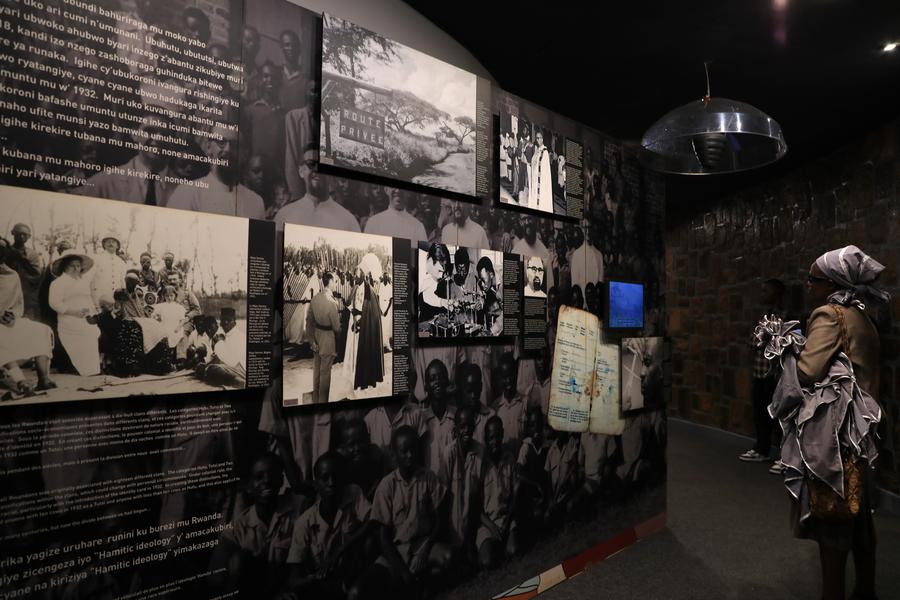
DIVISION CREATED BY COLONIZERS
Mahmood Mamdani, a Ugandan academic, delves into the ploy employed by colonial powers known as indirect rule, a tactic that sought not to eradicate but to redefine existing differences between conquerors and the conquered.
Initially, colonizers attempted direct control over their colonies but encountered formidable resistance rooted in entrenched social traditions.
Henry Maine, a British jurist, devised the infamous "divide and rule" scheme to salvage British authority in India. The Machiavellian approach exploited existing divisions among local populations based on race, language, culture, and religion. By co-opting select groups and nurturing indigenous elites to administer colonial rule on their behalf, colonizers intended to deflect resentment away from themselves.
This practice has since been adopted across the globe, from the British-controlled Malay Peninsula and Dutch-ruled Indonesia, and gradually extended to Egypt, Sudan and other African nations.
Yet, "divide and rule" evolved beyond mere polarization of native populations; it morphed into a deliberate effort to redefine Africa. Western powers crafted narratives, fabricating traditional cultures and distorting historical truths to justify their domination.
In Rwanda, the colonial manipulation manifested the preferential treatment of Tutsis in military and political spheres, while systematically suppressing Hutus. Tutsi's dominance was enforced, with Hutu chiefs replaced and educational opportunities limited for Hutu youth.
"The colonizers did not just exacerbate the division, but they created it," said Gasominari. "It's difficult for the colonizers to root a unified and peaceful country, so they divided African countries, weakened us and took away our minerals and gold."
THE COLONIZED TURNED AGAINST EACH OTHER
In the wake of World War II, the Belgian colonial administration, sensing the tide of anti-colonial sentiment, sought to align itself with the burgeoning Hutu populace, positioning themselves as arbiters in the escalating ethnic tensions.
"The last battle of the colonized against the colonizers will often be the fight of the colonized against each other," observed Frantz Fanon, a French writer and revolutionary.
In 1959, the "social revolution" erupted in Rwanda, as Hutu resentment boiled over into violence against Tutsis. Hundreds of thousands of Tutsis, including the two-year-old Paul Kagame, were forced into exile.
As the Belgian authorities lost their grip on power, they lent their support for the Hutus, paving the way for their resounding victory in the 1960 local elections.
After its independence in 1962, Rwanda's new government expelled Tutsis from the political sphere, barring them from higher education and gainful employment.
Jacqueline Mukamana, a Tutsi survivor of the 1994 Genocide, recalls the moment she became aware of her identity: "I didn't realize I was Tutsi until I faced discrimination in school, with policies favoring Hutu children."
In October 1990, the Rwanda Patriotic Front (RPF), comprised of Tutsi exiles from Uganda, clashed with Rwandan government forces, demanding their right to return home and be recognized as Rwandan citizens.
Amidst the escalating tensions, external actors further complicated the situation. France, vying for influence in Africa, threw its support to the pro-French Hutu regime, providing arms and training to quell the Tutsi forces, which had close ties to former British colonies like Uganda.
In August 1993, the Rwandan government, led by Hutu President Juvenal Habyarimana, and the RPF signed the Arusha Accords to address key issues such as power-sharing and refugee repatriation in a bid to end the protracted civil war.
On April 6, 1994, the tragic assassination of Habyarimana and Burundian President Cyprien Ntaryamira in a plane crash near Kigali airport served as the catalyst that ignited the powder keg of conflict in Rwanda, plunging the nation into its darkest hour.