The true story of a village's literary transformation









In the 1950s, Zhou Libo (1908-79) wrote Shanxiang Jubian (Great Changes to Mountain Areas), a novel portraying the way the country's resolution on agricultural cooperatives boosted food production in a small village named Qingxi.
This book contains detailed, vivid rural-life scenes and vibrant character portraits. It uses dialect and colloquial language to evoke the colorful atmosphere of countryside culture. It draws upon Zhou's actual experiences doing farmwork during his stay in Qingxi village in Hunan province's Yiyang city, and has become one of his representative works.
While Zhou's writing captured the social landscape of Qingxi village in the 1950s, more than 60 years later, the power of literature has truly spread its wings as Qingxi has undergone a remarkable transformation as part of the country's rural vitalization drive.
The village successfully redefined its development trajectory over the five years starting from 2018. It determined it would leverage its place as the novel's setting and use Zhou's former residence to turn itself into a "village of literature" with the support of the local government and the China Writers Association.
Scenes depicted in Zhou's writing, such as the lotus pond, camellia forests and pear orchards, were developed into tourist attractions. In early 2022, Qingxi obtained authorization from the association and associated publishing houses, and gradually built a series of bookstores and amassed a trove of editions signed by contemporary Chinese writers.
Bu Xuebin is the owner of Libo Bookstore. The 50-year-old villager previously worked as a farmer and then a miner when mineral extraction was a major industry in the area.
Around 2004, the mines were closed down. So, Bu and many other villagers had to seek livelihoods elsewhere. He traveled to different cities in search of mining jobs.
However, two years ago, when his hometown embarked on the journey to become a village of literature, he made the decision to return home and start his own business in the culture and tourism sector.
With support from the local government, he turned his family's old residence into a bookstore named after Zhou.
"The initiative of empowering rural vitalization through culture has pulled me out from the 1,600-meter depths of a mine shaft and into the sunshine," Bu says.
Meanwhile, as the work of mine reclamation and environmental restoration unfolds, the scenery has become even more beautiful.
The average annual per capita income in Qingxi has reached 50,000 yuan ($6,900). The area has seen a surge in vitality, accompanied by a growing number of young people returning home.
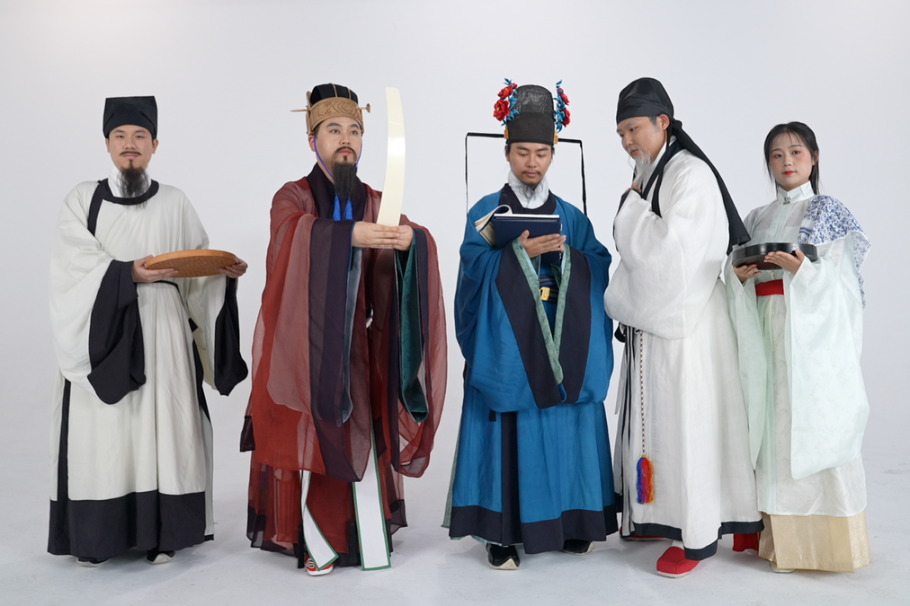
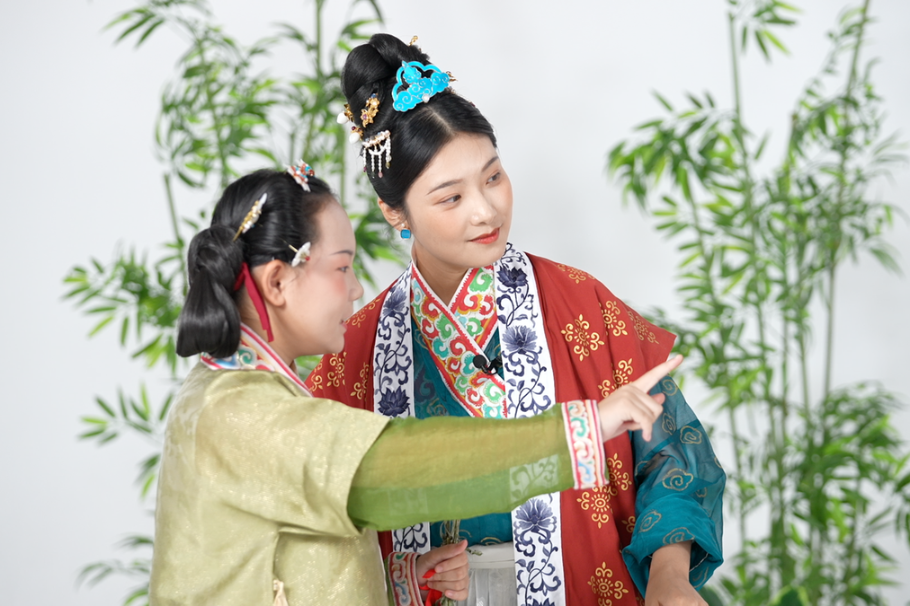
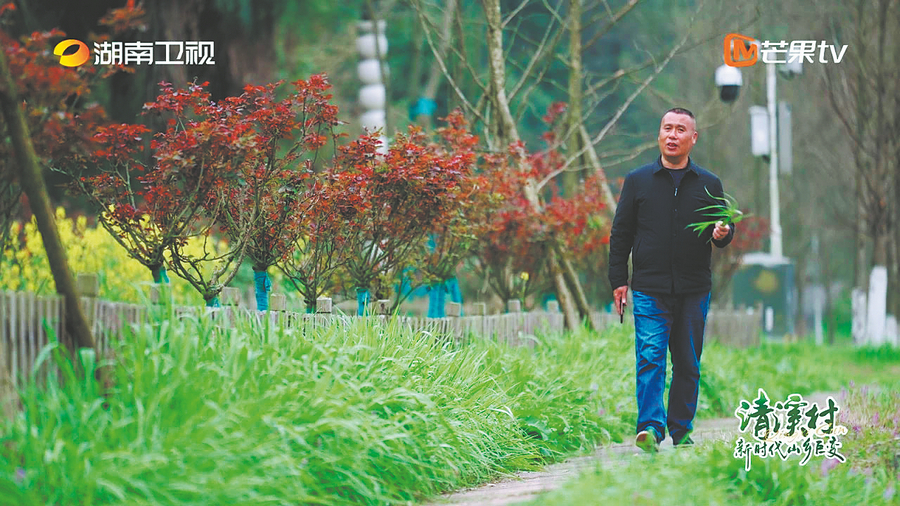
Recently, a six-episode documentary, Qingxi Village — Great Changes to Mountain Areas in the New Era, exploring how literature has transformed the village, was released on the video-sharing platform Mango TV and on Hunan Satellite TV. The episodes look at themes such as literary empowerment, environmental improvement, grassroots governance and industrial revitalization.
Zhong Shan, its executive producer, recalls a visit to Qingxi village after a rainfall.
"That day, the rain caused the flower petals to scatter, and there weren't many people around the village. In the afternoon, I sat on the road outside Zhou Libo's former residence, sipping tea, lost in thought. Before I knew it, I had drunk three cups," says Zhong.
"For me, it was like rediscovering long-lost tranquility and a poetic atmosphere."
Liu Xinshao, deputy director of the School of Humanities at Central South University, says the documentary offers a glimpse into how the village has been practicing the development concepts of innovation, harmonization, greenness, openness and sharing.
"Rural areas are fertile ground nurturing the flourishing development of culture. By revitalizing culture in rural areas, we can tap into its advantages to chart a path for development," Liu says.
xingwen@chinadaily.com.cn