'Supply chain diplomacy' suggested for US, China
Interconnection, not decoupling, seen as more effective to reduce conflict risk









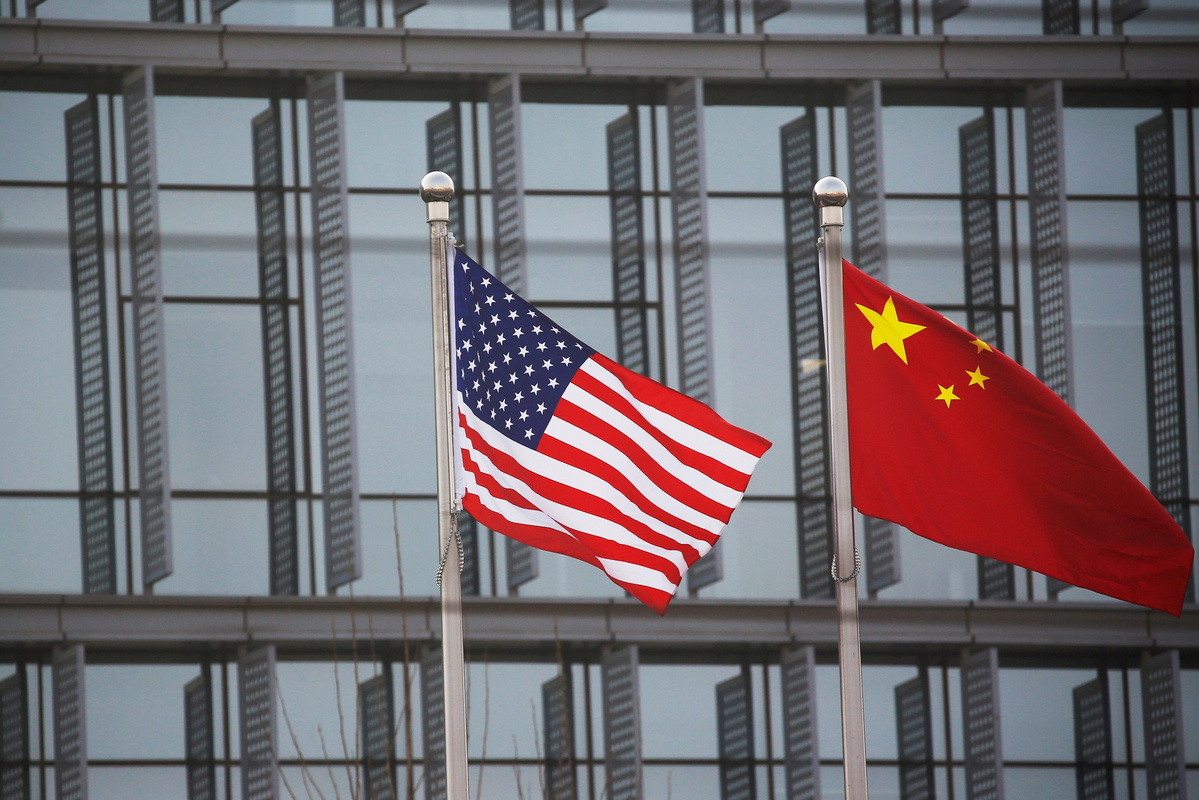
It's time to forge a "supply chain diplomacy" reminiscent of the 1970s' Ping-Pong Diplomacy between the US and China, said experts at an online seminar.
Global supply chains have been facing the most severe shortages in 50 years due to the COVID-19 pandemic and geopolitical tensions.
"We are aware that the supply chains that connect the US and China have been a large part of the cause of inflation, a word that hasn't been used since 1997 till 2018," John Kent, a professor at the University of Arkansas, said at the recent webinar titled "The US, China, and Supply Chain Diplomacy".
"Because of this, the once-efficient and well managed set of supply chains have clearly been disrupted," he said.
Claiming for himself the role of "clinical" professor at the J.B. Hunt Transport Department of Supply Chain Management, Kent said that the global supply chains are "sick" now.
"Perhaps it's time for an updated version of Ping-Pong Diplomacy," Kent said. "We need to bring together academic and industry experts from the US and China to work collaboratively on the supply chains of the future — we call it supply chain diplomacy."
Inspired by the historic Ping-Pong Diplomacy that helped thaw relations between the US and China in the 1970s, Kent and his team even placed a symbolic ping-pong table in the back of their meeting room.
"The ping-pong table demonstrates the diplomacy, that we and our Chinese partners are getting along, having fun together, eating dinner together and socializing together," Kent explained. "Diplomacy can start with simple gestures of goodwill and open the door to more substantial discussions."
Over the past few years, Kent has worked with academics and industry leaders on a global supply chain diplomacy initiative led by the George H.W. Bush Foundation for US-China Relations and the Supply Chain Management Research Center at the University of Arkansas, offering another diplomatic channel to supplement government-level diplomacy efforts.
While some advocate a decoupling of American and Chinese supply chains, Kent believes that fostering strong trade relationships is a more effective strategy to reduce the risk of military conflicts. He said that countries actively engaged in trade are less likely to resort to direct confrontation.
"We feel that there is a significant number of supply chains that are still connected and will likely be connected between the US and China for years, maybe for many years to come," Kent said.
The US imports a variety of essential items from China, including raw materials and manufactured goods, while China benefits from American agricultural exports such as grains and meat.
Kent's colleague, Daniel Stanton, a supply chain executive, entrepreneur and educator, known as "Mr. Supply Chain", believes that the supply chain relationship between the US and China is one of the most "fascinating" in the world.
"Some people refer to China and US as the 'G2' because they're the top two economies in the world," Stanton said. "We're huge trading partners. China depends on the US to eat, and the US depends on China for pretty much everything that we buy."
However, since former president Donald Trump's protectionist stance led to the imposition of tariffs on Chinese goods in early 2018, the current landscape of US-China trade relations includes a 25 percent tariff on many Chinese goods.
"The tariffs on a lot of Chinese products right now are 25 percent. So if you increase the cost of the stuff that you're buying by 25 percent, then we call that inflation," Stanton said.
He noted it's not accurate when people assume tariffs take advantage of the other country.
"The tariffs are really a tax that's paid by American consumers," Kent echoed. "It's actually the importers that pay the tariff. It's as simple as a plus sign on a calculator. It's not complicated math."
Many companies strategizing to deal with tariffs often face unintended consequences and supply chain inefficiencies. For example, a US fan manufacturer faces a 25 percent tariff on components, but not on imported fans.
That leads to higher costs for assembly in the US compared with China, yet the finished products must compete on price with Chinese imports.
"It shouldn't come as a surprise that prices have risen due to inflation. If priorities shift towards reducing inflation, we could consider reassessing tariffs as a potential solution. This could potentially benefit people in both China and the US," Stanton said.
Both experts emphasized that supply chain diplomacy serves not just economic interests but also as a platform for peaceful international engagement.
Despite concerns raised about domestic security, national security, competition geopolitically between China and the US, trade can maintain peace, as "when goods don't cross borders, troops likely will", Stanton said.
"The flow of products and services back and forth actually makes the world better, reduces the chances of conflict, increases peace," Stanton said.
"We should allow both countries to do the things that they do best," he added.