



US should jump-start talks with China on tariffs to manage tensions









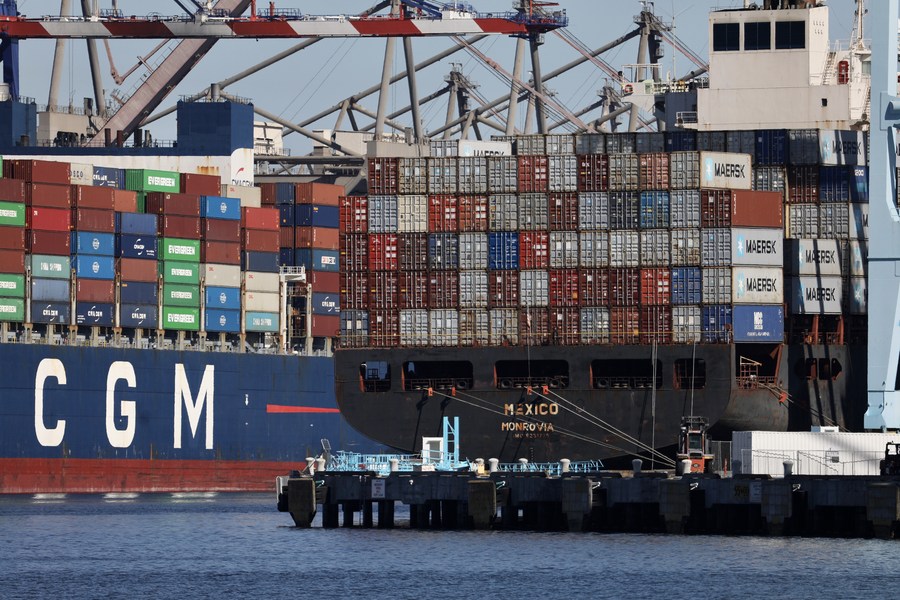
As the Biden administration tries to manage differences, it is critical for Washington to jump-start constructive and meaningful dialogue with Beijing on trade and economy, in particular tariffs that are hurting people and companies in the US. The US reluctance of shelving technology cooperation under the pretense of national security or in cahoots with allies to stifle China's tech advancement is another lingering threat to stabilization of the vital relationship.
Over the years, a stubborn policy of the past and current US administration has pushed America and China to an endless odyssey of economic rivalry, fearing Beijing in near-term could catch up or surpass Washington in economy and technology. In its insatiable quest for global economic and tech supremacy, America is deploying all tools to prevent this from happening through tariffs, sanctions, export and investment controls and restrictions of advanced chips exports.
This stubborn approach is hurting Americans and the US economy. For instance, most tariffs on goods from China are still in effect, which have inflicted significant harms to the US consumers, businesses and manufacturing competitiveness. The Section 301 and 232 tariffs on Chinese steel and aluminum as well as March 2024 petition to address China's shipping and shipbuilding practices continue to undermine the country's image as a champion of free trade, conceding more moral authority to China internationally.
According to the Tax Foundation, a vast majority of the increase in US tax collection ($211 billion of $233 billion) came from the Section 301 tariffs on China. These taxes were paid by Americans. Biden during his election campaign himself had acknowledged this fact, blaming Trump's tariffs for saddling Americans consumers, farmers and companies.
An early, promising completion of the US Trade Representative review of the China tariffs could provide a relief to consumers and importers; it would also end uncertainty in the China-US relations, making a positive impact on the international economy. An average approval rate of 35 percent by the USTR, allowing imports from China in a couple of categories, is self-evident that this cannot be decoupled.
"Reducing reliance on China is an easy soundbite for politicians, but the reality is very different," Erik Devetak, leading freight benchmarking firm Xeneta's chief product and data officer, told the Financial Times. A CATO Institute's study recently concluded that irrespective of this being a problem, tariffs was not a "valid solution."
Higher tariffs aren't either as they would cost $31 billion to American consumers, per the National Retail Foundation, and cut the US GDP by 0.5 percent, according to Bloomberg. Biden's plea to triple the tariff on steel and aluminum from China to appease the politically powerful steel industry and ban TikTok would neither charge his election campaign nor support his mission to stabilize the China-US relationship and
Before the tariff war, China was the fastest growing large market for the US. But retaliatory duties have positioned the US exporters, relying on Chinese components, at a huge disadvantage against competitors. Tariffs tend to heat up corruption, protectionism and appreciate the value of the US dollar, chastising the US manufacturers in terms of lower sales and profits.
China in Q1-2024 posted a strong growth of 5.3 percent, official data showed. The International Monetary Fund last year saw Beijing as the world's leading growth driver for the next five years; it retained its forecast this year, expecting the Middle Kingdom to remain the top contributor to global growth.
According to the US-China Business Council's recent report, exports to China in 2023 fell 4.3 percent to $144.9 billion; China remains an important market for American companies, supporting about one million jobs in the US. Further tariff spat between Beijing and Washington, it warned, could make other countries more competitive amid geopolitical tensions and economic slowdowns.
With a lot of restrictions already in place on China and military assistance of $61 billion for Ukraine, $26 billion for Israel and $8 billion to "counter communist China," in the Asia-Pacific, neither the China-US differences can be effectively managed nor Washington could come out clean of its actions of fueling the wars and conflicts by just deflecting the blame on Beijing about supporting the Russian defense industrial base. On the one side, Washington is mercilessly pouring American taxpayers' money on wars and conflicts and on the other, it's making their and the US companies' survival difficult by threatening to wage a new barrage of tariffs and sustaining export and investment controls.
Experts agree tariffs could have unintended consequences for American consumers, companies and GDP, stating tax hikes as a "stopgap" measure to rein in overcapacity. Removal of bilateral tariffs, on the other hand, will slash inflation, create more jobs, eliminate shortage of goods, increase economic output and reduce geopolitical tensions. An immediate breakthrough cannot be expected but a progress on the key irritant to the bilateral relationship would help to manage differences and jointly tackle the global challenges.
Azhar Azam is geopolitical analyst with a keen interest in economy, regional conflicts and climate change. The views don't necessarily reflect those of China Daily.
If you have a specific expertise, or would like to share your thought about our stories, then send us your writings at opinion@chinadaily.com.cn, and comment@chinadaily.com.cn.





