



China's diplomatic campaign in Europe: Partners building community with a shared future









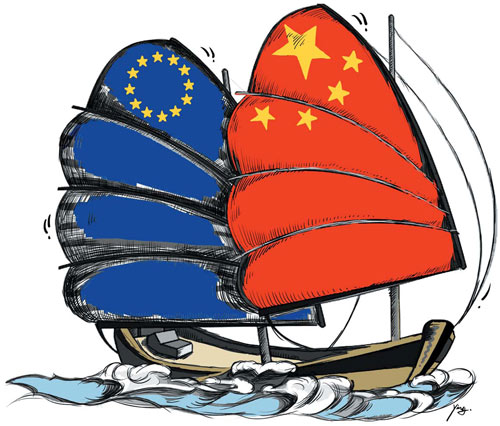
May 2024 is set to be an important month for Chinese diplomacy. This month, President Xi Jinping is visiting three European nations. These high-level interactions are likely to attract critical comments from some Western countries.
President Xi's European tour, which began in France, marks his first state visit to Europe in five years, following the disruptions caused by the COVID-19 pandemic. His itinerary also includes stops in Belgrade and Budapest. The choice of these particular European destinations is quite indicative. It probably reflects China's strategic priorities in Europe with regard to political and economic relations. France, Serbia and Hungary, while differing in their geopolitical positions and perspectives within Europe, share a common pragmatic attitude toward China.
France, alongside Germany, stands as one of the European Union's most influential member states and boasts an extensively cooperative relationship with China. This year marks the 60th anniversary of diplomatic relations between the two countries, which is supported by a comprehensive strategic partnership. Additionally, as a permanent member of the United Nations Security Council, France holds a significant position on the global stage. French President Emmanuel Macron advocates the concept of strategic autonomy for Europe, focusing on sovereignty and reducing reliance on American influence.
Hungary, another EU member state, is often seen as the most influenced by China within the EU bloc. Hungarian Prime Minister Viktor Orban pursues a multi-vector foreign policy, fostering strong ties with Russia and China, which sometimes deviates from EU norms and faces indignation from some other EU nations and officials. This year, as China and Hungary celebrate 75 years of diplomatic relations, President Xi's visit is anticipated to strengthen Sino-European relations, injecting stability and positive dynamics into the complex global scene. Furthermore, Hungary is involved in building Europe's longest high-speed rail line, which extends approximately 1,500 km from Budapest to Athens. Hungary has also attracted substantial investments from major Chinese firms like BYD, a leading electric vehicle manufacturer that is setting up a plant there, and CATL, a key battery producer.
Serbia, an EU candidate and a small country strategically located at the crossroads of Central and Southeastern Europe, has become an important partner in China's Belt and Road Initiative. Its geostrategic position makes Serbia a gateway to Europe, particularly through the land route that seeks to connect Greece to the heart of Europe. This strategic importance is the primary reason for several major infrastructure projects in Serbia, such as the construction of the Belgrade-Budapest high-speed railway, a flagship project of the BRI. Predominantly financed and constructed by Chinese companies, this railway is designed to improve the transportation of goods from Serbia to broader European markets.
This year marks the 15th anniversary of bilateral relations between China and Serbia, highlighted by the signing of a comprehensive strategic partnership eight years ago during President Xi's visit to Belgrade. The collaboration between the two nations is based on mutual respect and benefit, fostering prosperity and significantly contributing to Serbia's development and revitalization. The partnership is multidimensional and mutually advantageous, encompassing all key areas of cooperation.
As global dynamics shift, the strategic partnership between Serbia and China continues to strengthen, creating significant implications for regional politics and economic development. This relationship, however, is unfolding against the backdrop of increased scrutiny from the European Union, particularly following its recent anti-subsidy investigation into Chinese electric vehicles. This investigation reflects broader concerns about fair competition and market practices, placing Serbia in a unique position as it balances its national interests with its aspirations toward EU integration.
Despite the critics and lack of understanding from Brussels, Serbia is China's first comprehensive strategic partner in Central and Eastern Europe, and the two countries share a deep and steadfast friendship. During the COVID-19 pandemic, when the absence of substantial international solidarity was often present, China and Serbia collaborated closely to save lives.
The visit of President Xi to Belgrade further reinforces the long-standing bond between the two nations. Often described as "steel friends," this term reflects not only their robust cooperation in the steel sector, highlighted by the major Chinese investment in Hesteel Smederevo, but also their resilient traditional friendship that has overcome various challenges over time.
There is significant potential for developing a deeper and comprehensive strategic partnership between China and Serbia in many areas such as artificial intelligence, biotechnology, healthcare, and information technologies. The future of Sino-Serbian cooperation could see a significant focus on technological advancement and green energy, which would not only benefit both countries but also align with global sustainability goals. Moreover, after the signing of free trade agreement, new opportunities for strengthening their ironclad friendship will appear.
The current EU anti-subsidy probe into Chinese EVs presents both a challenge and an opportunity for Serbia. The challenge lies in navigating the EU's concerns about so-called market distortion potentially caused by Chinese subsidies, which could affect Serbia's own market as it integrates more closely with the EU. Conversely, Serbia has the opportunity to promote fair competition and transparent economic practices, potentially alleviating EU concerns and enhancing cooperation between China and the EU. Serbia's relationship with China can serve as a bridge in fostering better understanding and cooperation between China and the European Union.
The author is a researcher at the Faculty of Political Sciences at University of Belgrade, Serbia. The views do not necessarily reflect those of China Daily.





