Path to bright future runs through rural school canteens










China has a critical role to play in South-South cooperation, such as building more sustainable school meal programs in developing countries amid post-pandemic economic challenges, climate change and rising food prices, a UN official said.
"Chinese government has put in place good nutrition guidelines, innovations in areas such as food-fortification to address anemia as well as an effective monitoring framework for school meals," said Carmen Burbano de Lara, director of school meals & social protection service of the UN World Food Programme (WFP) in a recent visit to China in March.
"What China has done here is inspirational and the scale they reached is very important for other countries to also learn from," she said.
Since Burbano's first trip to the country in 2009, she has maintained both a strong connection and passion for it. This maiden trip coincided with the publication Rethinking School Feeding, which she co-authored and later on became one of the documents that the Chinese Nutrition Improvement programme relied on.

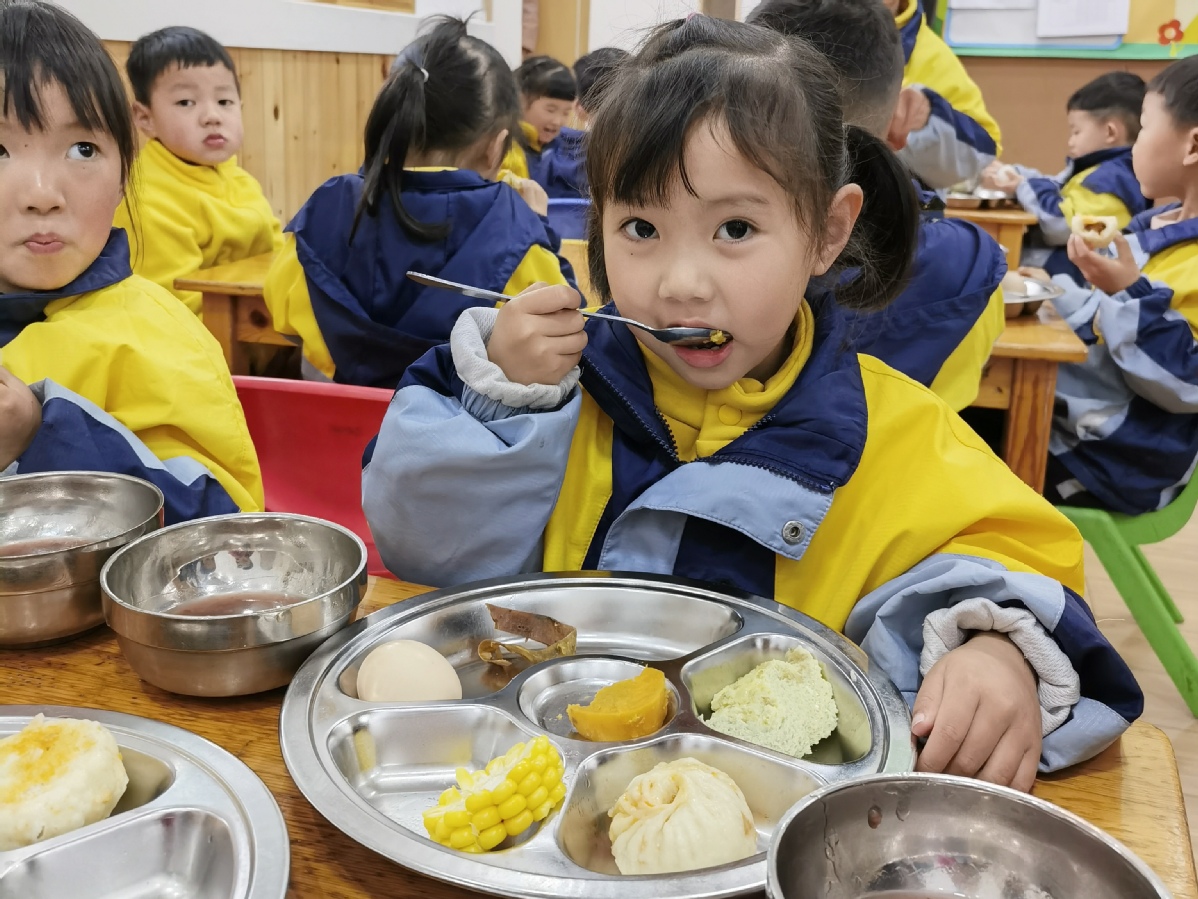
Since 2018, WFP China Office, with local governments, conducted trial initiatives on Pre-school Nutrition Improvement Plan in parts of rural China, including Hunan, Gansu, and Sichuan provinces and the Guangxi Zhuang autonomous region, targeting left-behind children and low-income families.
The huge investment made by the Chinese government to ensure children's nutrition in recent years is particularly significant, Burbano said.
"With each visit to China, I could see that cooks were trained, the infrastructure in schools was enhanced and foods such as rice and soy sauce were fortified," she said.
In 2022, China joined the School Meals Coalition, a platform to restore school meal programmes that had collapsed following the COVID-19 pandemic. Now, China is working with other governments to restore school meals around the world.
In Rwanda, the government has met a commitment announced in 2021 to introduce universal school feeding coverage, according to the WFP report. In 2020, the country provided 400,000children with school meals and by 2022 that number had risen to four million. In Benin, President Patrice Talon announced a national budget commitment of $270 million in 2022 to extend the national school feeding program.
"As the global community pays more attention to school meals, to help low-income countries build more sustainable school meal programmes is imperative," she said.
School feeding
Low-income countries lag behind the rest of the world in children's meals. Sixty-one percent of children receive meals in schools in high-income countries but only 18 percent do so in low-income countries, said a WFP report.
Statistics also shows that though there has been a recovery overall, the reach of school meals in low-income countries remains at 4 percent below pre-pandemic levels, according to a WFP report, the State of School Feeding Worldwide 2022. In the two years to 2022, the amount of international financial aid that these schools received fell from about $267 million to $214 million.
Burbano said that she saw poverty there was and realized unequal society was as she was growing up in Quito, Ecuador.
"If a student comes from a poor family, it's likely that the meal they get at school will be the most important one of the day," she said. "The mere presence of a meal in school sometimes is enough of a reason for parents to send their sons and especially daughters to school."
It is fortunate Burbano's mother, once a chef, understood that nutritious food and education would set us up for a good future in life. Burbano said her mother's teachings have shaped her life. "When I came of age, I married those two things: embracing the importance of education and good nutrition in nourishing children's dreams in all countries."
It's not just an investment in children and families but also economies of both rural and urban communities. In fragile countries, the school meals programs are supporting peacebuilding efforts and building trust in the state," she said.
Studies at Harvard University, show that for one dollar invested, nine dollar are returned in the form of economic benefits in health, education, social protection, etc. Where school meals are present, enrolment goes up by nine percent, and anaemia goes down by 20 percent, the studies further show.
"I would like to see more sustainable food systems that link smallholder farmers to schools and children," Burbano said. "All schools can have clean energy for cooking, and women can have more access to jobs through such systems."
In a case of Xiangxi Tujia and Miao autonomous prefecture in Central China's Hunan province, a nutritional improvement program launched by WFP China is part of a rural revitalization benefiting local farmers and constructing agricultural supply chain.
During her visits to many schools in Western China over recent years, she also had the opportunity to share, with children, the meals they were receiving under the programme.
"It was a great experience, eating what the children received at school: the fortified rice, vegetables, eggs, and a variety of soups. I found the meals both delicious and nutritious," she said.
"I was happy that, what I strongly believed, what shaped my own life, was really being practiced here in China."
Kuang Hanying contributed to this story.