Northeast Asia needs stable China-Japan-ROK ties










Northeast Asia is becoming the center of major power competition. As historical issues are difficult resolve within a given a timeframe and confrontations continue to emerge, tensions in the region have been rising, creating new challenges for China, Japan and the Republic of Korea.
In such a situation, the three countries need to establish stable and close cooperation and give full play to the role of economic cooperation so as to get the trilateral relationship back on track and help stabilize the regional situation.
Strengthening cooperation among the three sides is necessary, feasible, and in their common interest, not least because the three economies are highly complementary and their economic cooperation has further development potential.
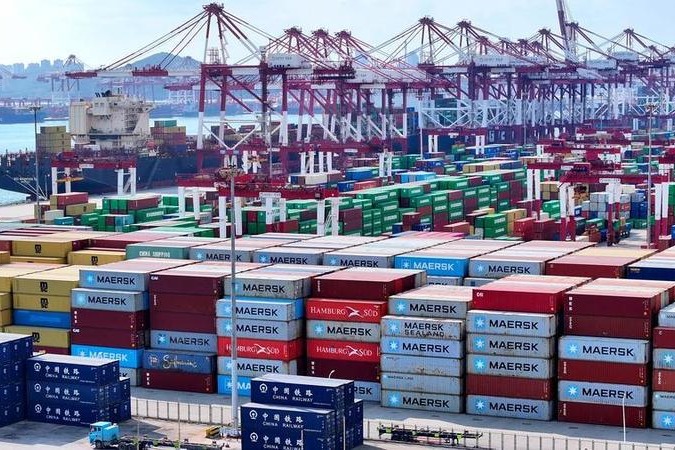
Thanks to the shift in economic and political power from the West to the East since the 1990s, the rapidly developing trade relations among the three sides have facilitated the formation of a close East Asian production network, which is an important part of the industry and supply chains in the Asia-Pacific. Thanks to the division of labor, intra-industry trade is becoming increasingly common among the three countries. If China has advantages in processing and manufacturing, Japan and the ROK have advantages in the fields of machinery and key raw materials.
There is much room for further improvement, though, in China-Japan-ROK cooperation. The percentage of intra-regional trade among the three sides is not high despite the three sides having close economic ties. For instance, in 2023, the trade volume among China, Japan and the ROK was $706.82 billion, less than that between China and ASEAN ($911.72 billion). The three sides also need to boost intra-regional investment, as there is great demand for trilateral cooperation in areas such as medical care and financing, which could become new growth engines for the region.
For example, Japan and the ROK, with their rich experience in medical care, can work with China to help boost the latter's "silver economy". Also, it's in the interest of all the three countries to strengthen financial security and stability, jointly improve the global payment settlement systems and reform the international monetary system.
The China-Japan-ROK high-level dialogue mechanisms have served as an important platform for the three sides to improve pragmatic trilateral cooperation, with the trilateral leaders' meeting outside the "ASEAN +3" framework promoting their socioeconomic cooperation for years.
During the eighth China-Japan-ROK leaders' meeting in Chengdu, Sichuan province, in 2019, the three sides issued a document titled "Trilateral Cooperation Vision for the Next Decade" and released a report on the early achievements of the "China-Japan-ROK+X", a cooperation model proposed in 2018 when they agreed to promote open and win-win cooperation, synergize their development strategies, and strive to build a predictable and stable trade and investment environment.
The three sides have also established 21 ministerial meeting and over 70 dialogue mechanisms to set policies and facilitate coordination in areas such as diplomacy, technology, telecom, finance, human resources, environmental protection, logistics and culture.
The Regional Comprehensive Economic Partnership, which took effect on Jan 1, 2022, is the first free trade agreement to which all three countries are signatories. Hence, the RCEP is important platform the three sides can use to deepen cooperation. According to the RCEP agreement, the three sides have to comply with the rules of origin, simplify customs procedures, lower the barriers to entry, promote trade and investment, and reduce business transaction costs.
While the RCEP can strengthen their cooperation in industry and supply chains, boosting intra-regional trade, China, Japan and the ROK should consider advancing their trilateral free trade agreement negotiations.
China, Japan and the ROK should also increase people-to-people exchanges. Since all the three countries are influenced by Confucianism and share similar cultural values, they should increase three-way interactions through social and cultural exchanges. For that, they need to improve the high-level exchange mechanisms, sign agreements, set up cooperative frameworks based on their respective advantages, and establish multi-dimensional communication platforms for business leaders and scholars.
China, Japan and the ROK need to strengthen the dialogue mechanisms also to enhance mutual trust. The three countries' relationship is deeply influenced by the United States' "Indo-Pacific" strategy. The US has been coaxing its allies, including Japan and the ROK, to push forward its regional strategy in the Asia-Pacific. The US administration is trying to control the risks with China and, at the same time, rally its allies to compete with China, not only intensifying Sino-US tensions, but also impacting the strategic policies of Japan and the ROK.
The current situation demands that China, Japan and the ROK conduct regular dialogues and form a working group to deal with the challenges created by geopolitical risks and protect the interests of small and medium-sized enterprises.
As in other places, the youth are the future of the three countries and the whole of Northeast Asia, so China, Japan and the ROK should increase the scale and depth of communication among the youths of all the three countries and launch various programs for youths of different ages, so they can strengthen trilateral cooperation in the future and build a brighter Northeast Asia.
The author is director-general of the Institute of Japanese Studies, Chinese Academy of Social Sciences. The views don't necessarily reflect those of China Daily.
If you have a specific expertise, or would like to share your thought about our stories, then send us your writings at opinion@chinadaily.com.cn, and comment@chinadaily.com.cn.