Realities and challenges









Arab-Chinese relations have growing significance in a rapidly changing world
Approximately 2,000 years ago, the ancient Silk Road routes, both maritime and overland, played a significant role in enhancing economic and cultural exchanges between China and the Arab world, fostering understanding and trust between the Chinese and Arab peoples.
With the establishment of the People's Republic of China in 1949, Arab-Chinese relations entered a new phase, starting in 1956 with Egypt's recognition of the PRC and the establishment of diplomatic relations, followed by other Arab countries.
The launch of the China-Arab States Cooperation Forum on Jan 30, 2004, created a new platform for Sino-Arab cooperation in the 21st century. It became an important engine driving the development of Arab-Chinese relations in all fields through various mechanisms such as organizing cultural and artistic festivals, scientific conferences, and more.
Since the launch of the Belt and Road Initiative in 2013, all Arab countries have actively responded to this initiative, making it a new platform for strategic cooperation and mutual benefit between China and the Arab world. China has established comprehensive strategic partnerships or strategic partnerships with 14 Arab countries and the League of Arab States.
The cooperation between China and the Arab world is comprehensive and forward-looking, aimed at mutual development. Strategic trust between China and the Arab countries has been strengthened, leading to the comprehensive, rapid and deep development of bilateral relations. The dynamic relationship has opened broad prospects for future growth and collaboration.
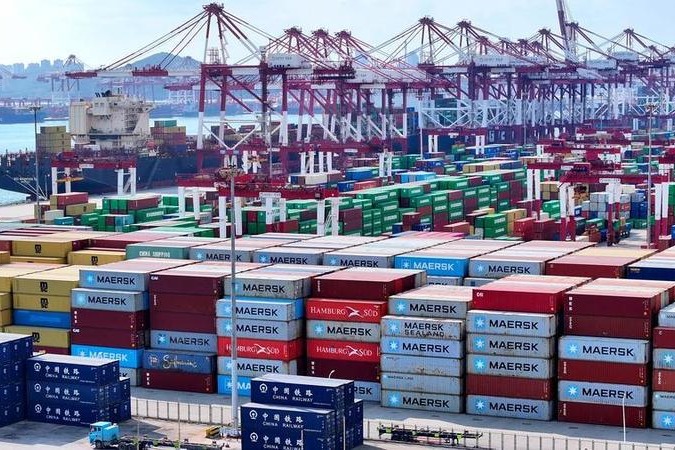
In the economic and trade field, China and the Arab world are strengthening their pragmatic and mutually beneficial cooperation, with the BRI boosting Sino-Arab trade and investment. In 2021, the direct investment between China and Arab countries reached $270 billion, an increase of 2.6 times compared to 10 years ago, and the trade volume between the two sides reached $330.3 billion, an increase of 1.5 times compared to 10 years ago.
In the international arena, China and the Arab world are cooperating closely, effectively addressing the complex conflicts and tensions in the Middle East. The two sides have enhanced their communication and coordination, and are working together to promote political solutions to hot issues. Last year, through China's mediation, Iran and Saudi Arabia agreed to restore their diplomatic relations after seven years of interruption. This is considered a significant step toward easing tensions in the Gulf region. At the same time, China and the Arab world are calling for upholding strategic independence, strengthening unity and cooperation on issues concerning Palestine, Iraq, Libya and Sudan, aiming to build a more peaceful, stable and prosperous Middle East.
On Jan 1, with the support and encouragement of China, Saudi Arabia, Egypt, Iran and the United Arab Emirates officially joined the BRICS mechanism. The inclusion of the four Middle Eastern countries enhances the ability of these countries to utilize their own potentials and enhance cooperation to boost local economic development, making BRICS Plus a new platform for cooperation and exchanges in the Arab region as a whole.
In the new era, China and the Arab countries can promote the construction of a community with a shared future for mankind by focusing on the following:
First, aligning the development strategies of both sides and promoting win-win cooperation. Cooperative implementation of global development initiatives, utilizing opportunities in energy, infrastructure, agriculture, investment, finance and modern technology, will help achieve mutual progress and development. This approach ensures that the benefits of cooperation extend to the peoples of both sides.
Second, establishing a new model of scientific and technological cooperation, promoting joint technological advancement. China's exports to the Arab world have shifted from raw materials to industrial products. With the new developments in the BRI, China can increase its focus on technology transfer, exporting modern technological products to the Arab world, as well as collaborating on the research and development of new technologies to enhance cooperation opportunities and achieve joint technological progress.
Third, expanding new tourism cooperation paths, broadening the scope of sports exchanges. Geographic information technology and smart data can be used in the tourism industry to provide information to tourists, guide new tourism consumption and enhance innovation in service methods and tourism industry models.
Fourth, modern technology such as artificial intelligence, the internet and digitization can now be used to reduce language barriers and establish new cultural exchange models. For example, the launch of the Digital Silk Road initiative to promote cultural and economic exchanges can provide new opportunities for cultural cooperation between China and the Arab world.
In the long course of history, the Chinese and Arab civilizations have continuously interacted with an open and tolerant attitude, inspiring each other. The ancient Silk Road witnessed cooperation and exchanges between the two sides, and today's BRI has injected new vitality and momentum into cooperation between them. In this changing age, the development of relations between China and the Arab world is no longer limited to the regional scope but has a global impact. The deepening cooperation between the two parties in the economic, political and cultural fields contributes significantly to the stability, prosperity and peace of the region and beyond.
The author is an Egyptian sinologist and director of the Confucius Institute at the Suez Canal University. The author contributed this article to China Watch, a think tank powered by China Daily.The views do not necessarily reflect those of China Daily.
Contact the editor at editor@chinawatch.cn.