



Integrated megapolises next stage of reform









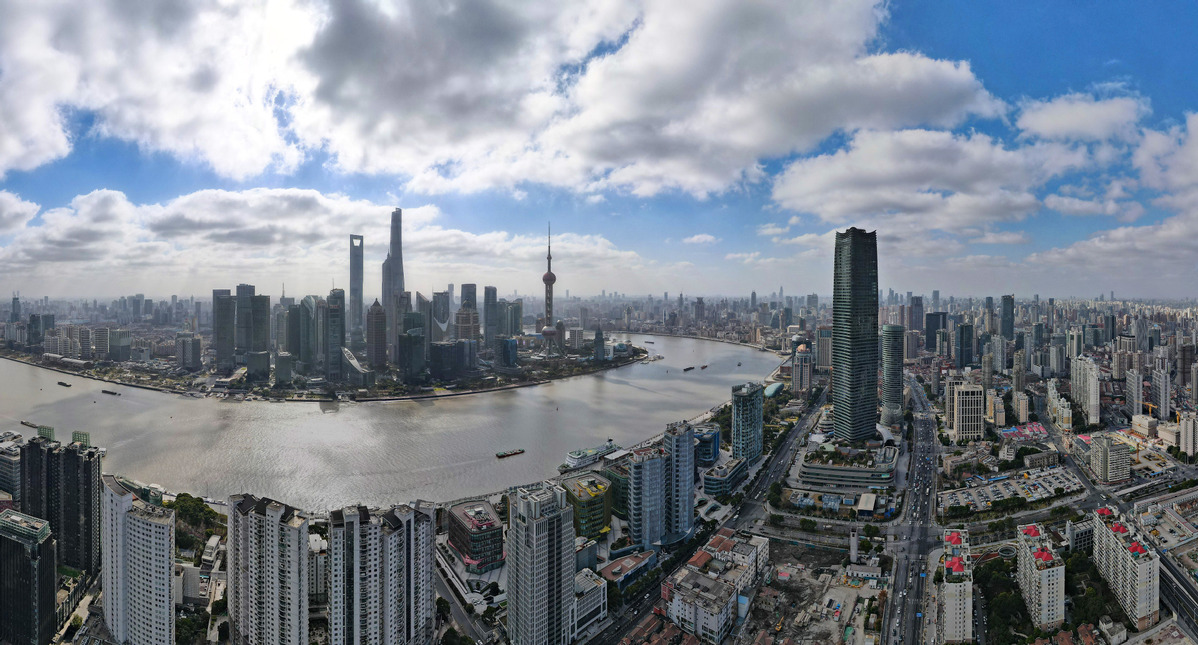
After record rapid urbanization, China is moving to the next stage with the development of integrated and coordinated multi-city clusters. The Yangtze River Delta region is a case in point.
To identify the best ways to advance the integrated development of the Yangtze River Delta region, President Xi Jinping chaired a symposium in Shanghai in November 2023. Half a decade before that, the president had championed an initiative that made the integrated development of the delta region a national strategy.
From the standpoint of development, I believe China has entered the next stage of reform and opening-up, essential to propel Chinese modernization.
The Yangtze River is China's longest waterway. Running more than 6,300 kilometers, it encompasses a set of economic powerhouses and megacities, including the provinces of Jiangsu, Zhejiang and Anhui, and the megapolis of Shanghai.
Between 2018 and 2022, the Yangtze River Delta region's GDP grew at an average annual rate of about 5.5 percent, accounting for 24 percent of the national total — the region's GDP exceeds that of Japan's.
Recently, Tesla inaugurated its new megapack battery factory in Shanghai, which highlighted the US carmaker's increasing investment in China amid intense competition. Among other industrial ecosystems, the Yangtze River Delta (YRD) region is a major automobile production base, and a hub of new energy vehicles (NEVs), including a variety of electric vehicles. With chip and software sourced from Shanghai, batteries from Jiangsu, die-casting machines from Zhejiang, an NEV factory in the YRD region can reportedly acquire all the auto parts within a four-hour drive.
From microchips to large aircraft, and cloud computing to artificial intelligence, coordination among these locations fosters industrial transformation and upgrading in the region. Because of its status as one of the most economically vibrant regions in China, the YRD city cluster has attracted major State-owned and private enterprises, and a large number of Fortune 500 companies for setting up headquarters in China.
As an increasingly diversified industrial, financial, retail and corporate hub, Shanghai can drive regional clusters while benefiting from their complementary strengths. But Shanghai is not alone. It is developing in tandem with China's other major regional growth engines.
Consider these important facts of development. In 1950, only 13 percent of the Chinese people lived in cities. By 1980, just after China launched reform and opening-up, the figure had increased to 19 percent. Since then, it has soared to a stunning 66 percent, with the initial urbanization drive taking off in the special economic zones of the largely coastal first- and second-tier cities. Now, urbanization is intensifying even in third- and fourth-tier cities.
Moreover, the development momentum is shifting from urbanization toward the integration of major regional city clusters.
China has several major "megapolises". In addition to the Yangtze River Delta region, the megapolises and economic hubs include the Guangdong-Hong Kong-Macao Greater Bay Area, the Jing-Jin-Ji (Beijing-Tianjin-Hebei city cluster), and the Chengdu-Chongqing dual-city hub.
Furthermore, some emerging multi-city clusters have the potential to develop into new regional growth engines in a decade or two.
Internationally, China's emerging megapolises also face competitive threats and cooperative opportunities from the regional engines of the advanced economies.
As the world's leading global financial center, the New York Metropolitan Area hosts the headquarters of more than one-third of Fortune 500 companies in the United States. The San Francisco Bay Area is the heart of global innovation, which is coupled with Boston and its Ivy League research-oriented universities, such as Harvard and the Massachusetts Institute of Technology, Austin's energy cluster, Raleigh's Research Triangle and Seattle's Microsoft engine.
These dynamic US regions compete with Western Europe's innovation-driven cities such as London, Berlin, Paris and the Nordic hubs.
However, what makes Chinese cities unique is their ability to combine world-class innovation at affordable prices in a way that the rich economies can't. Over time, some major multi-city clusters in India, Brazil, Mexico and Indonesia have the potential to follow in the footprints.
But whenever new challengers emerge, they face entrenched incumbents, some of which seek to retain their monopoly. From New York City to Los Angeles, farsighted Western metropolises and their mayors understand that businesses compete, whereas cities and countries cooperate, whereas cities and countries cooperate. By contrast, governments that prioritize win-lose geopolitics can't benefit from win-win cooperation.
Some portray the rise of regional multi-city clusters as threats, rather than opportunities. They have tried to contain China's rise by targeting successful Chinese companies, such as Huawei, the information and communications technology giant, and Byte-Dance, the parent of TikTok.
That has little to do with the "competition" they claim to tout. Instead, such efforts are reminiscent of colonial protectionism and imperial preferences that once legitimized monopolies in the name of Western supremacy.
Today, terms differ, but goals don't. It is a geopolitical ploy to avoid real competition with the Global South. Today, it targets China. Tomorrow, it will target India, Brazil, Mexico and Indonesia. Mega protectionism should have no role in the 21st century.
The author is founder of Difference Group and has served at the India, China and America Institute (US), Shanghai Institute for International Studies (China) and the EU Centre (Singapore). The views don't necessarily reflect those of China Daily.
If you have a specific expertise, or would like to share your thought about our stories, then send us your writings at opinion@chinadaily.com.cn, and comment@chinadaily.com.cn.





