Chinese carmakers zoom ahead abroad
Growing demand, customer supply concerns, local benefits spark big investments









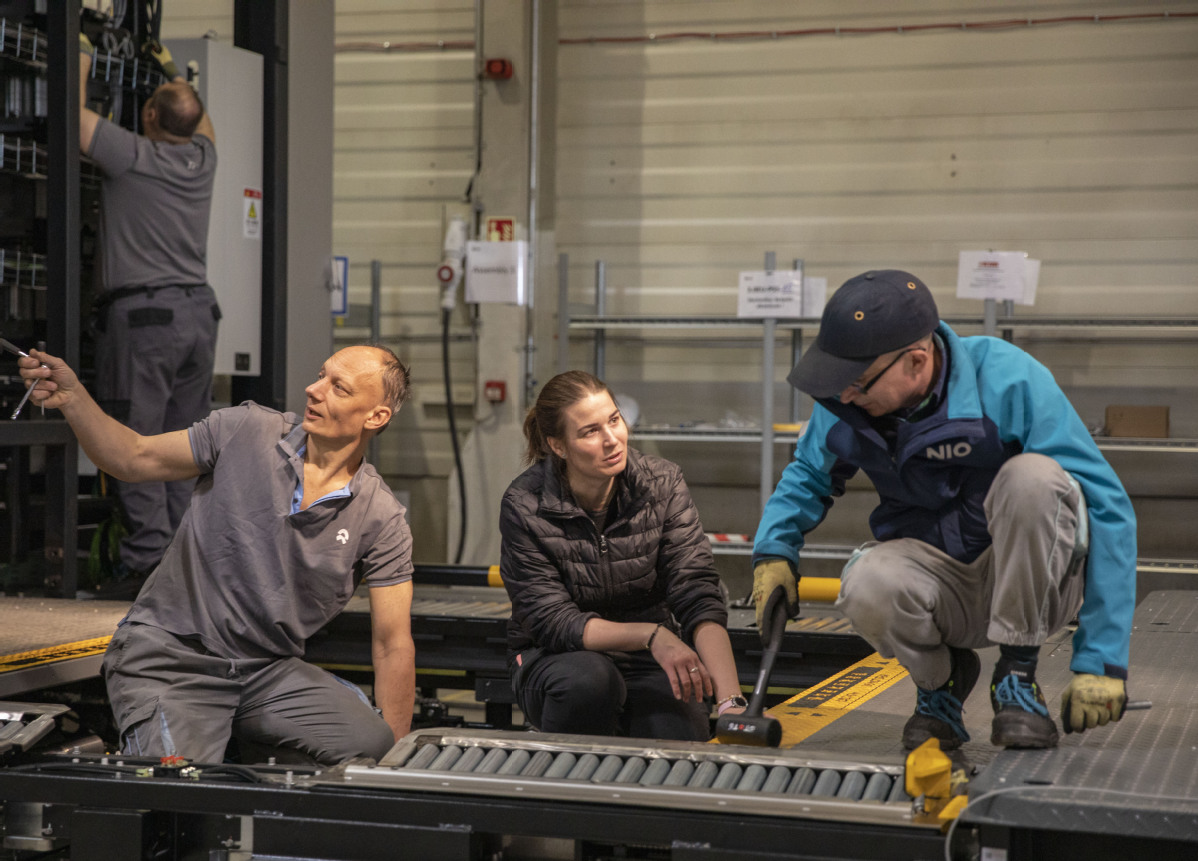
Chinese carmakers and auto parts manufacturers are increasingly diversifying their overseas production bases to meet growing global demand and address heightened supply chain security concerns, with Central European countries and Mexico becoming hot spots, experts and business executives said.
Their growing international presence shows they are keen to meet the rising demand from foreign clients who need quick responses and deliveries on time from parts suppliers, amid deglobalization and geopolitical tensions, the experts said.
Their remarks came after trade frictions intensified recently, including increased US tariffs on imports of Chinese products like electric vehicles, and the European Commission's decision on June 12 to impose extra duties of up to 38.1 percent on imported Chinese electric cars from July.
"Against the backdrop of deglobalization, foreign clients are shifting their focus from minimizing costs to supply chain security, thus favoring suppliers capable of producing parts near their sites. Central European countries and Mexico are popular destinations for investment due to their strategic location, favorable policies and proactive efforts to attract Chinese manufacturers," said Chen Shihua, deputy secretary-general of the China Association of Automobile Manufacturers.
"The two regions also boast good industrial bases with established names that have already set up operations and need good-quality auto parts and systems, attracting Chinese automotive industry players and niche companies," Chen said.
From July, Serbia will implement a free trade agreement with China that will result in over 90 percent of trade between the two countries being tariff-free. Sectors such as automotive, lithium-ion batteries and photovoltaics will benefit first.
In Hungary, low corporate tax rate, the establishment of German vehicle production bases, as well as stable and favorable policies to welcome foreign investment also make it a hot spot for Chinese automotive and parts manufacturers.
"Several Central European countries, including Poland, Slovakia and Hungary, have been the main destinations for Chinese companies seeking to set up sites overseas," said Wang Binlian, director of overseas projects at Zhejiang Shuanghuan Driveline Co Ltd.
The Shenzhen-listed auto transmission producer invested 122 million euros for the first phase of a project in Hungary. It is also expected to sign a long-term investment cooperation agreement with the local government in the coming months.
Wang said: "For us, Poland has an advantage in logistics over Hungary because our clients (automakers) are mainly located in Germany, Sweden and Belgium. This makes it convenient for us to transport our products via land from Poland.
"However, we chose Hungary because of its friendliness toward Chinese companies. Our foremost priority is a stable investment environment, even if it results in marginally higher logistics costs. In addition, Hungary's cultural similarities to China enable us to adopt Chinese management systems effectively.
"Moreover, Hungary serves as a central hub for the eastward relocation of European manufacturing, with major firms like Audi and BMW setting up factories. The Hungarian government is also actively encouraging the development of its automotive manufacturing sector."
Zhang Taixin, director of Halms Hungary KFT, Zhejiang Huashuo Technology Co Ltd's overseas branch, agreed. Huashuo produces various forms of auto parts. Its Hungary site began construction in April 2022 and commenced production in March 2023.
Zhang highlighted the recent energy upgrade in Debrecen, Hungary, where Halms is based. The move was reportedly aimed at supporting auto and auto parts manufacturers and securing reliable energy supplies for them, alongside the local government incentives and subsidies to attract foreign investment.
"We envision a strong R&D center at the headquarters, complemented by powerful global production and manufacturing facilities. We leverage our global production capacity to address regional market imbalances, thus avoiding market fragmentation that does not serve manufacturers or consumers," Zhang said.
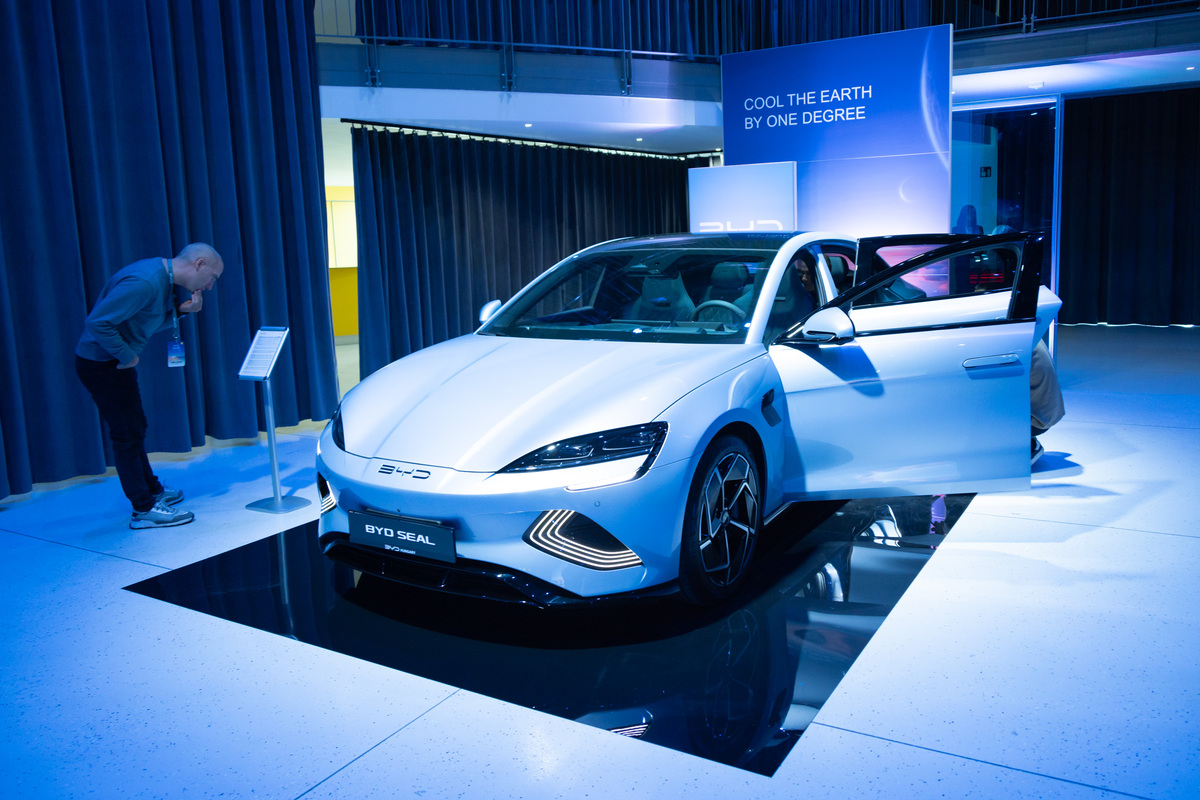
Beyond Central Europe, Mexico has become a prime destination for Chinese automakers and parts suppliers. Local media outlets have reported that China's BYD, also the world's largest new energy vehicle manufacturer, is scouting locations in Mexico for a new factory.
Listed companies in the "Tesla supply chain", including auto parts makers Ningbo Huaxiang Group, Ningbo Tuopu Group and Xusheng Group, have already begun or accelerated plans to establish factories in Mexico, following Tesla's plan to set up a manufacturing plant of its own in Mexico.
Xusheng Group said the purpose is to quickly respond to technical and after-sales service needs of local customers, and achieve rapid product delivery.
Chinese auto brands have already started making their mark in Mexico. Latest data from the Mexican Association of Automobile Distributors showed sales of Chinese brands such as BYD, JAC and Geely in Mexico reached 129,329 units last year, up 63 percent year-on-year. Their market share in Mexico grew to 19.5 percent, up from 6.4 percent in 2019.
"Global consumers prefer Chinese NEVs because they meet supply gaps in certain regions, driven purely by market demand. China's NEV development offers technical support and policy references for the global NEV industry, contributing to worldwide green development," said Fu Bingfeng, deputy secretary-general of the China Association of Automobile Manufacturers.
Although some Western politicians and media outlets claim that China is creating excess capacity and dumping products at low prices overseas, backed by government subsidies, experts and business executives argued the notion is unfounded, saying the growing overseas footprint of Chinese EV and auto parts makers is due to their products' cost-effectiveness, improved quality and efficient after-sales service.
"Some foreign media have incorrectly attributed China's recent export growth to overcapacity, unjustly labeling it as 'dumping'. In reality, the strong export performance of Chinese vehicle brands is driven by improved product quality, technological advancements and enhanced business services," said Fu, emphasizing that China's NEV production capacity utilization rate now exceeds 70 percent, which is within a reasonable range.
According to the CAAM, in the first four months of this year, about 1.8 million vehicles were exported, up 33.4 percent year-on-year. Among these, 421,000 were NEVs, up 20.8 percent year-on-year.
On the accusation that Chinese companies accept government subsidies, Lin Boqiang, head of the China Institute for Studies in Energy Policy at Xiamen University, said the competition in China's EV market is extremely fierce and is not sustained or protected by subsidies.
"Digging deep into the industrial development of new energy fields, major economies, including the United States and the European Union, have offered subsidies to the industry to support its development," Lin said.
He said the EU's anti-subsidy move is a political maneuver to curb the development of Chinese industries because they are worried that China's EV industry will quickly dominate the global market, leaving little space for them.
The China-EU cooperation can yield win-win results, as the two sides provided market space for each other. In 2022, the market share of Chinese brands in the EU's EV sales increased to 3.7 percent, up from just 0.4 percent three years ago.
Meanwhile, the share of European new energy vehicles in the Chinese market also grew, rising from 2.4 percent in 2019 to 6.1 percent in 2022, reported BJNews, citing the European Automobile Manufacturers' Association and the China Passenger Car Association.
Companies recognize this trade benefit. European automakers, particularly German manufacturers with a strong presence in the Chinese market, have expressed strong opposition before EU tariffs were announced on EVs made in China, saying that such a move could backfire.
Top executives at BMW and Volkswagen warned in May that imposing EU import duties could upend the bloc's Green Deal plan and harm automakers that import cars made in China.
Norbert Wiest, general manager of SW China, the Chinese branch of German machine tool maker SW Group, said: "It is logical for China's car industry to go global. In industrial history, every rapidly growing and significant economy has gone global.
"Japan expanded globally when its automotive industry was growing. Despite initial challenges, Japan succeeded in its second attempt due to improved performance, technology and cost reduction through mass production, similar to China's experience. German OEMs (original equipment manufacturers) were also very successful in exporting parts to China.
"Many of SW's customers in China are tier 1 suppliers directly serving OEMs. Their main reasons for overseas expansion include following global customers such as Tesla in Europe and North America. These innovative enterprises also contributed to the global technical development in the field of electric cars and benefited companies involved in the supply chain."