



Manila's provocative moves will not succeed









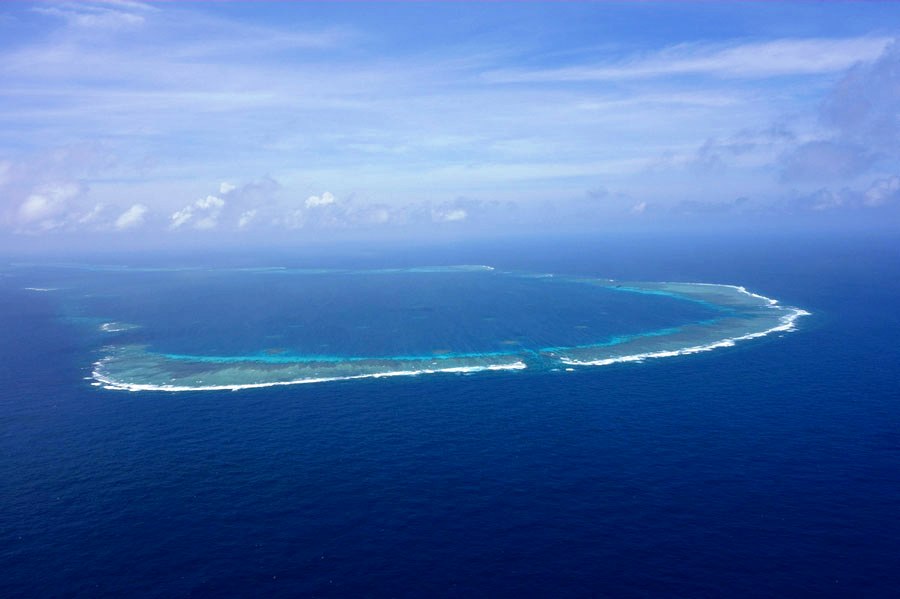
The Philippines made a submission to the Commission on the Limits of the Continental Shelf on June 14 for determining the outer limits of the continental shelf beyond 200 nautical miles in parts of the South China Sea. Although the details of the application have not been released, it can be inferred from the term "Western Palawan region" mentioned by the Philippine Department of Foreign Affairs that it covers China's Nansha Islands and the waters in China's jurisdiction, which is a violation of China's sovereignty, sovereign rights and jurisdiction.
Manila had been planning the move for a long time to substantiate the award of the 2016 South China Sea arbitration, consolidate its illegal gains and unilateral claims, and continue to make provocative moves in the South China Sea in a bid to gain global support for its illegal acts.
Established under the United Nations Convention on the Law of the Sea, the commission takes into consideration information and other facts on the outer limits of coastal states' continental shelf beyond 200 nautical miles and accordingly makes recommendations. Since the launch of its formal operations in 1997, the commission has received 94 applications from coastal states for determining the outer limits of the continental shelf beyond 200 nautical miles.
According to the Third United Nations Conference on the Law of the Sea from 1973 to 1982, more than 30 countries had an outer continental shelf. However, the total number of applications has now more than doubled, with South China Sea littoral states such as Vietnam, Malaysia and the Philippines, too, making joint or separate submissions to determine the outer limits of their continental shelf beyond 200 nautical miles in parts of the South China Sea.
This shows that during the negotiation of the UNCLOS, countries had a relatively limited understanding of the outer continental shelf. The issue of the continental shelf beyond 200 nautical miles in the South China Sea is what led to the intensification of the South China Sea disputes, with the negative impact of the arbitral award highlighting the issue of the outer continental shelf in the South China Sea.
In fact, individual parties to the disputes in the South China Sea have violated China's sovereignty and maritime rights, with some non-regional powers portraying the South China Sea as a "global common good". These powers, with the help of some of China's neighbors, have been using the South China Sea disputes as a political and legal tool to negate China's claims in the South China Sea and strengthen the "effect" of arbitral award.
Although, in accordance with the rules of procedure, the commission will not consider applications relating to disputes. As a result, some committee members as well as certain UNCLOS member states have, from time to time, called for an amendment to the rules. In other words, although the rules may not be repealed or amended in the short term, an amendment cannot be ruled out, which could compel the commission to consider submissions for the determination of the outer limits of the continental shelf beyond 200 nautical miles in the disputed waters of the South China Sea.
After Ferdinand Marcos Jr. was sworn in as Philippine president in 2022, Manila began gradually changing its China policy and its stance on the South China Sea issue, while repeatedly making provocative moves in the South China Sea. However, China's strong countermeasures have put paid to the Philippines evil design. As a matter of fact, the Philippines is trying to open a new battlefield in multilateral forums by filing a submission to determine its outer continental shelf.
Some US research institutes and the team of US lawyers, which provided legal services for the Philippines in the South China Sea arbitration case, have given legal and technical advice to the Philippines on issues related to the outer continental shelf.
With the gradual strengthening of China's soft and hard power, which helps it to safeguard its legitimate rights and maintain peace and stability in the South China Sea, the Philippines' anxiety over consolidating its illegal gains has increased. And given the limited time window China and ASEAN member states have to advance negotiations on the Code of Conduct in the South China Sea, Manila has less room to make provocative moves on the South China Sea issue.
By making the submission to the commission before any substantive progress could be made in the COC negotiations, Manila intends to add a veneer of legitimacy to its illegal claims.
Considering the commission's rules of procedure, whether its submission is considered, let alone accepted, is not of paramount importance to Manila, because its aim is to set off another round of diplomatic debate against China, and provide a chance for some countries within and outside the region to attack China's South China Sea policy. The danger is that the Philippines is creating the ground for not only the countries directly involved in the disputes but also those from outside the region to intervene in the name of safeguarding "freedom of navigation and overflight" in the South China Sea.
Perhaps the content of Manila's submission goes far beyond the scope of expressing positions, which would make it impossible for the commission to deal with. Such an approach reflects the current geopolitical reality of the South China Sea issue, which could destabilize the region. Still, Manila's attempt to legitimize its illegal claims in the South China Sea is not destined to succeed.
The author is the deputy director and an associate research fellow of the Research Center for Ocean Law and Policy at the National Institute for South China Sea Studies.
The views don't necessarily reflect those of China Daily.
If you have a specific expertise, or would like to share your thought about our stories, then send us your writings at opinion@chinadaily.com.cn, and comment@chinadaily.com.cn.





