Nations aligning steps for green partnership









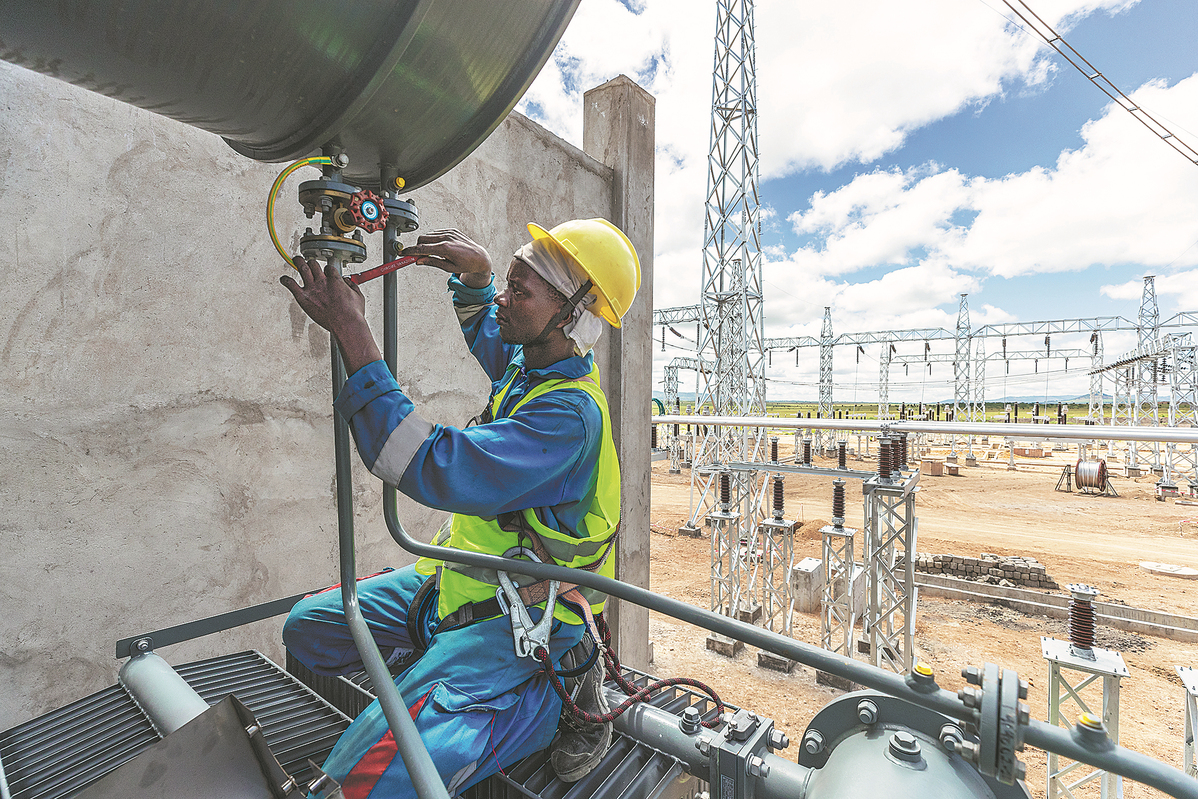
The China-Africa Dar es Salaam Consensus specifically speaks of aligning international initiatives and national plans to strengthen high-quality and sustainable development of China-Africa ties, including, and prioritizing, the development of renewable energy in Africa.
Climate change figures as one of the important thematic areas that represent a new frontier of global governance underscored in the consensus, presenting China with the occasion to display its willingness and ability to act as a responsible great power on the global stage, and serve as another catalyst in the ongoing shift toward a more plural global system.
At the same time, despite contributing only a small fraction toward total global carbon emission, African countries suffer from the negative effects of climate change more severely than those in other continents. According to the 2024 World Development Indicators of the World Bank, Africa is the most energy-intensive region in the world, measured as energy used to produce one unit of economic output. Consumption and carbon emissions are rising, underlining that policymakers must embrace energy efficiency and clean energy to mitigate carbon emissions.
Looking ahead, the pressure on African policymakers is only going to intensify. According to the United Nations World Population Prospects, Africa's population is expected to increase from 1.3 billion in 2025 to 2.2 billion in 2050 — the fastest growing population in the world. At the same time, Africa is experiencing rapid urbanization, adding an average of 14.7 million people to cities each year since 1990, which is expected to rise to an average of 38 million additions per year through 2050.The lack of energy — particularly affordable modern energy — will be a serious headwind to African economic growth. The impact of this could expand further to hinder advancements in the socioeconomic well-beings such as education, health delivery and access to clean water and food.
Renewable energy was identified more than two decades ago as a potential solution, presenting an opportunity to leapfrog traditional sources of power for developing countries.
China has already emerged as the global leader in renewable manufacturing, and also a leader in the deployment of services. Significant progress has already been achieved in the application and use of renewable power technologies in Chinese cities, resulting in greater access to and saving of electricity.
China's leading position in the global market for clean energy technologies has also involved the supply chains of critical raw materials such as rare-earth magnets, graphite and lithium-ion through domestic and overseas investments. Countries like Egypt and South Africa are turning to China to develop wind capacity, resulting in robust Chinese exports. Africa is an important market for export of Chinese renewable manufacturing capacity.
China's growing involvement in African renewables has the potential to transform African energy systems and ecosystems. Managed well, China's role in renewable energy could go a long way in enhancing its global reputation as a responsible leader, dealing with energy access, climate change and environmental sustainability. Both solar and wind energy can enhance Africa's ability to deliver cleaner and environmentally friendly energy, boost energy security and reduce energy poverty.
However, it's worth recognizing that even in the renewable energy space, Africa is too small. If African policymakers want to shape the story, African markets need to be more important to the various actors at play.
In this respect, the Forum on China-Africa Cooperation has provided a platform to promote green and low-carbon projects and incorporate environment protection into all aspects for sustainability of investments and pathways to sustainable growth. FOCAC should focus on promoting green and low-carbon projects.
Projects must include the export of wind turbines and solar panels, and the development of new equipment manufacturing, grid and transmission building and management. Each project must be commercially viable.
The key approach is to help governments create macroeconomic and sector environments that enable private capital mobilization, and create a steady pipeline of high economic value projects in which the private sector can invest.
African policymakers should provide incentives to financial institutions that fund energy generation and transmission, as empirical evidence suggests that financial development is more significant for energy supply than even institutional quality.
In addition, often the social benefits of clean energy outweigh the private benefits for the investor. Correspondingly, as private companies tend to be at the forefront of China's renewable energy interactions, African policymakers must focus on creating the right incentives and scaffolding to attract these players.
Improving transparency in business regulations and legal frameworks, along with supportive government policies, are crucial for encouraging investment in Africa — renewable energy related or otherwise.
The author is an economist at Standard Bank Group and contributed this article to China Watch, a think tank powered by China Daily.