


On-site museum takes closer look










When they were unearthed, they were the first Han-style brick chamber tombs identical in structure to those found in the Central China Plains region and the Hexi Corridor, part of the ancient Silk Road in northwestern China, to be discovered in Xinjiang.
The tombs have provided evidence of governance and administration by the central dynasties over present-day Xinjiang and serve as a valuable testament to the interaction among different ethnic groups from between the 3rd and 6th centuries, including Wei (220-265) and Western Jin (265-316) dynasties and following periods, when many small states rose and fell.
Due to their significant role in historical research, the tomb complex was listed as one of the top 10 archaeological discoveries in China in 2007.
The 15 brick chamber tombs on show have clear features, such as tomb doors, corridors and burial chambers. Doors are adorned with carvings, and the lintels feature traditional Chinese mythical creatures, such as Green Dragon (Qinglong), White Tiger (Baihu), Red Bird (Zhuque) and Black Warrior (Xuanwu, tortoise and snake).
Some of the occupants were buried with coins in their mouths or hands, in the belief that they could take those items to their next life, a reflection of burial customs in the Central China Plains region. The large amount of pottery, bone artifacts, coins and other items buried alongside the tombs also serve as evidence for the close connections between the Central China Plains and the western regions, experts say.
The occupants of the tombs could have been Qiuci nobles influenced by Central China Plains culture, soldiers stationed in the region to guard the borders, or migrants from the Hexi Corridor area, according to research.
"The museum seeks to effectively and accurately disseminate historical knowledge to the public, to uncover historical truth, and better protect and research our precious cultural heritage," says Feng Wei, deputy director of the museum.
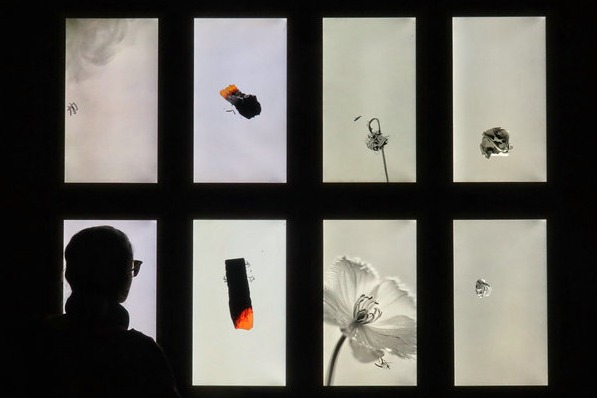
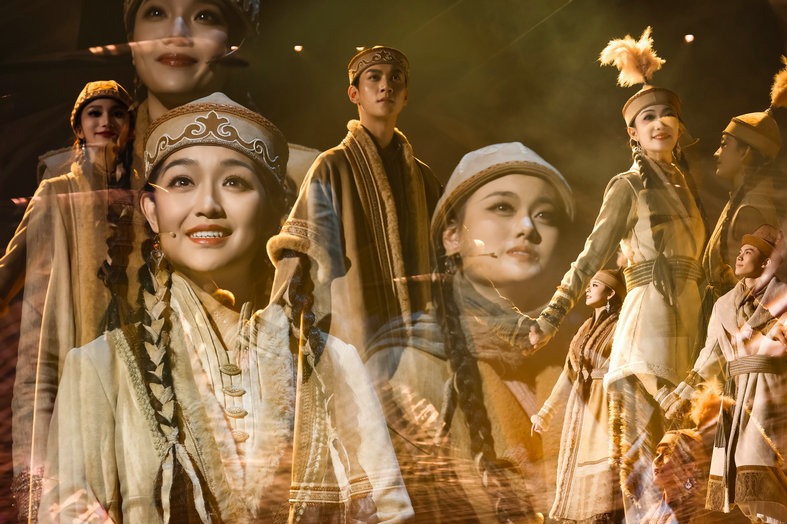
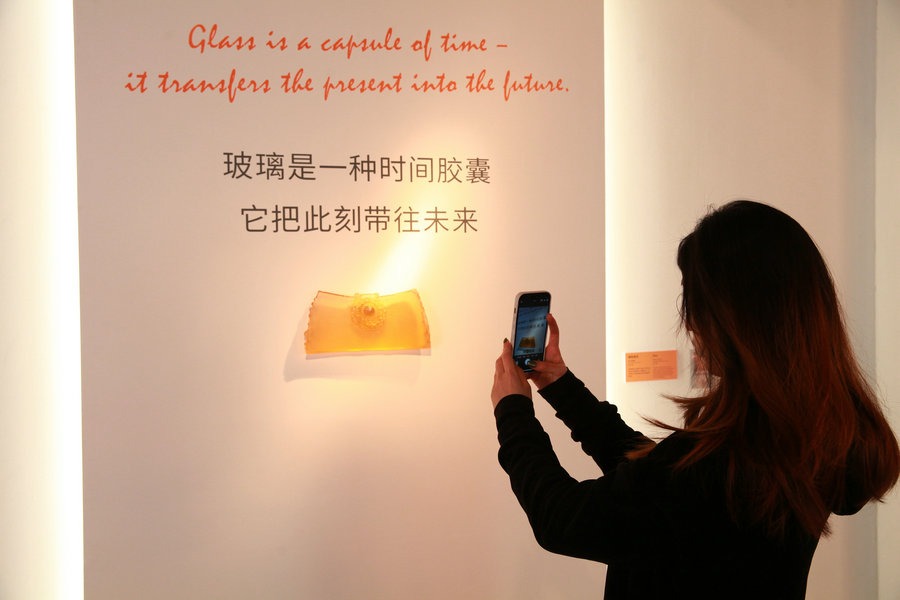
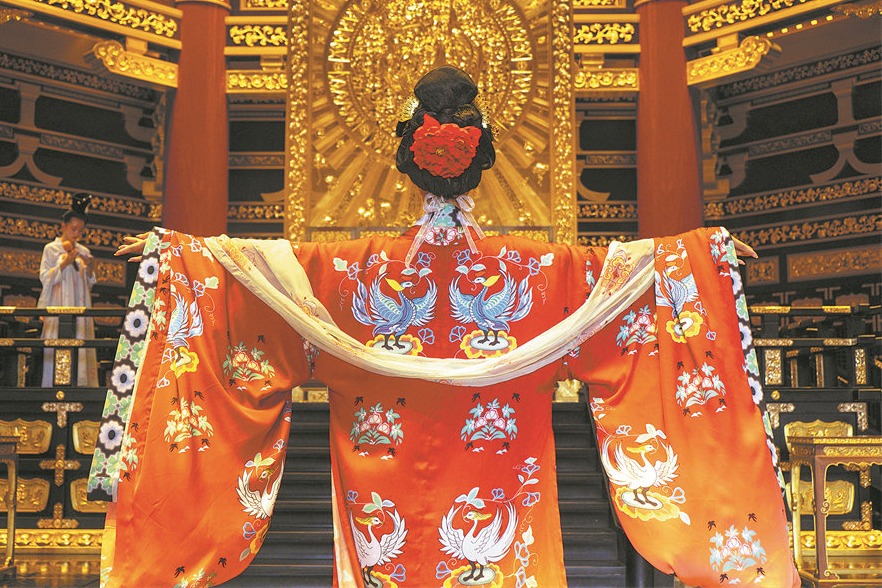
Through digital exhibitions, virtual reality experiences, projections on gauze curtains, interactive screens and other digital means, the museum re-creates the customs and way of life of ancient Qiuci, allowing visitors to immerse themselves in the beauty of the artifacts.
For convenience, the exhibition hall has wide walkways and glass sections that allow visitors to see the brick chamber tombs from close up. Additionally, there are an array of multimedia digital image displays, on-site recordings of archaeological discoveries, introductions to artifacts and explanations from archaeological experts. Visitors can also see the internal structure and construction methods of the tombs from multiple perspectives.
Li Junqi, a tourist from Gansu province, was one of the first to visit the museum after its opening. "This is the first time I've seen a museum built on the original site of an ancient tomb, and it provides a truly immersive experience," he says. "The museum design is modern, the exhibits are varied, the explanations are detailed, the guidance is clear and the viewing experience is convenient."
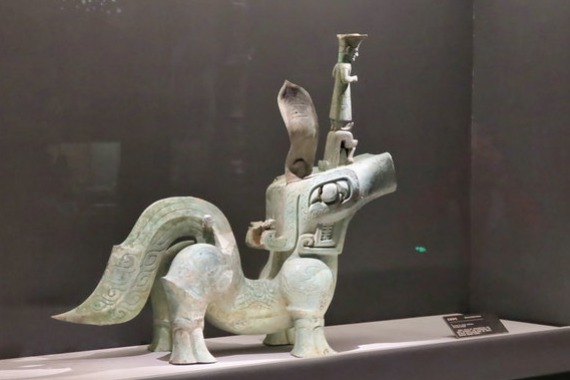
The pattern on top of the No 3 tomb appears to depict a road going skyward. Also displayed are images of the four mythical creatures, and a representation of Xiezhi, a one-horned mythical creature reputed to be able to distinguish between good and bad, which according to Ma Lili, director of the museum, shows the historical value of the tomb.
She adds that as they cleared the tomb out, archaeologists discovered traces indicating secondary use of the chamber. Fine sand had flowed in between the bricks and stones below the chamber, suggesting that it had been opened multiple times.