


Market-based drivers key to energy success
Focus on spurring independent ops in monopolistic sectors; reforms boost competition










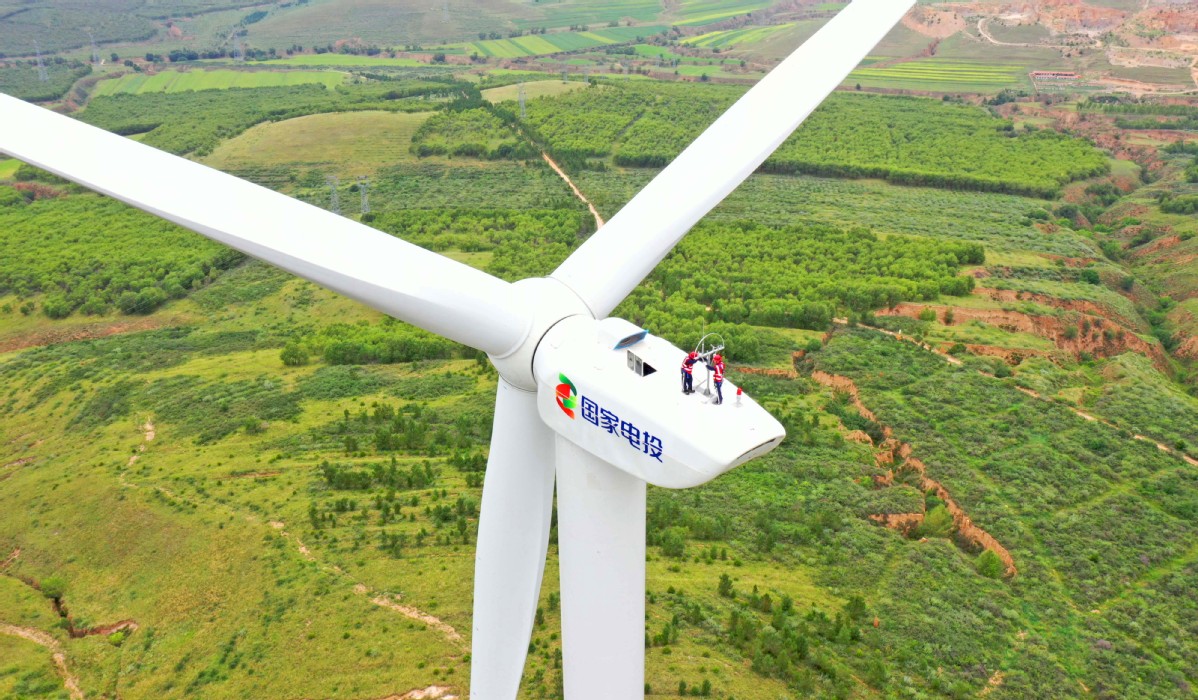
"Future policies will further enhance the grid compatibility of new energy integration, and peak-shaving capabilities," Li added.
Wang Bohua, honorary chairman of the China Photovoltaic Industry Association, said that relaxing the required absorption rate of green power for the grid from 95 percent to 90 percent, combined with accelerated large-scale project construction and faster grid development — along with support for distributed new energy development (such as rooftop photovoltaics) — will create significant opportunities for new energy development. Consequently, China's photovoltaic installed capacity is expected to remain high.
Earlier, data from the China Electricity Council showed that by the end of June, the combined installed capacity of wind and solar power in China surpassed that of coal power for the first time, reaching 1.18 billion kilowatts compared to coal power's 1.17 billion kW.
"As end-use energy becomes more electrified and electricity consumption becomes low-carbon, new energy will gradually become the primary energy source in the power generation process. Meanwhile, electricity reforms are advancing improved electricity pricing mechanisms, and more efforts will be made to promote distributed PV's participation in electricity trading," Wang said.
Talking about the establishment of a new type of energy system that was underlined in the decision of the third plenary session, Lin said the proportion of new energy in the energy system continues to rise, and its impact on grid stability is also increasing, thus posing greater need for a new adjustment system. Lin said that the essence of a new type of energy system lies in primarily relying on wind and solar power as the main electricity resources, complemented by corresponding grid stability and coal-fired energy supply support.
Ouyang Minggao, an academician at the Chinese Academy of Sciences, emphasized the necessity of implementing new types of energy storage methods.
He said new types of energy storage include long-cycle, cross-seasonal flexibility adjustments using hydrogen and its carriers, electrochemical energy storage for mid-term adjustments within eight hours, and electric vehicle energy storage for vehicle-to-grid interactions.
A recent report from the China Renewable Energy Engineering Institute revealed that China's cumulative installed capacity of new types of energy storage exceeded 31 gigawatts as of the end of last year, a nearly tenfold increase over the past three years, with lithiumion storage accounting for 97.4 percent, and compressed air storage entering the accelerated development stage.
"Constructing a new type of energy system requires both ensuring stable energy supplies and increasing the proportion of clean energy, which opens new opportunities for new technologies such as smart grids and carbon capture, utilization and storage technologies," Lin said.
He said CCUS is an important technological choice for balancing energy security and carbon reduction. Facing challenges posed by the limited share and intermittency of renewable energy resources, together with increasing global energy market volatility and heightened post-pandemic development pressures, many countries, especially developing ones, approach energy restructuring cautiously. Against this backdrop, ensuring stable energy supplies while promoting carbon reduction has become equally imperative.
Lin said CCUS technology, primarily applied in high-emissions sectors such as coal-fired power generation, petrochemicals and steel production, facilitates low-carbon utilization of fossil fuels. It plays an important role in stabilizing global energy transformation and serves as a significant technical means for countries to reduce carbon emissions while maintaining stable fossil fuel consumption.





