



A branded house or a house of brands









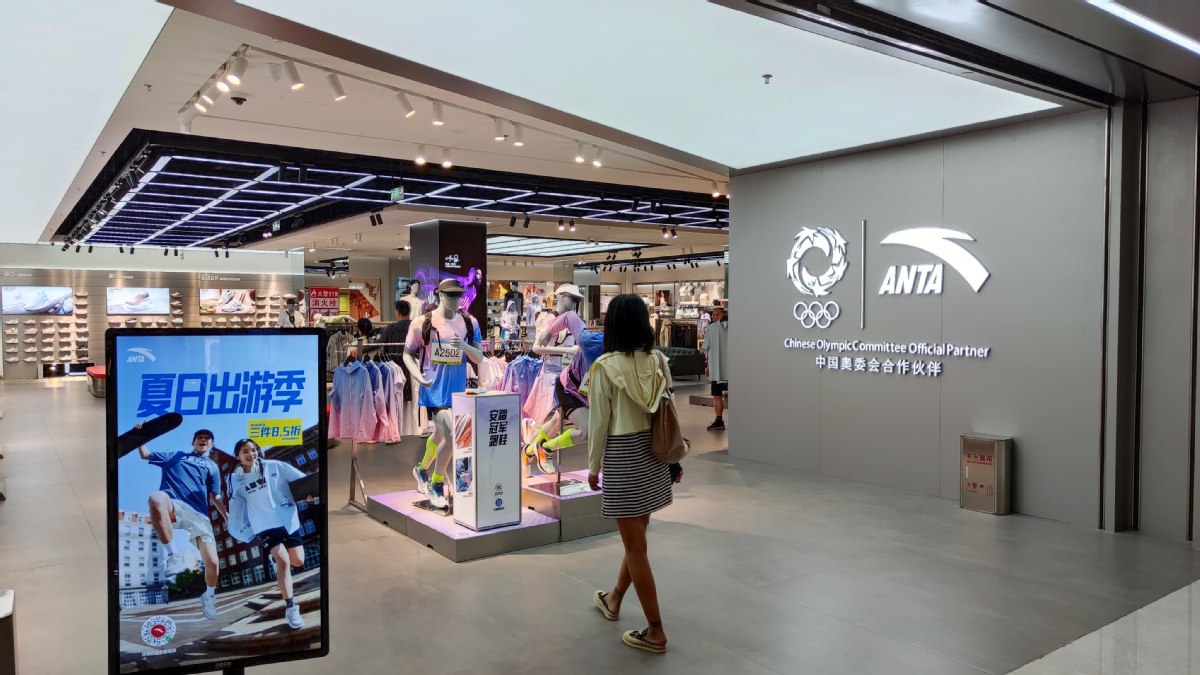
The global expansion and market penetration of Chinese sportswear brands, thanks to their high-quality design and innovation, continues, with potentially global giants Anta and Li-Ning leading the way. Initially, established global sports brands such as Nike and Adidas did not feel the pinch of the expanding Chinese brands. But in 2022, Anta overtook Adidas to become the second-largest sportswear brand in China with a market share of 20.4 percent.
But Anta and Li-Ning are not the only Chinese sportswear brands expanding in the global markets. Chinese brands such as Xstep, 361 Degrees, Peak Sports, Zhongqiao Sports, Hongxing Erke, Feiyue and Camel are all poised to seize the opportunities to penetrate further into overseas markets. In fact, all these brands have impressive global penetration programs in place.
The global exposure and expansion of Chinese brands resulted in the Chinese sportswear and equipment industry's intensive involvement in the just-concluded Paris 2024 Olympics, with Anta and leading Chinese sports equipment producers Taishan Sports and Double Happiness leading the way.
But how can this increasing array of innovative Chinese sportswear companies continue to build their brands worldwide?
Their paths to development and expansion vary. Take Li-Ning for example. It was Li-Ning that in 2017 first publicized the "national wave" (guo chao) trend, that is, infusing Chinese elements into sportswear and related products, to wide acclaim. Although the brand's path to global expansion differs from its domination in the domestic market, the continued infusion of traditional Chinese elements into its products will provide a good launch pad for its global rise.
Sportswear branding, initially, considerably overlaps with fashion branding which requires strong emotional appeal, and Li-Ning is well-positioned to continue to infuse traditional Chinese elements into its products, something which would resonate with consumers of fashion brands.
Of course, commitment to ensuring quality in all aspects of design, production and innovation also underpins Li-Ning's global success.
Anta, too, requires a move similar to Li-Ning's guo chao-focused approach to expand overseas. As a matter of fact, Anta's design for the clothing of Chinese athletes who took part in the Paris Olympics contained subtle aspects of traditional Chinese elements. The company's collaboration with globally renowned Chinese filmmaker Zhang Yimou was a smart move to promote its brand internationally.
As such, both Li-Ning and Anta will continue to infuse traditional Chinese elements into their products as they "go global".
But what about brand architecture? To what extent do Chinese sportswear companies rely on their corporate brand name, identity and image? Or do they follow an innovative new brand naming strategy where the corporate brand provides, increasingly subtle, support? The latter will be required to achieve long term success in global markets.
Both Anta and Li-Ning need to create sub-brand names that resonate globally. That would lead to a range of sub-branded items with the corporate name retaining a reassuring, confidence-boosting presence.
Since other Chinese sportswear brands are a bit behind Li-Ning and Anta in terms of global presence, they too should infuse their products with subtle traditional Chinese elements to enhance their brand identity.
It is the infusion guo chao into the products that can elevate a global sportswear brand to a luxury fashion brand. On the other hand, many luxury fashion brands are now focusing on the sportswear market in a bid to meet the rising demand for luxury goods with a sports theme.
Companies such as Double Happiness, Enlio and Taishan Sports meanwhile provided very high-quality sports equipment for the Paris Games which were used in a wide variety of sports, from wrestling, cycling, taekwondo and gymnastics to table tennis, and track and field.
Ingredient branding offers a suitable way forward, as it facilitates the shift from high-quality but largely anonymous provider of branded goods to a well-known manufacturer of branded products which prominently carry the company's name and logo.
Taishan, for example, is synonymous with "quality", "reliability" and "innovation" but its products fail to establish an emotional connect with consumers, which is essential for transforming a "product" into a "brand". So Taishan should also introduce subtle traditional Chinese elements into its products in keeping with its business branding protocol of erring slightly toward the rational rather than the emotional.
Chinese sports equipment and sportswear brands are making greater efforts to expand and/or consolidate their global presence, though their global branding journeys are very different. But they should focus more on the emotional aspects of a brand, create an increasing array of sub-brand names, and sports equipment-makers should retain control over their products by assigning them stronger corporate brand names. But for both, they have to infuse their products with subtle, perhaps more and more regional/local, traditional Chinese elements.
The author is a senior teaching fellow at University of Southampton. The views don't necessarily represent those of China Daily.
If you have a specific expertise, or would like to share your thought about our stories, then send us your writings at opinion@chinadaily.com.cn, and comment@chinadaily.com.cn.





