



Tackling inequality through green transition









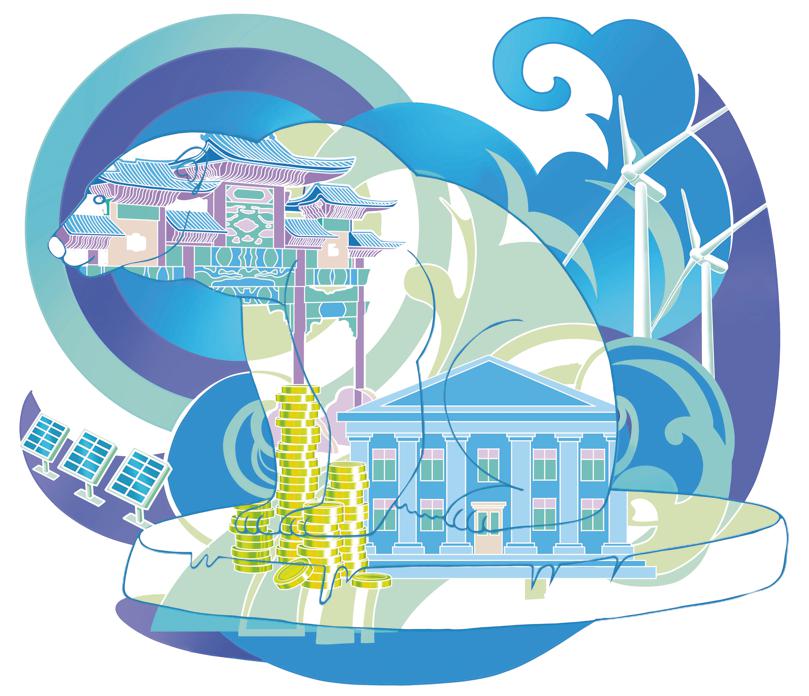
The Asia and Pacific region stands at a critical juncture, positioned both as a significant contributor to global greenhouse gas emissions and a potential leader in transformative climate action. The Asian Development Bank, alongside its member countries, is steering the region toward a sustainable future through support for a just transition. Our (the ADB's) vision is to reorient economic and social frameworks to foster low-carbon, climate-resilient growth that enhances prosperity and inclusion.
The need for a just transition, one that puts people at the center of the shift to net zero, cannot be overstated. Asia and the Pacific account for more than half of the world's annual greenhouse gas emissions, driven by its dependence on fossil fuels. At the same time, more than 200 million people in the region are impoverished, with many lacking access to basic electricity and relying on traditional biomass for cooking and heating. Women are particularly affected, and often face disproportionate impacts.
As Asia and the Pacific's climate bank, the ADB prioritizes an inclusive approach to ensure that the costs and benefits of the transition to net zero are fairly distributed. Achieving net zero requires us to restructure our economies and change the way we live and work. It is paramount that in this process, the burden of change is not imposed on the most vulnerable section of society and that the benefits of a low-carbon economy are both maximized and shared equitably. Ensuring that all segments of society, including women, share in these benefits is critical to the success of our just transition efforts.
To create opportunities for inclusive and sustainable growth, the ADB works with partners to implement robust policy frameworks, enhance institutional capacities and engage stakeholders through participatory processes. These just transition efforts align with global commitments such as the Paris Agreement, and at the country level we support ADB's developing member countries in crafting policies and programs that respond to their unique climate challenges and development needs.
At COP27(27th UN Climate Change Conference), the ADB launched a "Just Transition Support Platform" to facilitate a just transition within our developing member countries. The platform focuses on supporting countries to incorporate just transition into their institutional and policy frameworks and identify innovative financing approaches that attract public and private capital for a just transition. The platform also supports the mainstreaming of just transition in the ADB's operations.
Moreover, at COP28, the ADB launched an inclusive process to design a "Just Transition Finance Facility" that will provide targeted finance to address the socioeconomic challenges of the transition to net zero. It will help countries realize the economic and social benefits of the transition and ensure these benefits are inclusive and widespread, ultimately supporting a robust and equitable shift to low-carbon and climate-resilient economies.
Just transition is also a core part of the ADB's "Energy Transition Mechanism".Developed in partnership with ADB member countries, the ETM is a scalable initiative that has the potential to be one of the largest carbon-reduction programs in the world. Under it, public and private investments — from governments, multilateral banks, private sector investors, philanthropists and other long-term investors — finance country-specific ETM funds. These funds are designed to retire or repurpose coal power assets on an earlier schedule compared with a business-as-usual timeline.
Just transition principles are a cornerstone of the ETM's implementation, helping us to ensure that potential negative socioeconomic impacts are minimized through policies and programs. For example, retraining and re-skilling programs provide new opportunities in emerging industries for women and vulnerable workers.
The importance of managing the social impacts associated with the transition to net zero can be seen through the ADB's work on the Cirebon 1 coal-fired power station in Indonesia. This plant serves as an ETM pilot, for which the ADB completed a preliminary just transition assessment earlier this year — the first of its kind for the ADB and for the region. The assessment utilized a comprehensive methodology to identify impacts along the coal value chain and within the community and surrounding areas. It also established a process to further assess and develop a plan to deal with the impacts at the right project stages.
Just transition offers a compelling vision for green and inclusive development across Asia and the Pacific. Its promise lies not only in avoiding the worst impacts of climate change, but also in creating a more equitable social order that values people's well-being and gender equality, provides decent work, and ensures sustainable economic growth.
We must encourage optimism and all sectors of society should make a concerted effort to embrace the principles of justice and inclusivity that will be needed to build a low-carbon, climate-resilient future. This journey faces challenges but is also filled with opportunities for transformative change that can forge a healthier, more equitable and prosperous world. The path we chart now will determine the climate legacy we leave for future generations.
The author is president of the Asian Development Bank. This article was first published in the OECD Development Co-operation Report 2024 under the heading: "Finance for net-zero transition must maximise and share benefits equally." The views don't necessarily reflect those of China Daily.
If you have a specific expertise, or would like to share your thought about our stories, then send us your writings at opinion@chinadaily.com.cn, and comment@chinadaily.com.cn.





