Philippines' violation of international law risk to regional stability









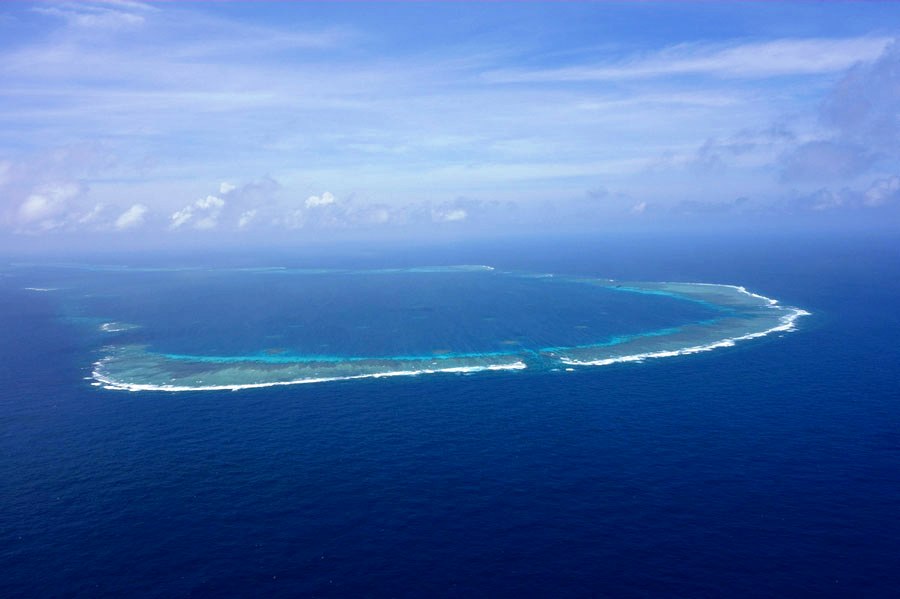
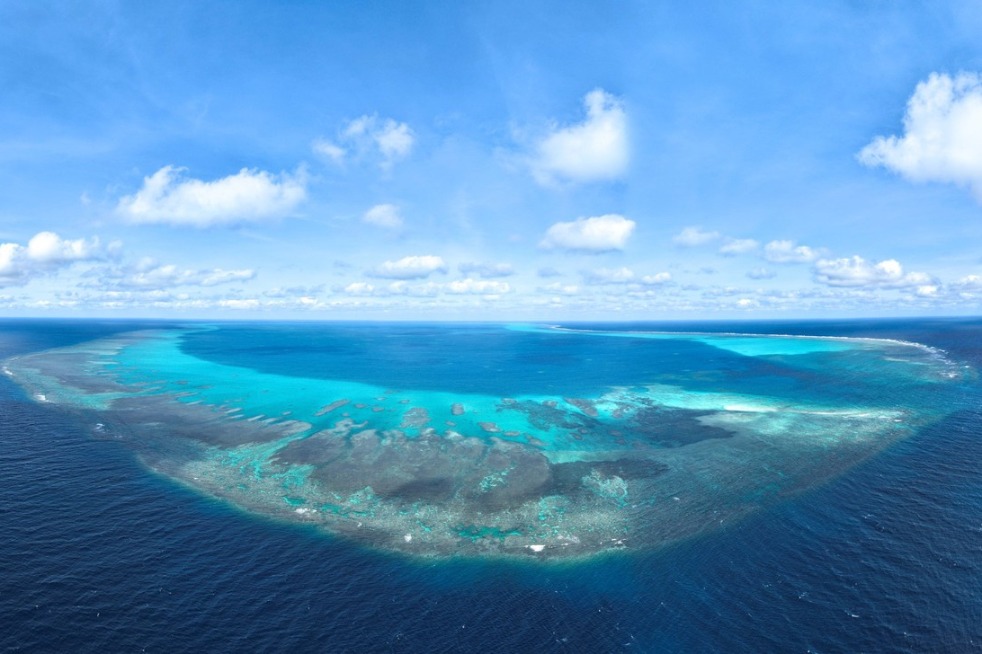
Since April 2024, the Philippine Coast Guard vessel BRP Teresa Magbanua (MRRV-9701) has been illegally and destructively anchored in the lagoon of Xianbin Jiao. For over four months, the Philippines has repeatedly sent coast guard vessels, government ships, fishing boats, and helicopters to resupply the vessel. On Aug 31, the Philippine vessel weighed anchor and while maneuvering in the lagoon, deliberately collided with Chinese Coast Guard vessel 5205. These actions reflect the real intention of the Philippines, which is to make Xianbin Jiao a new “strategic point” in the Nansha Islands by emulating the tactic it has employed at Ren’ai Jiao - where it has grounded an old warship, the BRP Sierra Madre (LT-57) - to illegally occupy the reef, and so control the northwest route of the Nansha Islands. By this coordinated action, the Philippines is attempting to engage in a simultaneous double provocation, causing synchronized tensions in the South China Sea. The Philippines’ intentions are extremely malicious, and completely violate international law.
Xianbin Jiao is a part of the Nansha Islands, over which China has indisputable sovereignty. China will respond to any violation of its territorial sovereignty and maritime rights. A survey report on the coral reef ecosystem of Xianbin Jiao, released by the Ministry of Natural Resources on Aug 30, states that: “There are currently six cays on the Xianbin Jiao reef flat, which are numbered from No. 1 to No. 6 in an anticlockwise order from north to south. Three of them are above water at hide tide.” Of these, “The highest points of No. 3, No. 4 and No. 6 cays are about 1.3m, 0.4m and 1.0m above the local mean high water springs.”
These statistics and the survey images prove the legal status of Xianbin Jiao’s high tide elevation, which means it has the legal status of being a territory, and can by no means be falsely recognized as being part of “the Philippines’ exclusive economic zone”. Thus, the illegal occupation of Philippine Coast Guard vessel 9701 in the lagoon of Xianbin Jiao violates the United Nations Charter, especially Article 2(4), which stipulates that “All Members shall refrain in their international relations from the threat or use of force against the territorial integrity or political independence of any state…”. This article is universally recognized as jus cogens, a category of norms that govern customary international law.
The prolonged anchoring of Philippine Coast Guard vessel 9701 in the lagoon of Xianbin Jiao and the continuous attempts to resupply it, also seriously violate the Declaration on the Conduct of Parties in the South China Sea (DOC) signed by China and the members of the Association of Southeast Asian Nations in 2002. Article 5 of DOC states that: “The parties undertake to exercise self-restraint in the conduct of activities that would complicate or escalate disputes and affect peace and stability including, among others, refraining from action of inhabiting on the presently uninhabited islands, reefs, shoals, cays, and other features and to handle their differences in a constructive manner.” The actions of the Philippines threaten the peaceful and stable environment in the South China Sea that all other regional parties are making efforts to maintain. The Philippines’ troublemaking by infringing on China’s sovereignty is severely undermining the peace and stability that are in the common interest of regional countries, and seriously hindering the efforts by China and ASEAN countries to implement the DOC and to finalize the Code of Conduct in the South China Sea (COC).
China’s effective law enforcement measures in response to the Philippines’ attempts to resupply the vessel at Xianbin Jiao comply with the law. The Coast Guard Law of the People’s Republic of China grants the Chinese Coast Guard the right and obligation to safeguard national sovereignty, security, and maritime rights and interests, which is in accordance with international law, as all parties to the United Nations Convention on the Law of the Sea (UNCLOS) are required to act “with due regard for the sovereignty of all states”. The Chinese Coast Guard has taken reasonable yet restrained measures to safeguard national territorial sovereignty, maritime rights and interests in response to the to the Philippines’ provocative actions in order to safeguard China’s sovereignty and maritime interests.
The Philippines’ continuous provocations at Xianbin Jiao have seriously deviated from the consensus between China and the Philippines to peacefully resolve South China Sea disputes through negotiations and consultations. Up to now, 10 meetings of China-Philippines Bilateral Consultation Mechanism on the South China Sea (BCM) have been held. At the ninth meeting in July, both sides agreed that "maintaining peace and stability in the South China Sea is in the interests of both China and the Philippines and also a common goal of regional countries". The two sides agreed to continue dialogue and consultation through mechanisms such as the BCM in order to manage their differences and disputes. However, the Philippines has acted perfidiously, reneging on its commitments. Despite this, China has been actively communicating through diplomatic channels, hoping the Philippines will return to the right track of peacefully resolving the South China Sea disputes through negotiations and consultations.
The reason why the Marcos Jr. government of the Philippines is determined to escalate the dispute is it intends to use Xianbin Jiao as a forward base and important leverage to deepen the United States’ involvement in the South China Sea disputes. From a legal and political perspective, the mutual defense treaty between the US and the Philippines cannot be cited to enable the US to support the Philippines’ actions. The Philippines should not delude itself that by provoking maritime frictions it can attract extraterritorial powers to put their full weight behind its illegal land-grabbing designs. Such actions will only invite trouble upon itself.
The Philippines proclaims itself to be “the guardian of international law and the international order”, yet it is failing to abide by the United Nations Charter, the United Nations Convention on the Law of the Sea, and general international law. The Philippines should fulfill its obligations to respect the territorial sovereignty of all countries, promote the peaceful uses of the seas and oceans, adhere to the self-restraint clauses in the DOC, and respect the long-term efforts of both countries to manage their territorial disputes through negotiations and consultations.
The Philippines should not underestimate China’s strong and resolute determination to defend its national sovereignty and national security. The Philippines should immediately withdraw its ships and personnel from Xianbin Jiao, restore it to its original state of being uninhabited and without facilities, stop inviting extraterritorial powers to meddle in the disputes, and work with China and other regional countries to maintain peace and stability in the South China Sea region.
The author is an assistant research fellow at Shanghai Institutes for International Studies.
The views don't necessarily reflect those of China Daily.
If you have a specific expertise, or would like to share your thought about our stories, then send us your writings at opinion@chinadaily.com.cn, and comment@chinadaily.com.cn.