



Sports propelling the China growth story in the new era









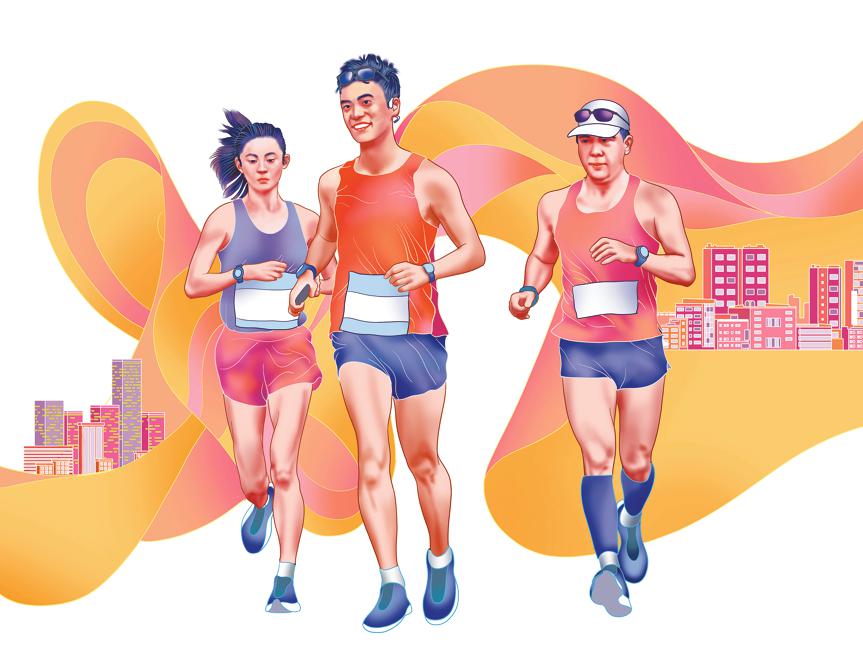
In the 75 years since the founding of the People's Republic of China, the nation's sports industry has evolved from modest beginnings to a major player. From Olympic victories to a thriving sports culture, China's achievements highlight the country's growth and commitment to excellence. This progress reflects not just the athletes' success, but the broader strength and ambition of the nation.
China won its first Olympic gold medal in Los Angeles in 1984, thanks to Xu Haifeng's shooting prowess, and crossed the 300-gold-medal mark in Paris. After competing against developed countries in 11 Olympics, China has become one of the leading medal-winning countries at the Games.
These achievements have not only reinforced China's self-belief but also showcased the great achievements it has made since launching reform and opening-up. Since the 18th National Congress of the Communist Party of China in 2012, China has been trying to integrate the resource mobilizing system with the market mechanism, giving proportionate play to the government, market and society, while developing competitive sports.
The development of competitive sports promotes recreational sports and the sports industry, forming a virtuous circle of sports development.
Participating in and watching high-level sports events have become part of Chinese people's lives. For example, marathons have become increasingly popular in China in recent years, with more than 120 Chinese amateur marathoners competing in the Olympic marathon in Paris. It was the first time in history that the public was invited to participate in an Olympic discipline.
Apart from watching the Olympics on TV at home, many Chinese people also watched the Games on big screens, thanks to one of China's leading film companies partnering with State broadcaster CCTV to relay live broadcasts of the Paris Games in cinemas across the country.
Also, the sales of sports products in China, especially those with"2024 Paris Olympics" prints, and the national team's jerseys, surged during the Games. The booking of sports venues and the sales of home appliances, audio equipment and snacks, too, increased. The "Olympic economy" unleashed the potential of many sectors, showing that sports had become a facilitator of socioeconomic development. As such, the role of sports should be given full play in the advancement of Chinese modernization.
First, sports should help people to lead a better life. Sports can improve the physical and mental health of the people, increase their adaptability capacity and promote social interaction. China has been using the national fitness campaign as a strategy since 2014 to improve the physical health of the people, reflecting the central leadership's commitment to put people, and their health, first.
The country has established a relatively sound public service system for promoting sports and physical fitness both in rural and urban areas. Thanks to increasing investments in the sports sector, mass sports are becoming more diverse, per capita sports venue area has kept increasing, and more people are becoming competent and enthusiastic enough to play competitive sports and/or engage in fitness activities.
However, public fitness services remain unbalanced. So, the government should establish a physical education system suitable for people of different age groups and from different backgrounds, especially to make physical activities a part of teenagers' daily life.
The government should also create a social environment in which people can participate in sports, to encourage more people to play sports or engage in other physical activities, while promoting the balanced development of public fitness services both in urban and rural areas, especially in areas with a high population density.
Local governments and markets, too, should make efforts to improve the sports sector's supply chains, and ensure the supply of high-quality sports products and services.
Second, sports should be further integrated into the country's overall socioeconomic development. The sports industry is a sunrise and green industry, which can promote innovation, raise domestic demand and help upgrade the economic structure.
The sports industry has been growing in scale and improving in quality, playing a significant role in targeted poverty alleviation work and rural revitalization. An array of rural sports activities have bolstered the development of tourism and increased employment in many areas, although the sports industry still needs time to become a pillar industry of China's economy.
Also, to enhance the competitiveness of Chinese sports goods enterprises, the authorities should create a high-level and business environment governed by rule of law, and nurture and cultivate leading enterprises. They should also establish a modern industrial system by adopting new business models and expanding the industry chain.
There is also a need to promote "sports plus tourism" by integrating the sports, tourism, cultural and education sectors and the media, and encourage innovation in sports technology by developing new technology.
The author is an associate professor at the School of Economics and Management, Shanghai University of Sport. The views don't necessarily reflect those of China Daily.
If you have a specific expertise, or would like to share your thought about our stories, then send us your writings at opinion@chinadaily.com.cn, and comment@chinadaily.com.cn.





