Changing Chinatowns
Members of the Chinese diaspora have long traveled across Southeast Asia, establishing distinctive, vibrant enclaves that continue to evolve










Malaysia
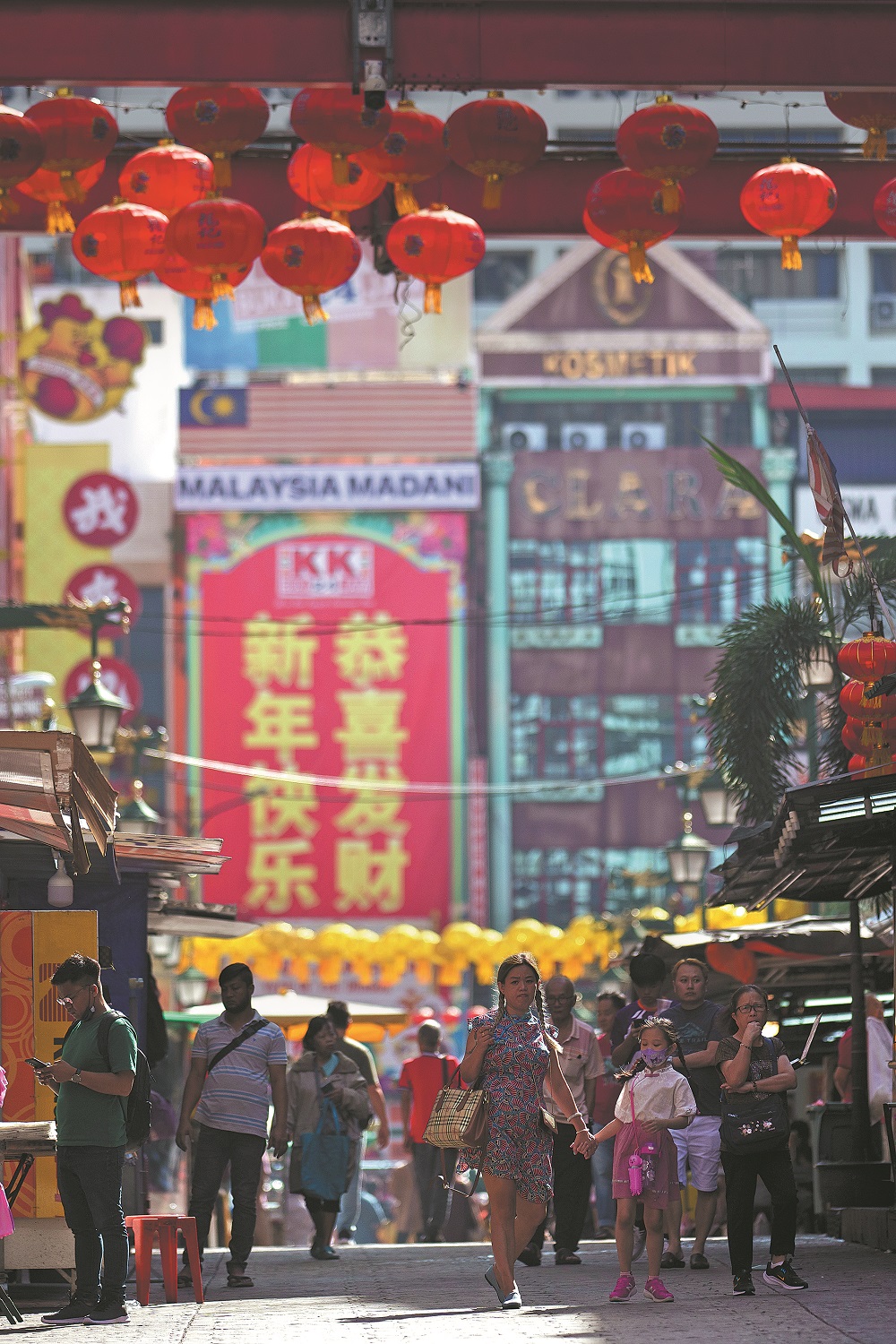
Malaysia's centuries-old famous Chinatown in Kuala Lumpur has also undergone some demographic changes. In recent years, it has seen an inflow of residents of non-Chinese ethnicity and descent, and is no longer a settlement just for local Chinese communities.
With a growing presence of Southeast Asian and South Asian migrant workers from Indonesia, Pakistan and Bangladesh, some shops have altered their traditional offerings to cater to new customers.
Halal or Muslim-friendly Chinese food options have popped up in the Jalan Petaling area, attracting customers from local Malay communities as well.
Dessert stall Madam Tang Machi Popo, which sells peanut-coated glutinous rice snack muah chee, is now run by 24-year-old Liew Mun Yee, the granddaughter of the original owner, the late Madam Tang Kwok Wang.
To cater to Muslim customers, Liew stopped selling the stall's popular red wine-flavored muah chee and now offers new tea-based flavors instead.
Lined with pre-war shophouses, some painted with colorful murals, Jalan Petaling Chinatown has also undergone a revival in recent years in order to attract tourists.
In particular, Kwai Chai Hong, a narrow back alley, now frequently hosts art installations and events in its restored buildings throughout the year.
Thailand
In Thailand, the streets of Bangkok's Yaowarat area brim with tourists during the day. At night, traffic slows to a crawl as bus-loads of visitors swarm roadside stalls serving rat na, gravy noodles, on hot plates or toasted buns oozing pandan custard or chocolate.
In the narrow Plaeng Nam Road, Asian and Western tourists throng the almost century-old Khao Tom 3/1, where a variety of ready-cooked dishes, such as pork sausage and stir-fried water spinach, are served with steaming rice porridge round the clock.
Yet Noodjaree Juntarin, 52, one of the fourth generation of descendants running the family shop, said the crowds have not returned to levels before the COVID-19 pandemic.
A different picture is seen at Bangkok's Huai Khwang district, where a newer "Chinatown" has emerged, serving a different clientele.
Located just down the road from the Chinese embassy, the stretch around Pracha Rat Bamphen Road is crowded with eateries offering Lanzhou noodles, spicy hot pot and herbal teas that are popular with Chinese mainland customers. Many agencies here offer services to entrepreneurs from China wanting to start a business in Thailand.
Sociopolitical analyst Teoh Chee Keong, who specializes in Malaysian cultural and heritage studies, said it is only natural for new migrants to come and go, forming new communities in their host countries.
Kuala Lumpur's Jalan Petaling also began life as a gateway for Chinese migrants 150 years ago. In the 2000s, migrants from Southeast Asia and South Asia began to arrive. Today, the arrival of Chinese businesses and new Chinese migrants is all part of the ebb and flow of migration.
Professor Teoh, who teaches at UCSI University's School of Architecture and Built Environment, said, "Change is a permanent feature of Jalan Petaling as it still serves as a major gateway for migrants."
What has never changed, he said, is Jalan Petaling's inclusiveness of migrants.
As the Chinese left their homeland and moved to different parts of the world, they found their community and created a space where they felt they belonged.
Today, Chinatowns have put their stamp on many parts of Asia and while some have disappeared and others evolved, they still provide a tangible link for locals and visitors alike to a Chinese culture that has lasted centuries.
THE STRAITS TIMES, SINGAPORE