



Wealth managers strike a digital balance
HK's financial businesses are widely using robo-advisers to meet clients' diverse needs and drive growth. But experts say the traditional operation mode won't be totally eclipsed. Liu Yifan reports from Hong Kong.









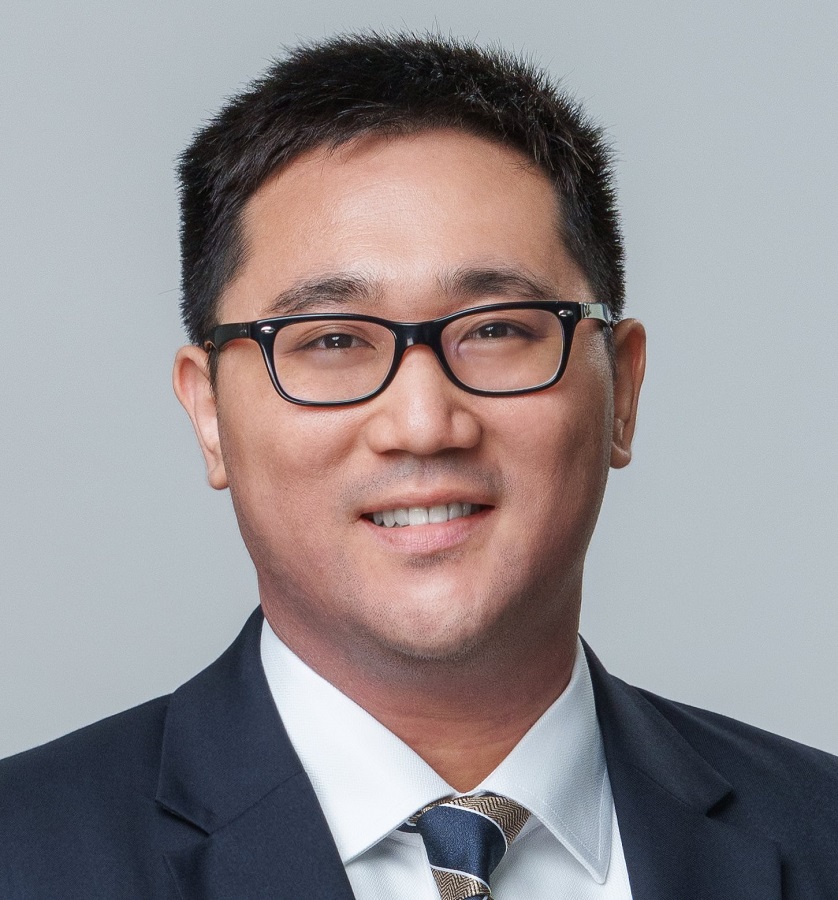
As Hong Kong's wealth management moves toward a hybrid "physical-plus-digital" model, there is a quest for striking the right balance between maintaining the personal touch and harnessing emerging digital innovations to meet clients' preferences, streamline costs, and broaden the customer base.
In a recent study conducted by business consultancy Capco and involving 500 affluent individuals in Hong Kong, it was revealed that 93 percent of the participants have increased their utilization of digital platforms for wealth management activities in the past two years, with 47 percent noting a "significant" rise. Their most prevalent channels for wealth management are self-serve via the internet, and mobile applications.
The survey, focusing on individuals with investable assets of $100,000 or more, also indicates a notable comfort level among the city's wealthy regarding artificial intelligence-guided wealth management decisions, exemplified by the fact that more than half of the respondents are already utilizing robo-advisers.
Hayley Haupt, partner and Asia-Pacific wealth management leader at Capco, says Hong Kong's wealth management industry is embarking on "a period of change", facilitated by rapidly advancing digital technologies that enable wealth managers to cater to a diverse clientele, embracing the mass affluent segment and a new generation of high-net-worth or ultra-high-net-worth individuals.
Hong Kong's asset-and-wealth management business demonstrated resilience last year, with the assets under management logging a modest growth of 2.1 percent year-on-year to above HK$31 trillion ($3.99 trillion), according to the Securities and Futures Commission. The city's net capital inflows surged by more than 3.4 times last year, compared with 2022, thanks to the strong performance in private banking and private wealth management businesses.
Officials point to Hong Kong's strategic geographical location, legal system, a freely convertible currency pegged to the US dollar, and a business-friendly tax environment as the city's strengths.
Increased technological applications in Hong Kong's wealth management sector dovetail with the city's ramped-up efforts to make itself an international innovation and technology center. Local businesses have been widely encouraged to innovate and seek growth by adopting technologies.
But the traditional operation mode of wealth management has not been eclipsed by the digital frenzy. This is evidenced by Capco's survey results showing that in-person consultations with wealth managers and advisers are utilized by nearly half of the participants, and are similarly favored by younger respondents.
Highlighting investment management as a "business of trust" fundamentally, experts believe the success of wealth management demands a strategic combination of high-touch and high-tech approaches.
"While AI can help process information and do analyses, for now, it cannot fully take responsibility for investment advice or carry a fiduciary duty to clients," says Ben Charoenwong, an associate professor of finance at INSEAD - a global graduate business school.
"AI can parse through data in a consistent fashion without getting tired, and humans can have relationships," he says. That means a combination of the two may let human advisers specialize in servicing clients and understanding their needs, while AI helps to handle the more mundane tasks of finding investments, screening them, monitoring existing investments, and digesting contracts.
External brainpower
Yves Ding Yaoxin, vice-president of information technology solution provider Newlink Technology, says wealth managers are facing mounting challenges as clients show growing interest in diversifying their investment allocations not only geographically, but also in asset classes.
Technological applications enable a higher level of customization and immediate adaptation that would be unattainable solely through human advisers, particularly when managing a large client base at scale.
As such, Ding believes an "external brain" is very much needed for wealth advisers nowadays to empower their services in order to better meet their clients' needs and deliver better returns amid an evolving investment landscape.
Looking ahead, Haupt says there are still headwinds for the sector, such as the need to effectively establish a fully integrated hybrid or "phygital" model that delivers seamless client experiences. Such a model should ensure that primary offerings complement each other harmoniously rather than compete while upholding data privacy and security.
Charoenwong is concerned about the absence of a fiduciary duty relationship among clients and advisers in most Asian economies. Out of nine major economies, only Taiwan, South Korea and the Philippines mandate a fiduciary duty, according to the professor.
This means that users of AI or machine learning need not actually deploy their technologies to improve investor outcomes, but instead use them to maximize their own profit and loss statement, and exacerbate some of the issues that plague the industry in new and more shrouded ways, he says.
The academic also cited his research studying the impact of regtech and complementary technology investments on the financial adviser market structure, saying technological advancements in finance have typically been found to disproportionately benefit larger institutions. "This creates a widening gap where smaller firms and individual advisers may struggle to compete."


- Nation intensifies crackdown on telecom, online fraud
- Fudan University president suggests 'Lego thinking' to transform academic disciplines
- Mainland criticizes Taiwan official's visit to Japan
- Emirates resumes daily Dubai-Hangzhou flights
- F1 fan festival opens in Shanghai
- NPC deputy promotes ethnic unity education in Xinjiang school





