



US should reflect on its role in Middle East









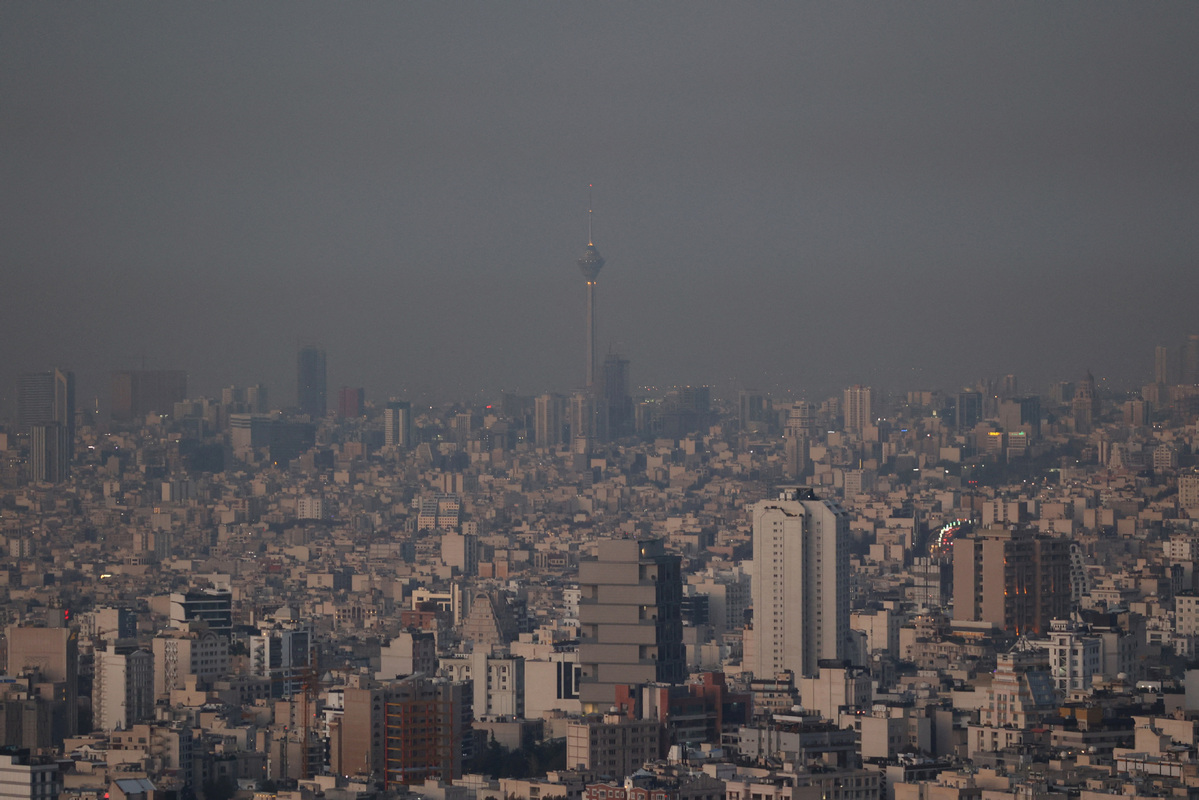
Following Israel's strikes on Iran's military facilities on Saturday, the Middle East crisis has worsened. The ongoing Israel-Palestine conflict, which has lasted more than one year, and the resulting Israel-Hezbollah conflict have been intensifying. Since Iran launched a retaliatory attack on Israel on Oct 1, a possible war between the two countries has been hanging like the sword of Damocles over the Middle East and the regions beyond.
Some view the ongoing Middle East crisis as an opportunity for China. But I don't agree with this view. If a full-scale Israel-Iran war were to break out, China's losses would far outweigh its potential benefits.
China does not want to see the Middle East crisis escalate, as a volatile Middle East would create innumerable challenges for China, and many other countries. So the argument that the Middle East crisis is conducive to China challenging the United States' position in the Middle East is untenable. To begin with, China has no plans to challenge the US over its role in the region.
For decades, China's interactions with the Middle East have primarily focused on trade and economic cooperation, with the scope of collaboration continuously expanding. China respects its trade partners' sovereignty and territorial integrity, and has been working to foster regional stability and peace, earning praise from the international community.
However, the damage caused by the US to the Middle East has become increasingly clear. True, many Middle East countries have strengthened their relations with China in recent years, partly because they are unhappy with the US' role in the region. But they view China as a reliable partner, one that offers an alternative to the US, not as a "rival" of the US.
But if the Middle East crisis deepens further, especially if an Israel-Iran war breaks out, China's advantages could be undermined. Although most Middle East countries may have grown increasingly resentful of the US, their heightened security needs in a time of crisis could prompt them to depend more heavily on the US. This increased dependency could, in turn, lead to the US interfering in their cooperation with China, potentially complicating, if not restricting, the development of China's economic and diplomatic ties with the countries in the region. In such an emergency scenario, the strategic balance may shift back toward the US, despite many Middle East countries being frustrated with the US.
Also, since China does not have enough influence to reason with the conflicting parties, its efforts to help restore peace in the Middle East, if unsuccessful, will disappoint the countries in the region. Not to mention that despite provoking widespread resentment among Middle East countries, the US' unique allure in the region is yet to fade.
Many Middle East countries have been known to be angry with US policies but simultaneously yearn for US support. This remains a fundamental reality in the Middle East.
When analyzing the potential impacts of the Middle East crisis on China, experts often focus on the competition between China and the US in the region. But does such a competition truly exist? In fact, Beijing does not see it that way. To the best of my knowledge, China has not formulated plans or policies aimed at competing with the US in the Middle East.
China is aware that it is very difficult, if not impossible, to undermine the US' position in the Middle East, not least because Washington has numerous military bases there. China is also aware of the influence the US exercises in the region. Therefore, I believe that rational thinkers in China do not consider it feasible for the country to directly challenge the US' position in the Middle East.
Many view the Belt and Road Initiative as China's ambitious overseas expansion plan, but this is a misconception. The initiative is primarily a response to China's internal development challenges. Similarly, some interpret China's increasing focus on international organizations such as the Shanghai Cooperation Organization and BRICS as its intention to confront the US and other Western powers. In reality, Beijing's efforts, and the Belt and Road Initiative, are more of a response to the US' growing China-containment strategy.
Instead of challenging, let alone making efforts to replace, the US in the Middle East, China seeks to focus on its development and fostering cooperative relations without engaging in direct rivalry with Washington.
Although China and the US have serious disagreements on many issues, both agree that it is necessary to prevent a possible Israel-Iran war. I believe that like China, the US too hopes for peace in the Middle East; the difference between them lies in the approach to achieving it. As the two most influential global powers today, the US and China have the responsibility to make positive contributions, both separately and jointly, toward restoring and maintaining peace in the Middle East.
The author is professor at the Middle East Studies Institute of Shanghai International Studies University.
The views don't necessarily represent those of China Daily.
If you have a specific expertise, or would like to share your thought about our stories, then send us your writings at opinion@chinadaily.com.cn, and comment@chinadaily.com.cn.





