Keeping global governance machinery running










As the world's second-largest economy, China will work with developing countries to urge the West, led by the US, to fulfill their responsibilities
The rise of new global powers, such as China and India, has significantly changed the power balance in the international system. When institutions such as the World Bank, the International Monetary Fund and the World Trade Organization were established, the global economy was dominated by the United States and Western Europe. The economic landscape has changed dramatically over the past few decades, with emerging markets now playing a much larger role. Despite these changes, the governance structures of many international institutions remain largely unchanged, leading to frustration among emerging economies that feel underrepresented. This lack of adaptation has contributed to a decline in trust in these institutions and has raised questions about their relevance in the world today.
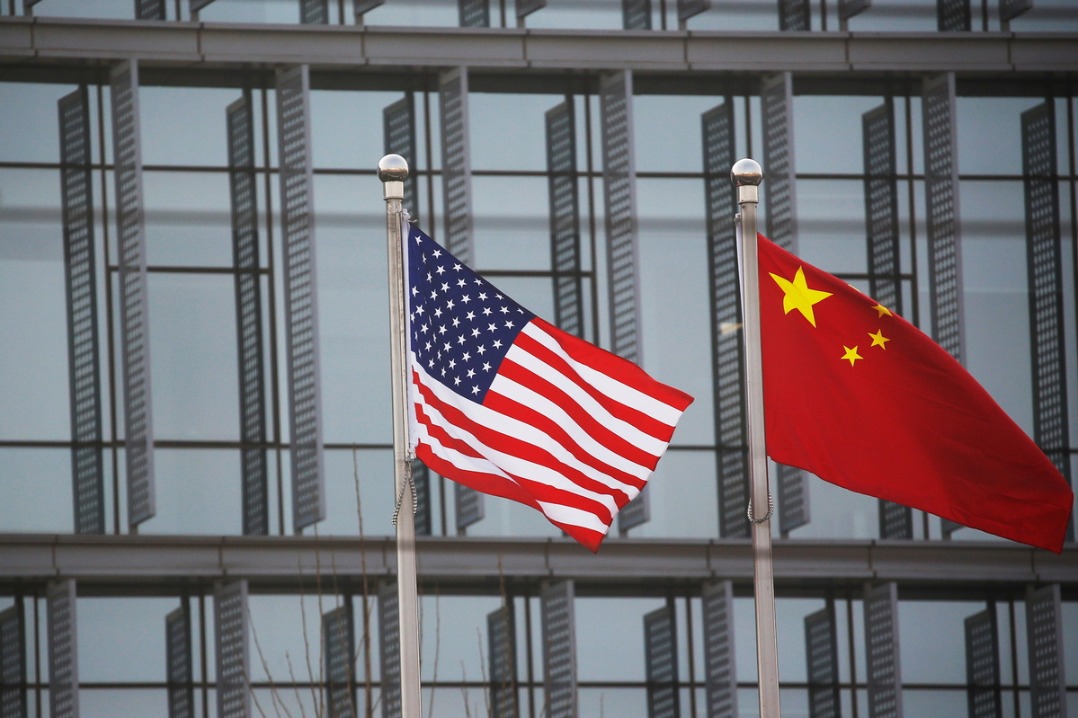
For instance, we can examine the multilateral trade system as an example. In April 2018, the then Donald Trump administration initiated a trade war with China. The Trump administration openly claimed that it did not merely want to ensure that China complies with existing rules, it wants to prevent China from catching up with the US technologically. This is obviously not acceptable to China. In the National Security Strategy that the Trump administration released in 2017, China was cited as the main challenger to "American power, influence, and interests", an adversary that is "attempting to erode American security and prosperity".
This perspective fuels the risk of the so-called Thucydides Trap, in which an established power's fear of a rising rival leads to conflict.
Under the Joe Biden administration, the US toned down its rhetoric a bit but has expanded the scope of sanctions on Chinese companies, such as by placing hundreds, if not thousands, of Chinese companies on its so-called Entity List, blacklisting them on national-security grounds.
US National Security Adviser Jake Sullivan said these measures are not a "technology blockade". But the claim is dubious. While national security is a legitimate concern for any country, it is difficult, or impossible, to decide whether supply chains — or segments of supply chains — have security implications. The concept of national security can be easily abused to violate WTO provisions. Since the US-China trade war began in 2018, the US has imposed heavy tariffs on Chinese imports and China has retaliated with tariffs. The trade war increased costs for businesses and led to a significant reduction in bilateral trade.
Even if the geopolitical situation deteriorates further, China cannot disengage fully from global supply chains — at least not without paying a heavy price. But the same is true of the West, which may be tempted by the idea of forcing China out. Just as the Chinese industry would suffer massively from the economy's isolation, so would Western businesses. Achieving a pyrrhic victory in a trade war actually benefits nobody. It is also important to note that the trade war has led to decoupling and reshaping of global production chains against the principle of comparative advantage. While some countries might benefit in the short term, all countries will eventually diminish in the long run.
Recently, I met with a respected US business leader, who told me that China uses industrial policy to gain competitive advantage. I asked him why he does not sue China in the court of the WTO. His answer is that it does not help, because China has not violated WTO rules technically. Instead, the US will just copy China, using industrial policy to improve its industries' competitiveness. This is a worrying development. All countries should abide by WTO rules and the US should stop obstructing the normal functioning of the WTO. For example, the US government should stop blocking the appointment of new members of the Dispute Settlement Body.
Solving trade disputes within the WTO framework is of utmost importance to uphold multilateralism. If the world wishes to avoid repeating the terrible mistakes of the past, all countries, especially the US, should return to the WTO to solve trade disputes, rather than acting unilaterally.
Currently, the other challenge faced by global governance is the issue of development financing for developing countries. To achieve the sustainable development goals set by the United Nations, developing countries need to make large-scale investments in infrastructure, food security, climate change, health and education. The funding gap is estimated at $2.5 trillion.
At the same time, according to UN statistics, by 2022, the external debt stock of developing countries had reached $11.4 trillion, double the figure 10 years ago. Developing countries, especially low-income developing countries, face a heavy debt service burden. Due to the impact of the pandemic, the debt situation in developing countries has further deteriorated. The UN's Report titled "2022 Financing for Sustainable Development Report: Bridging the Financing Gap" indicated that, on average, the poorest developing countries need to allocate 14 percent of their income to pay debt interest — almost four times the rate of developed countries (3.5 percent). Globally, due to the pandemic, many developing countries have been forced to cut budgets that should have been allocated for education, infrastructure, and other sectors.
In 2020, the G20 introduced the Debt Service Suspension Initiative. From May 2020 to December 2021, the initiative suspended $12.9 billion in debt-service payments owed by 73 low-income countries to creditors, with China making the largest contribution. As the world's second-largest economy, China is still on its way to becoming a middle-income country in terms of per capita income. China will shoulder the responsibilities that it should and can take as a major power. China will also work with other countries, especially developing countries, to urge the West, led by the US, to fulfill their responsibilities.
The author is academic member of the Chinese Academy of Social Sciences. The author contributed this article to China Watch, a think tank powered by China Daily. The views do not necessarily reflect those of China Daily.
Contact the editor at editor@chinawatch.cn.