A swift lending journey
Hong Kong's small and medium-sized enterprises are set to embrace a shift in banks' lending pattern in line with the digital trend. As Oswald Chan reports, the change calls for SMEs, lenders and the government to team up in creating a smooth funding process.










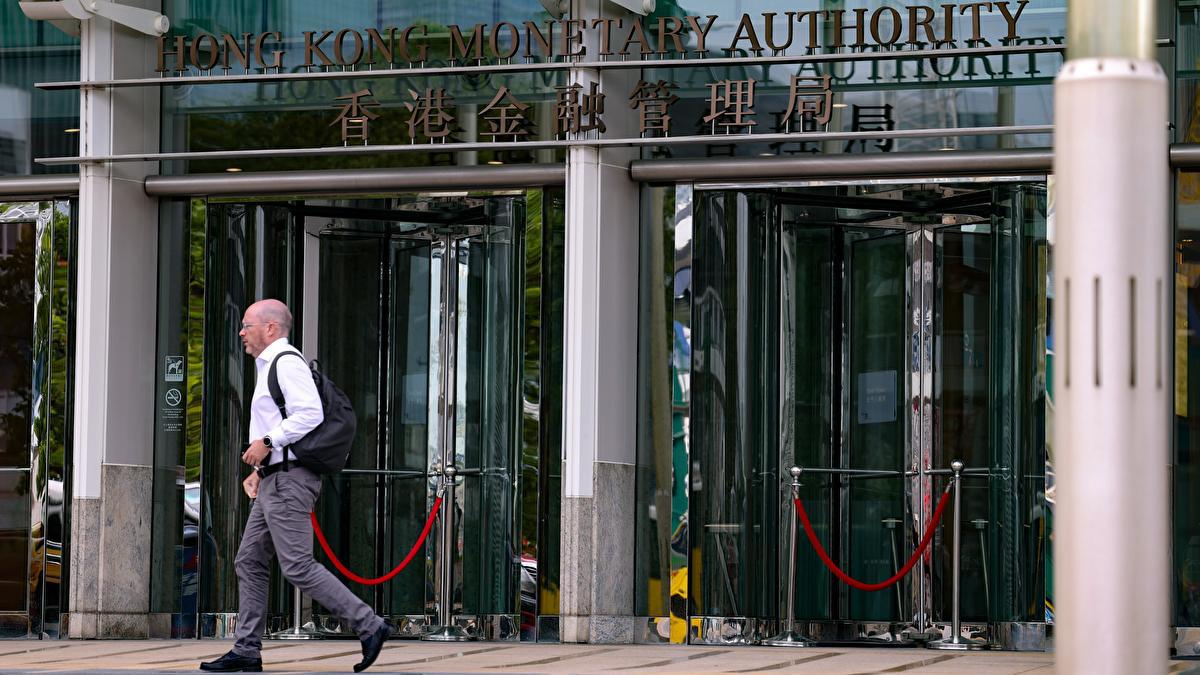
The launch of the Interbank Account Data Sharing pilot program in January, as well as the Hong Kong Monetary Authority's IADS Developer Platform in collaboration with Hong Kong Science and Technology Parks Corp in October, marked a turning point in data sharing, refining the city's lending system for small and medium-sized enterprises.
The breakthrough allows banks, with the consent of customers, to share account information with other lenders securely and efficiently, paving the way for more innovative data-driven banking products and services. It has enabled some of the 28 banks involved in the IADS program to shorten the time significantly in approving SMEs' loans - from several weeks to a few days.
By joining the HKMA's IADS pilot project, Hang Seng Bank and Dah Sing Bank have started streamlined identity verification services for SME customers. In authorizing both banks to retrieve account information and data directly from other IADS participating lenders, SMEs can seamlessly secure loans as the traditional documentation process is skipped.
SMEs' credit demands range from funding for business operations to more specific purposes like trade finance or franchising. Previously, they had to overcome a wall of obstacles, such as undisclosed loan approval steps, stringent documentation, collateral or personal guarantee requirements, and a lack of engagement initiatives by lenders, leading to a series of operational hiccups.
The overhaul also came amid concerns that commercial banks have been inappropriately demanding early loan repayments from SME borrowers, or "call loans". In response, the HKMA - the city's banking industry regulator - and the Hong Kong Association of Banks set up a task force to deal with the problem. The unit has pledged to enforce nine measures adopted by the HKMA and the Banking Sector SME Lending Coordination Mechanism to reduce the financial liquidity pressure on SMEs.
The steps taken have reflected the deficiencies associated with the traditional SME lending model - essentially a paper-based and labor-intensive process with heavy emphasis on outdated financial statements and collateral requirements involving residential or commercial properties.
Hongkong and Shanghai Banking Corp said recently it will provide HK$5 billion ($643.5 million) in preapproved credit limits to eligible SME customers by leveraging its vast pool of proprietary data. A minimum loan of HK$50,000, repayable over a period of up to five years, would be granted within two working days without the need for financial statements or collateral.
"By enhancing transparency in SME lending, we empower our customers to make informed borrowing decisions for their operational needs or business developments. We will continue to enhance our data capabilities to provide accessible financing and simple banking services for smaller businesses in Hong Kong," Frank Fang, HSBC's Hong Kong and Macao general manager and head of commercial banking, tells China Daily.
HSBC is now connected to the Commercial Credit Reference Agency and the Companies Registry through the Commercial Data Interchange platform, as well as having joined HKMA's IADS pilot program to provide faster access to bank financing for SMEs.
While traditional lenders rely on customer data already circulated internally within banks to grant preapproved loans whereas SMEs that are not bank customers may not benefit, at the other side of the spectrum, fintech startups are building their own proprietary artificial-intelligence, data-science and machine-learning-driven credit scoring models based on real-time financial data generated by other partners in the SME lending ecosystem.
Riding the digital wave
Hong Kong-based PAO Bank Ltd (PAObank) - a wholly owned subsidiary of Lufax Holding Ltd and a member of Ping An Insurance (Group) Co of China - offers preapproved loans of up to HK$10 million with no documents required, and has waived handling fees and penalty charges. In partnership with Octopus Hong Kong and FWD Hong Kong, the fintech company can conduct a comprehensive customer credit check in streamlining its loan approval process.
As of June 30, among the loans approved by PAObank, 32 percent of SMEs had obtained their first bank loan, and 10 percent of startups that have been operating for less than three years had been granted unsecured loans.
FundPark, another fintech firm dedicated to SME lending, said it has provided more than $3 billion in working capital funding (with $1 billion deployed in 10 months) and supported 17,000 shops in the cross-border e-commerce sector. FundPark has secured financing deals with Goldman Sachs and HSBC to secure funding of over $750 million as financial arsenal for making SME loans.
"We believe the key to plugging Hong Kong's stubborn SME credit gap lies in algorithm-based lending by utilizing alternative data to develop customized SME credit scoring models that can prequalify loans," says Benjamin Quinlan, CEO and managing partner of Quinlan & Associates. "This approach not only helps to address previously underserved customer segments, but also streamlines the current SME lending journey."
According to the business advisory firm, Hong Kong's current addressable SME credit gap stands at HK$170 billion. As the economy slows down, leading to a poor lending appetite among banks, coupled with the fact that more businesses still need funding, the firm expects the funding gap to widen to HK$200 billion by the end of this year.
Quinlan says the footprint data relating to the entire value chain of SMEs, such as business orders, purchases, payrolls, sales receipts, accounting software, trade receipts, customs data, e-commerce data, and even geolocation data of business venues, can be used to assess SMEs' profits and losses, and then to evaluate how creditworthy the SMEs are. Lending based on real-time financial information can decouple the need for collateral in loan applications.
"These are useful in determining the real-time financial health of a company, and it is very important to ensure that the agenda of financial inclusion is taken into consideration," Quinlan says.
Playing the right roles
According to Quinlan, the future paradigm in SME lending is an automatic credit model, and integrating data and checking credit-scoring algorithm will be the two most important elements.
He emphasizes that lenders, small businesses and the government have a role in cementing this pattern shift in SME lending, adding that "banks have to develop more digital banking services, infrastructures and credit scoring capabilities. The government must be able to push the agenda in terms of regulation, while SMEs need to make digital investments".
Ambrose Wong Yun-po, PAObank's alternate chief executive and chief risk officer, says SMEs should not see business digitalization as frenzy, and installing a point-of-sale terminal is already the first step.
"SMEs should be thinking of how to digitalize their operations, not only for efficiency, but also to create digital footprints that can generate useful data to facilitate their lending decisions," he says.
Yip Hay-chun, chief strategy officer and chief of staff at FundPark, agrees. "Traditional SMEs do not necessarily have to invest in infrastructure. Neither do they have to be financial experts. But they should be more aware of the opportunities that diversifying into e-commerce channels can bring."
In his view, there are three verticals concerning SMEs' business fundamentals - the e-commerce marketplace, the fund collection and payment gateway, and the inventory and logistics segment.
"Lenders for SMEs must understand the underlying fundamentals, and ask questions relating to the three verticals. There are market shifts and structural changes that require SMEs to face new and emerging verticals. We are excited that new verticals have become more digitalized, enabling us to serve those specific verticals in the SME ecosystem, which is currently in a bit of a vacuum," says Yip. "A gap is still there in terms of ensuring that SMEs have the right level of working capital to sustain business growth."
On the role of the government, Wong says that since there are various data providers, even within one particular business segment in Hong Kong, the government should nurture the growth of the SME lending ecosystem as the Commercial Data Interchange platform provides a very good market infrastructure.
The link between the HKMA's CDI and the government's Consented Data Exchange Gateway was extended in August to all CDI participating banks for access to various government data concerning corporate and business operations.
Currently, CDI participating banks can access data from the Companies Registry and Hong Kong International Airport Cargo Data Platform to streamline various banking processes, greatly benefitting SMEs. The HKMA is exploring a connection with the Land Registry to enhance mortgage and loan assessments for both individuals and corporates in phases from 2025.
According to the HKMA, the CDI has facilitated more than 27,000 SME loan applications and reviews since its launch in October 2022, with credit approved having surpassed HK$23.8 billion as of June.
"How can different e-commerce platforms, payment gateways, as well as procurement and logistics service providers, be encouraged to join the CDI platform and share their data to drive the growth of Hong Kong's entire SME lending ecosystem? At the infrastructure level, how can these different sets of business data be integrated to give a comprehensive credit assessment?" asks Wong.
Quinlan says, "Even though the CDI has created a data repository that can be used to evaluate the creditworthiness of businesses, the administration still needs to connect the data effectively with other financial institutions. It has to provide the right kind of incentive arrangements for data providers to share data on the CDI platform."
The part of industry players should also not be neglected. Wong believes that as more participants in the ecosystem provide business data, and more fintech startups targeting SME lending launch their products, there will be a "gradual transition of the SME lending model relying on paper-based financial statements and collateral to digital-based alternative data and digital footprint".
PAObank is investing in technology infrastructures to ensure that all the accessed data can be integrated, consolidated and continuously processed, enabling digital bank to manage the loan cycle. "The data are useful for conducting proactive business monitoring in the post-lending stage; for example, how we can provide timely additional funding support after clients have obtained business loans from us," Wong says.
Adds Yip: "Besides traditional lenders, there is an emerging class of disruptive fintech startups focusing on SME lending that can augment existing traditional lenders in supporting the broader economy and ecosystem."
According to official data, there are more than 360,000 SMEs in Hong Kong, accounting for nearly 99 percent of the total number of companies in operation. They contribute about 50 percent to the city's GDP and provide 44 percent of the jobs in the private sector.
Contact the writer at oswald@chinadailyhk.com






- Typhoon Mitag makes landfall in South China's Guangdong, forcing school closures, transport halts
- Xizang region charts 'remarkable' advances in public healthcare
- 'Significant' gold resources discovered in Jiangsu province
- Peng Liyuan attends UNESCO award ceremony for girls', women's education
- Hunan university gives valuable lesson on Mao Zedong's youth
- Illegal disposal of hazardous waste under probe after public complaints