Sino-US tech ties need deepening, not 'decoupling'










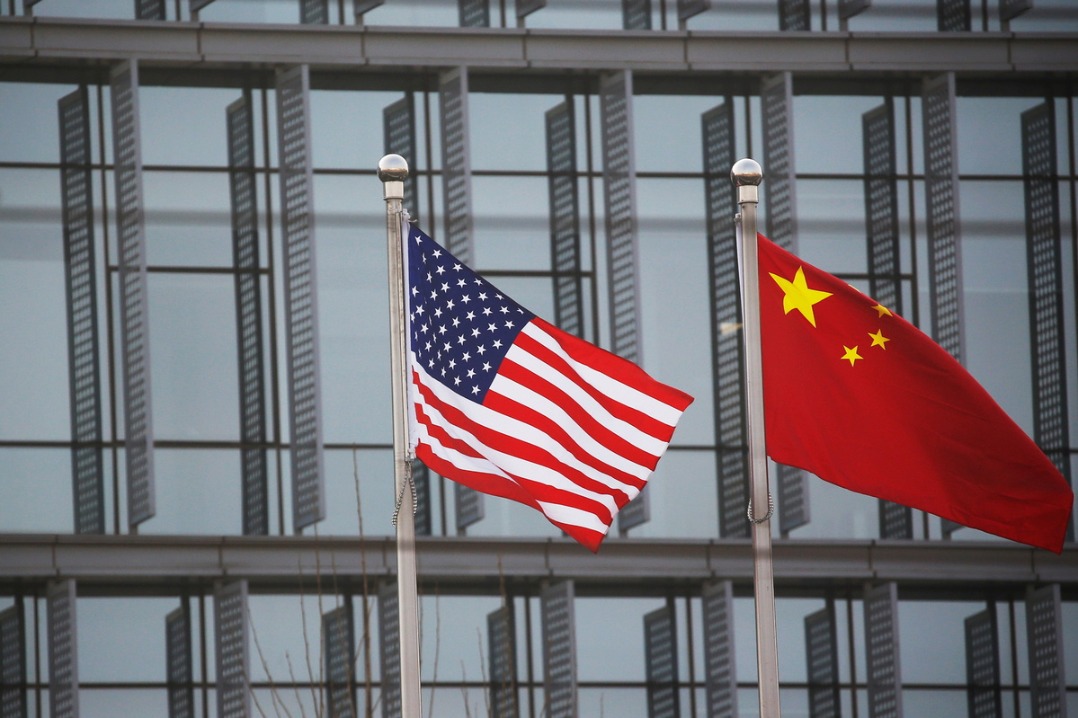
With voters in the United States electing a new president, speculation on the trajectory Sino-US relations will take, particularly in the realm of technology, has increased. The new US president, with ample business experience and fewer political constraints, has the opportunity to shift away from the current administration's trial-and-error approach and adopt a more rational and pragmatic stance on China.
During the election campaign, the president-elect laced his speeches with anti-China rhetoric and accusations, and proposed to take measures that could impede bilateral relations in high-tech. However, it is important to understand that campaign rhetoric in the US often differs from the actual decisions taken by the government — an inherent feature of US electoral politics. Hopefully, the interests of the American people should guide the White House policies.
Ideally, the right thing to do for the new administration would be to abandon the emotion-driven high-tech policy toward China. Both empirical evidence and logical reasoning indicate that the ongoing restrictions on technological exchanges between the two sides are detrimental to not only China but the United States as well.
A key assumption underpinning US restrictions on technology exchanges is that China's technological progress poses a threat to the US' high-tech sector. Such assumptions, however, do not hold up to reason or scrutiny. The complementary and mutually beneficial aspects of technological research and exchanges, academic collaboration, patent sharing and intellectual property rights trade far outweigh the blind competition and confrontation elements.
China has the highest number of doctoral candidates in the world. As a matter of fact, US multinational corporations have reaped substantial benefits from their investments and research and development operations in China, and leveraged China's human resources to acquire valuable intellectual property.
The growth of China's high-tech manufacturing is closely related to its integration with the global value chain led by the US. A significant part of China's high-tech exports involves processing, which requires substantial imports of components and intermediate goods — many of which come from the US.
Therefore, claims that China's technological development is a threat to the US are largely politically motivated, especially because evidence shows that US policies aimed at "decoupling" and "de-risking" from the Chinese economy have not yielded the intended results. For China, these policies may have caused short-term disruptions in its industry and supply chains, but in the ultimate analysis, they have fostered alternatives, by prompting the country to expedite original and innovative R&D.
Besides, Washington's policies have compelled some US companies to shift their manufacturing and other units from China to the US or other countries.
Interestingly, the US International Trade Commission has said that the cost of imposing extra tariffs on Chinese products under the provisions of Section 232 and Section 301 of the US Trade Act of 1974 is being passed down to US businesses and consumers. Many US experts have questioned the wisdom of decoupling the US and Chinese economies, despite the chances of the two sides reaching a consensus on export control policies becoming increasingly difficult.
Also, the US' approach has inadvertently increased the burden on many global companies and consumers. For instance, US restrictions on exporting semiconductors to China have disrupted the global semiconductor supply chain, forcing companies in Japan, the Republic of Korea, the Netherlands and other economies to navigate between increased operational costs and reduced market demand, potentially leading to overcapacity in advanced countries' chip industries.
Additionally, the US is using its "long-arm jurisdiction" and political pressure to force third-country companies to join the technological blockade bloc against China, harming their interests. The inconsistency between the US' self-proclaimed commitment to free market and fair competition and its frequent use of non-market, unjust policies to target other countries has eroded the country's credibility and sowed distrust between the US-led West and developing countries.
Improving China-US tech relations is essential not only for the mutual interests of the two sides but also to invigorate economic globalization. The new US administration, therefore, should adopt a pragmatic and flexible approach to its technology policy toward China, lift the export controls and extra tariffs on Chinese products, promote cooperation in high-tech and expand personnel exchanges. And the two countries should enhance communication and collaboration, work together to steer bilateral relations toward a cooperative and mutually beneficial future.
Liu Dongmei is secretary of the Party Committee and a researcher at the China Academy of Science and Technology Development Strategy; and Huang Ning is an associate researcher at the Institute of International Technology Relations, China Academy of Science and Technology Development Strategy. The views don't necessarily reflect those of China Daily.
If you have a specific expertise, or would like to share your thought about our stories, then send us your writings at opinion@chinadaily.com.cn, and comment@chinadaily.com.cn.